The use of powerful sedative injections on dementia patients at Jersey’s General Hospital has dropped to “very rare” levels – but the practice remains under close scrutiny a year after serious concerns sparked a healthcare crackdown.
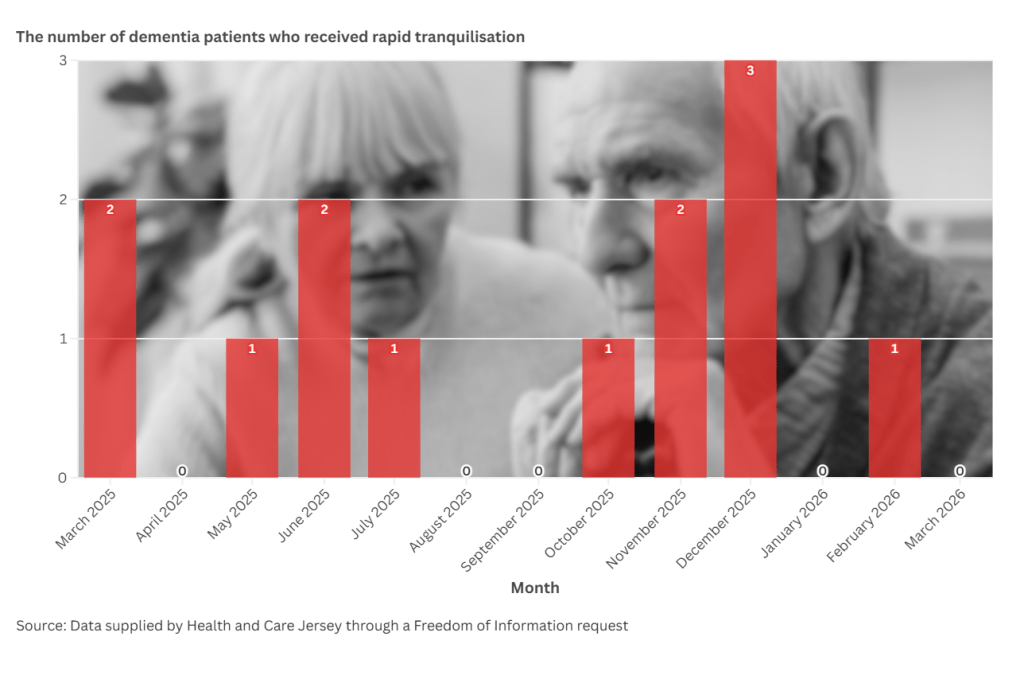
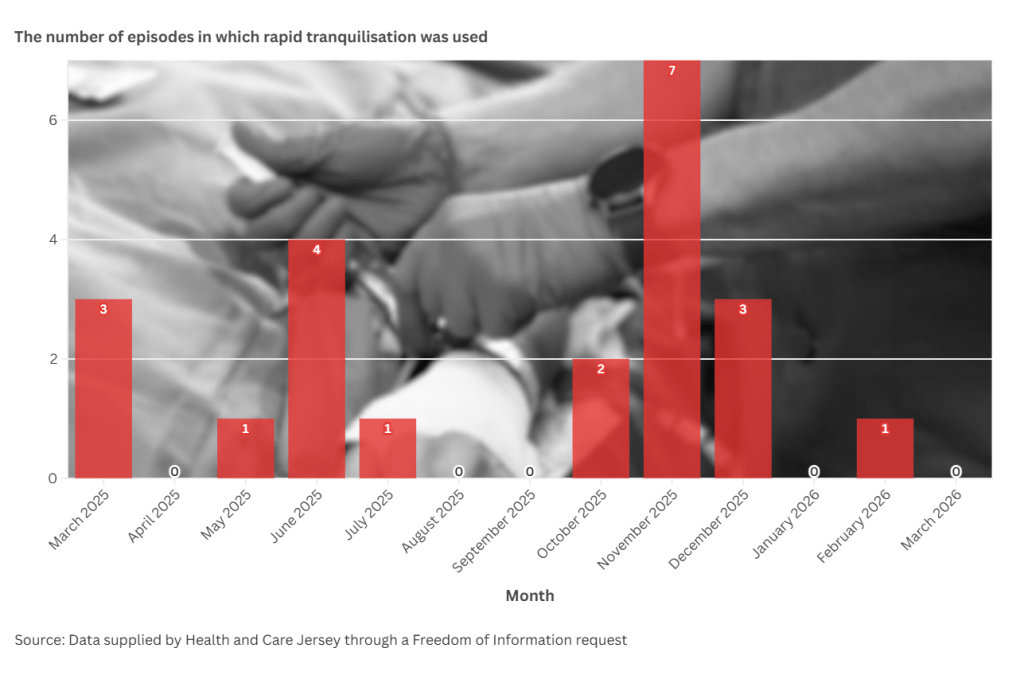
Rapid tranquilisation was administered 22 times to 13 dementia patients over the past 13 months, according to new figures obtained by Express under the Freedom of Information Law.
During the same period, 578 patients with a dementia diagnosis were admitted to the hospital.
It comes after Express revealed last year that the “outdated” and high-risk intervention – intended only as a last resort – was being used with what charity leaders described as “alarming frequency”, raising patient-safety concerns and prompting urgent reforms.
Rapid tranquilisation involves administering strong sedatives by injection or intravenously to calm severely distressed patients when all other methods have failed.
The 2024 Health and Care Jersey Quality Account linked its use to a number of “patient-safety events” – incidents that could have, or did, result in harm.
In response, hospital leaders introduced enhanced staff training, tighter reporting requirements and continuous monitoring, including daily oversight and monthly reviews by a specialist steering group.
Andy Weir, director of Mental Health, Social Care and Community Services, said the latest data shows the intervention is “used very rarely” and is “closely monitored”.
He added that the department is focused on “providing safe, compassionate and person-centred” care for dementia patients.

Dementia Jersey chief executive Claudine Snape, who last year warned her charity had been “alarmed” by the frequency of tranquiliser use, said progress over the past year was welcome.
She said the charity “recognises and welcomes the steps the government has taken to review practice, improve monitoring and strengthen staff training”, adding the focus now should be “preventing the distress that leads to its use in the first place”.
My Voice chief executive Patricia Winchester, who sits on a monitoring board overseeing tranquiliser use, said the recent figures were reassuring.
“Thirteen is actually nice and low,” she said, noting it equates to roughly one case per month.
But she warned that any sharp increase would raise immediate concern.
“If it jumped from 13 this year to 39 next year, then I would be really worried,” she said.
Ms Winchester explained that each case is scrutinised in detail, with the board examining whether any increase is linked to individual patients or reflects a wider trend.