

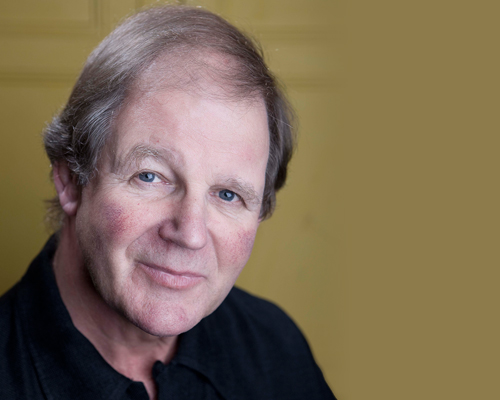
With more than 100 books to his name, the former Children’s Laureate, knows exactly how to tell a great story, and the large audience were treated to one after the other, as he revealed the inspirations behind some of the best known modern works of children’s fiction.
Sitting centre-stage in a comfy armchair, the author talked at length about the stories behind the stories, to his audience of children and adults. One of the most poignant was that of Henry Tandey, which was the inspiration behind Morpurgo’s An Eagle in the Snow – the title of his talk on Saturday afternoon.
Tandey was the most decorated British Private of the Second World War, winning the Victoria Cross for gallantry amongst his many medals. But it was the events of 28 September 1918 which inspired Morpugo: although some believe the story is an urban myth, it’s claimed that after a long and exhausting fight, Tandey encountered a weary German soldier, wandering alone out of the smoke towards the waiting British ranks, after the Battle of Marcoing.
Several of his comrades raised their rifles to shoot, but Tandey stepped in, and spared the life of the German solider, turning him around, and telling him to go home.
It was quite an act of mercy, after some of the most vicious fighting of the war.
A few years later, an astonishing claim emerged – that the solder whom Tandey had spared was none other than Adolf Hitler, who fought in the trenches in WWI.
One bullet from Tandey’s rifle would have avoided WW2, saving millions of lives.
Morpurgo continued the war theme, explaining the origin of perhaps his most well-known book, War Horse: a fireside chat with an old solider in his local pub in Devon. He discovered than more than a million horses had gone to France during WW1, with only 65,000 returning – roughly the same proportions as the men who fought. The horses shared the same hardships and deaths as the humans, and so Morpugo decided to tell their story too.
But some of his inspirations were personal – such as running away from school at the age of seven, only to be rescued while trying to run home to London by an old lady, who took pity on him, and then helped him get back into his school unnoticed before the alarm was raised, and he got into serious trouble; or his own childhood inspiration, and the man who kindled his love of a great story: Robert Louis Stevenson.
A former teacher, Morpurgo is a consummate story-teller, and kept the audience enthralled right until the end, when he had to be ushered off stage to catch his flight.
It was a fantastic performance, and judging by the queues in the lobby to purchase one of his books, he certainly inspired the audience with his love of a great story.
One of the liveliest events of the festival was at the Opera House on Friday night as a panel of six and the audience struggled to debate “How Free is Free Speech?” Veteran journalist, and author of Trigger Warning, Mick Hume, set the ball rolling by saying he believes people should be able to say and write anything they want no matter how obnoxious their view or opinion. Whilst others wanted to agree with him, they said unfortunately they felt there do need to be limits. That led on to a discussion of what the limits should be, who should set them, and how they should and could be enforced.
On Sunday afternoon at the Arts Centre local historian Ian Ronayne stood in for Roman adventure thriller author Simon Scarrow, who was too ill to attend. Fortunately, it was scheduled to be a joint performance with local author, Caroline Lea, who has written When the Sky Fell Apart about the German occupation of Jersey in 1940.
With Mr Ronayne talking about the actual history of one of the most fascinating periods in the Island’s history, and Ms Lea explaining how she interpreted it through fiction, it was a very entertaining performance. Perhaps the highlights were when the pair dealt with the highly sensitive subject of collaboration, and how difficult it was to reach judgements now, without first-hand knowledge of what it was actually like at the time. They dealt with the difficult balance between collaboration and cooperation, such as the decision by some local people to find essential work to feed their families by helping the Germans to build their fortifications. Hopefully Caroline Lea’s book will help interpret a crucial part of Jersey’s history.
And the theme of WW2 continued on Sunday evening at the Jersey Arts Centre scriptwriter Jenny Lecoat updated filmgoers on her latest project – Another Mother’s Son. It’s the story of her great aunt – Louisa Gould – who was gassed in a German concentration camp because she was caught hiding a Russian slave worker during the Occupation. Although Jenny was unable to show any clips at the talk, she says editing is progressing well and is hoping for a spring release.
