

For years, travelling to Europe with a family pet was a relatively simple process for Jersey residents.
A pet passport – typically costing between £50 and £100 and valid for the animal’s lifetime, provided vaccinations stayed up to date – allowed islanders to travel freely with dogs, cats or ferrets to the EU without needing fresh paperwork for every journey.
But as of last month, that system has changed.
Under updated regulations, islanders whose main residence is in Jersey can no longer rely on EU pet passports when travelling to Europe.
Instead, they must obtain an Animal Health Certificate (AHC) from a vet within ten days of departure for every trip.
The certificates can cost between £150 and £250, and existing EU pet passports may now be refused – even if they were originally issued in the EU.
For many pet owners, the change has transformed what was once routine family travel into a logistical and financial burden.
Breaking down the costs
One islander, Lucy – whose name has been changed to protect her anonymity – told Express that the rising costs have made visiting family in Europe increasingly difficult.
Lucy, who is European and lives in Jersey for work with her family, regularly travels to Italy to see her father three or four times a year.
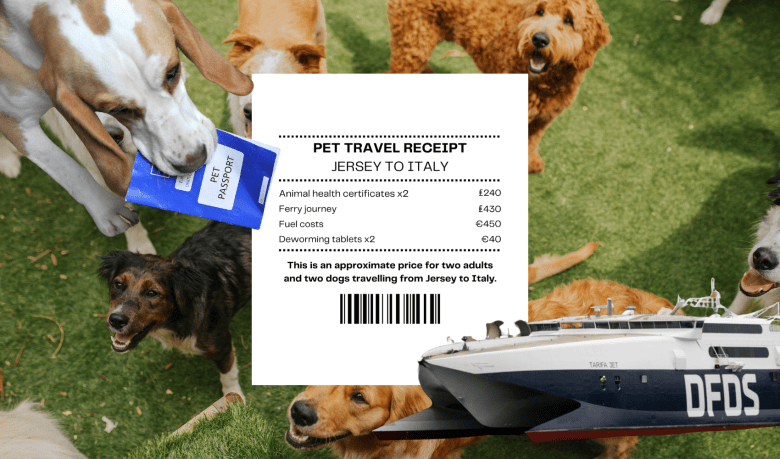
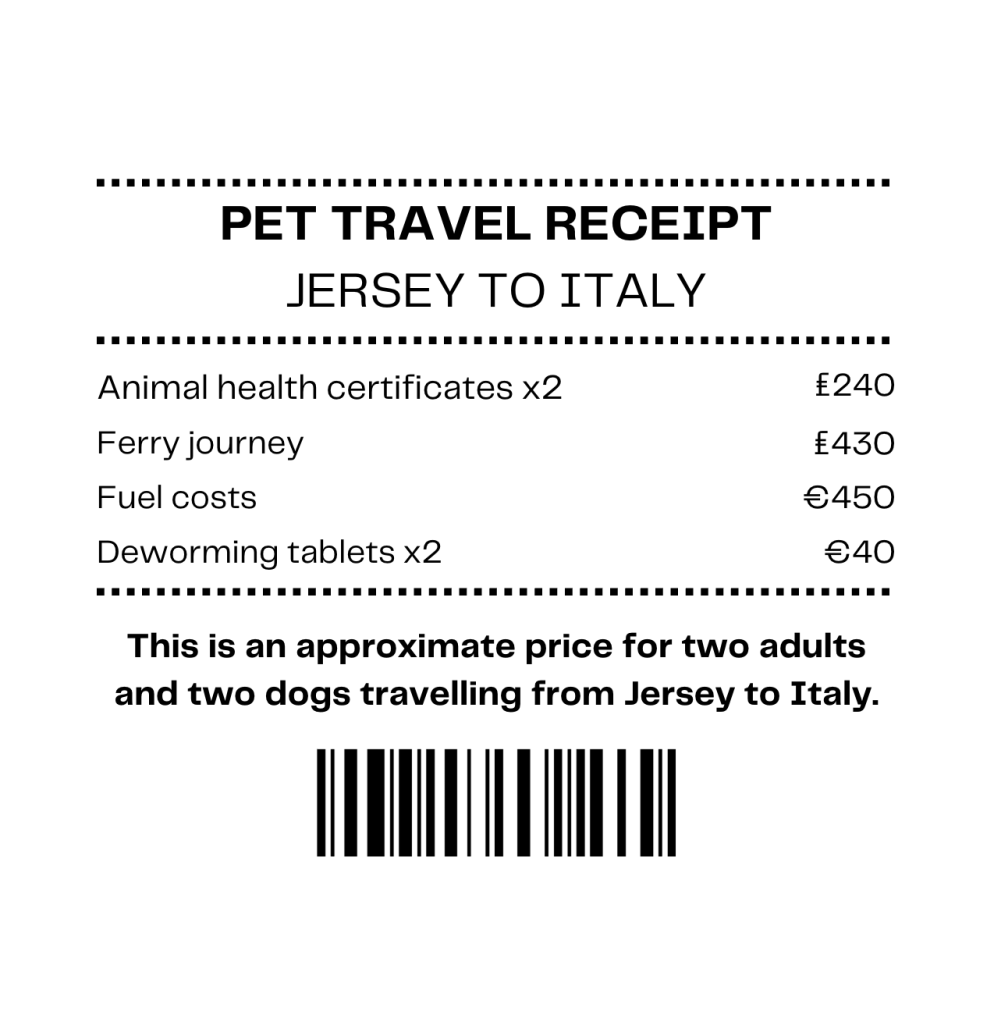
She said she was quoted £170 for an Animal Health Certificate for her first dog, with a reduced fee of £70 for her second. That is before travel costs are even considered.
Taking two dogs on the ferry with DFDS costs £80 return, while a sample return sailing for two adults to St Malo was around £350. Adding pets immediately raised the total to approximately £430.
From there, Lucy and her family still face the long drive from St Malo to Italy, with fuel costs estimated at around €450 for the return journey.
There are also mandatory deworming treatments required before returning to Jersey, typically costing around £20 per tablet from a European veterinary clinic.
Lucy said a cancelled ferry sailing once forced her to repeat the treatment because the required travel window had expired.
The experience left her worried not only about the expense but also about repeatedly medicating her dog in a short space of time.
Accommodation during the drive adds another unavoidable expense.
“How can you justify spending this much?”
Altogether, Lucy estimated that a return trip for two adults and two dogs between Jersey and Italy costs around £790 before factoring in hotels, meals or other additional spending.
“You could buy a trip to Spain, and an all-inclusive hotel at this price,” she said.
“If you want the freedom to go and come back whenever you like, without waiting, you need to pay around £175 every four months.
“How can you justify spending this much to go over to Europe if you had an emergency?
“And how can I be there in an emergency when I need these documents 10 days before?
“It looks like they treat people who are going to France like rich people. I’m not going for holidays, I’m going because I need to visit my family.”
“The old method seemed a lot more reasonable”
The issue has sparked widespread reaction online, with many islanders questioning both the cost and necessity of the new process.
John Thomas wrote on Facebook: “We paid over £150 just to have a piece of paper filled out to say we were OK to travel to France. Our dog’s rabies, vaccine, flea, tick and worming medications were all in date, so not needed.
“Travelling back from France, we arranged to visit a vet on the way back to St Malo, and it was €35 for a worming tablet, and they gave our dog a thorough check over at the same time. Anything in Jersey, unfortunately, is daylight robbery.”
Annie Brown added: “It costs us £200 for a health certificate! It’s very expensive for dog owners.”
Chris Hackett said: “I’ve just got off the phone with the vets, regarding taking my dogs to France on a holiday with us. £68 per dog for rabies infection and £110 per dog for a travel letter that lasts three months. £356 – that’s with the veterinary charge on the way back.
“Seems very expensive. The old method of £90 per year for a dog passport seemed a lot more reasonable. Are all vets charging these prices?”
Many owners highlighted that their pets now cost more to transport than they do themselves.
There may, however, be some signs of relief ahead.
New Era Veterinary Hospital recently announced that the States Veterinary department had enabled much of the lengthy paperwork process to be completed electronically, which could simplify the application process and potentially reduce costs in future.
