
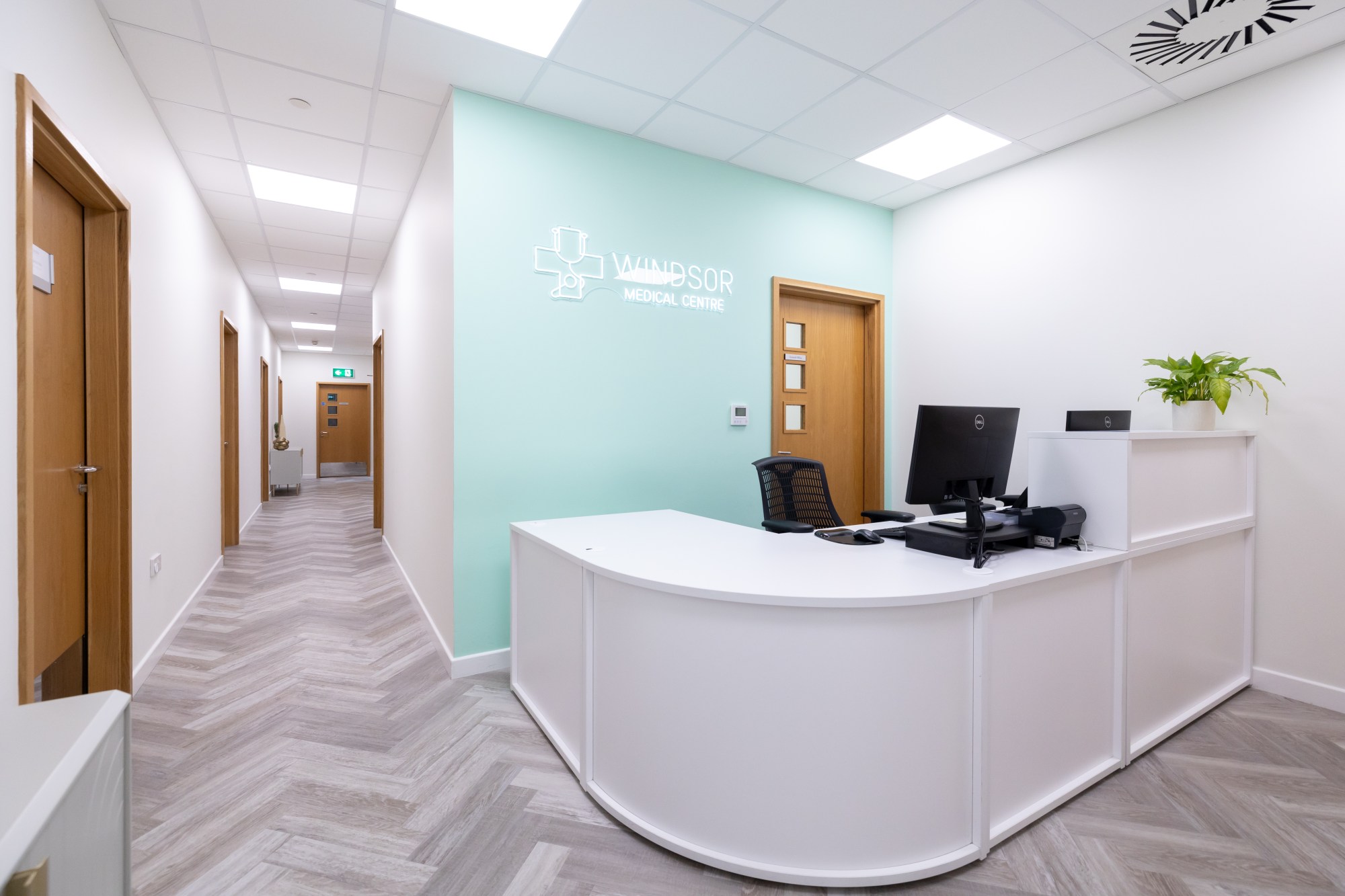

A St Helier medical practice has become the first in Jersey to permanently offer free doctor appointments to stop islanders’ finances from being a barrier to good healthcare in a move that has been warmly welcomed by one Minister. But how are they funding the move? What will the impact be? And could other clinics follow suit?
Windsor Medical Clinic, located at the Lido Medical Centre, announced today that consultations with its GPs will now be free for all existing patients, and for up to 1,000 new patients on a first-come, first-served basis.
Dr Jane Holloran, who recently joined the team, told Express that the arrangement will be permanent.
She said that it is possible for the clinic to balance its books, while still making appointments free-of-charge and that, by doing so, the clinic hoped to improve early access to care and help prevent serious health problems from developing.
Fine fears as islanders swerve GPs
The Jersey Opinions and Lifestyle Survey, published in the thrust of the cost-of-living crisis in 2022, found that 41% of adults respondents had skipped GP appointments because of cost.
At the same time, the island’s Emergency Department is under significant strain.
The Health Department has in recent years been forced to issue numerous alerts to islanders with coughs, colds and viruses to keep clear of the hospital and instead make an appointment with their GP due to high demand.
Revealing that as many as half of all attendances at the Emergency Department last year were for minor illness, equating to around 28,000 in total, Health Minister Tom Binet said earlier this year that the situation was now so serious that fines for islanders who attend the Emergency Department instead of their GP for non-urgent care were under consideration.
“As a GP, I’ve seen people delay coming to see me because of financial reasons,” Dr Holloran told Express this morning. “Their condition worsens, and had they come sooner, the outcome would have been better.”

“No one should have to put their health at risk because they can’t afford to see a doctor,” she continued. “We want a service that’s accessible to all.”
How is this being funded?
GP practices on the island are privately owned, so they make their own decisions on pricing.
They are, however, subsidised by Government.
Last year, for example, Government funding increased by £10, which allowed prices for adults to to come down.
But Dr Holloran said that Windsor Medical Clinic was actually able to sustain itself through Government funding alone – and would be able to balance the books without charging patients directly.
The model has been costed to ensure doctors are still paid fairly while the service remains free for patients, she said.
“Obviously as a business, we’ve looked at our model, and we feel that actually it’s affordable based on what we get from the government,” Dr Holloran told Express.
“There was a small charge which patients were paying [previously], but, having looked at it, we feel that it’s going to be sustainable and we’ll still be able to offer an excellent service – and it will be free to our patients, which means they won’t be avoiding coming to see us… It’s going to be positive for our patients and Jersey as a whole.”
To prepare from the increased demand they expect, she said that the team had grown.
“I’m a new GP that has been brought on board. We’ve expanded so that we can actually deal with new patients, because we don’t want our existing patients to suffer.
She also said there would be no limit on the number of appointments available per patient.
In fact, Dr Holloran said that the clinic wants to “encourage our patients to attend four times a year for a free health check to things before they actually happen, and as a preventative measure, rather than treating when somebody actually becomes ill”.
Will others follow suit?
Reform Jersey leader Deputy Sam Mézec, who has previously called for free GP care, welcomed the announcement.
“When we began campaigning to make GP appointments free, we were told it was a silly socialist idea that wouldn’t work,” he said.

“Now a private practice is volunteering to make all appointments free of charge because they believe that the cost puts people off getting healthcare when they need it and encourages people to misuse A&E instead.”
Praising Windsor Medical Practice for the “fantastic progressive initiative”, he said he hoped “more practices will follow suit and one day we can celebrate being an Island where healthcare is free at the point of need for all.”
The move also echoes sentiments expressed by the then-Jersey-based Intensive Care medic, Anaesthetist, and former Deputy Medical Director Dr Paul Hughes in an Express interview back in 2021.
Reflecting on the year since the pandemic outbreak, he spoke about how healthcare inequality had become exposed as a result of covid-19. He called for Jersey to consider building a National Health Service-style model to address that gap in access.
Referring to themes explored in Nye Bevan’s 1948 work, ‘In Place of Fear’, in which he lays out a vision for a National Health Service, Dr Hughes said: “He talks about it being a fundamental part of society, and how can a decent society not accept that everyone should have access to health? It’s not a commodity.
“If you can’t do it on such a wealthy island like Jersey with really great facilities, there’s something wrong with the way the conversation is happening in public. I think sometimes we’re getting a bit distracted with the ‘hospital on the hill’ and all the noise around it, but actually there’s a real opportunity to get this social conversation going.”
What will Jersey’s GP needs be like in future?
Jersey is expected to see a sharp rise in demand for GP appointments over the coming decades – with an extra 43,520 appointments needed by 2053 that could cost an extra £1.4 million per year.
Current Public Health Director Peter Bradley said this was why investment in prevention and early help was vital.

“We can absolutely ensure that our really crucial primary care services are used in the best possible way, and if we invested more in prevention, we’re not going to see the rise that we’re predicting in the report,” he said.
“That’s really only going to happen if we don’t make the choice to look at prevention now.”
