

Jersey is expected to see a sharp rise in demand for GP appointments over the coming decades, according to the Director of Public Health — with an extra 43,520 appointments needed by 2053 that could cost an extra £1.4 million per year.
Public Health has warned that the island’s ageing population and increasing rates of preventable illnesses are putting growing pressure on healthcare services.
In the Annual Director of Public Health Report 2024, Professor Peter Bradley makes a case for investing in prevention to ease the anticipated pressure on GPs and associated costs.
“Investing in prevention is not only good for islanders but is also one of the most effective ways to reduce pressure on healthcare services by creating a healthier population,” Professor Bradley said.
Speaking at a media briefing, the Public Health Director warned that without action, primary care could struggle to cope.
“But what we’re really saying in this report is we can do something about this,” he said.
Previous analysis suggested that dementia and heart failure rates in Jersey will dramatically increase over the next two decades.
He said: “We can absolutely ensure that our really crucial primary care services are used in the best possible way, and if we invested more in prevention, we’re not going to see the rise that we’re predicting in the report.
“That’s really only going to happen if we don’t make the choice to look at prevention now.”
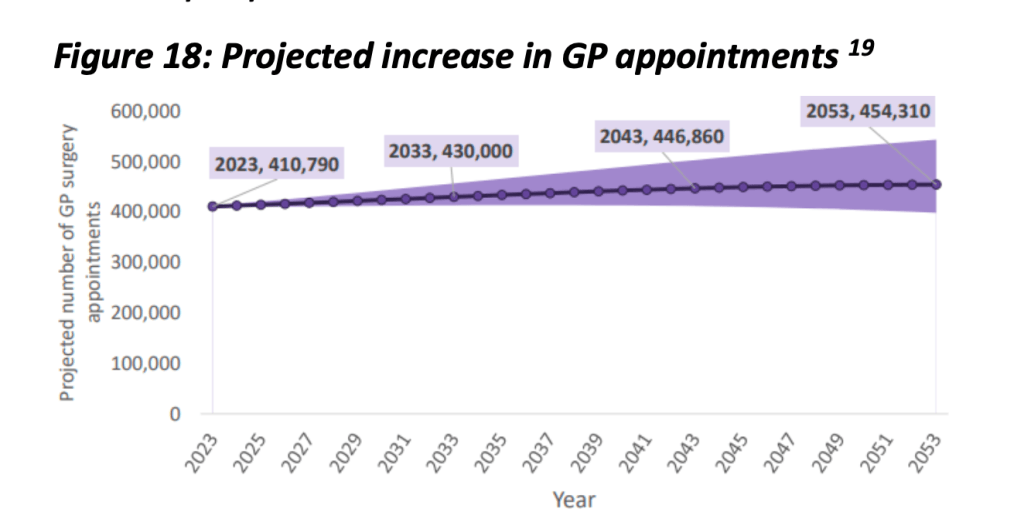
Pictured: Public Health expects Jersey will need an estimated 43,520 extra GP appointments days by 2053. (Public Health)
He pointed to conditions like type 2 diabetes, which require frequent medical follow-ups, as an area where prevention could make a difference.
He said: “If we look at diabetes… that is a condition that is entirely preventable for a lot of people.
“The amount of follow-up care that’s needed in primary care and also in the hospital for a condition like that is considerable.
“So if we’re able to give people the advice that they’re able to to prevent that diagnosis, that in itself, would prevent a lot of activity.”
Public health consultant Rob Marr explained efforts were already underway to improve diabetes prevention, with a new food and nutrition strategy being developed.

“One of the biggest risks for diabetes is the quality of the food you eat,” he said. “The public health team are in the process of updating a food and nutrition strategy that expired in the covid pandemic into a food and nutrition framework, and part of that looks at a diabetes prevention programme.
“So that’s something we’re currently examining and hoping to put in place. But we’re also looking at how we can improve the food environment on the island so that it’s easier for more people to eat well, more of the time.
“It’s just worth pointing out, this isn’t about being a nanny state. This isn’t telling people what to do. This is about making it easier for those people who want to look after their health.”
The report warns that without a stronger focus on prevention, the island will face rising healthcare costs and increasing demand for services.

An 11% rise in GP appointments alone could cost an extra £1.4 million per year.
Jersey already spends at least £576 million a year on healthcare, including £165 million on health-related benefits and over £400 million on hospital services.
The report suggests that even small reductions in preventable illnesses could lead to significant savings.
Public health officer Margi Clarke said: “We know from our figures that we’re already spending over half a billion pounds on ill health in 2023.
“We also know that from those increases, we can anticipate an increase in healthcare usage. So for example, there are increases in GP appointments and hospital bed days as well.
“We know that we aren’t necessarily as healthy as we used to be, as demonstrated through increasing obesity trends.
“We’re advocating here for prevention, because we know that what we’re projecting is not sustainable.”
The report calls for a shift in focus from treating illness to preventing it, highlighting the role of factors like housing, income, and access to healthy food in shaping public health.
