


Before 2020, Jane Fulton had taken three sick days off work in 40 years. One week after she got her covid vaccine, she woke up from a coma in hospital – paralysed from the eyebrows down.
Five years later, Jane has still not fully recovered, and says her life “will never be the same again”. But she can’t claim compensation for what happened because she doesn’t meet the threshold to be “at least 60% disabled”.
“I wasn’t reluctant to get jabbed,” said Jane. “I’m by no means anti-vax.
“I’ve had loads of jabs in the past to go to India, to go to Mexico, for tetanus, polio, flu, typhoid, yellow fever, you name it – and I’ve never once had a reaction.”
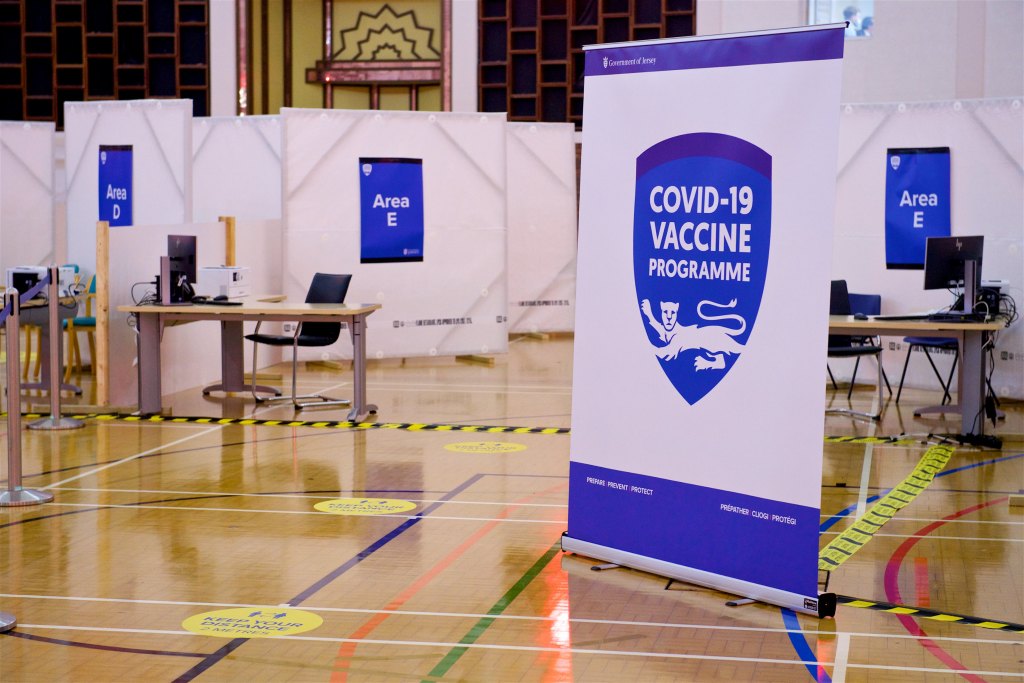
In 2020, Jane headed up to Fort Regent to get her covid vaccine alongside thousands of other islanders without a second thought.
“The following weekend, I started feeling just a bit odd,” she said.
“I couldn’t put my foot on it but I thought, there’s something not right.”
Jane was working from home at the time, and suddenly found that she was unable to get up off her chair.
Luckily, one of Jane’s friends was a doctor who lived nearby.
He took her blood pressure – which was “through the roof” – and then Jane was bundled in her husband’s van and taken straight to the Emergency Department.
But four hours later, Jane was dismissed and sent home with a “backache”.
“The next morning, I woke up and I was like two strands of spaghetti,” she said.
“I phoned another doctor, and he came down to the house, made me do some movements, and called an ambulance right away.”
Jane was taken to the Emergency Department for the second time in less than 24 hours – but this time, she was admitted to a ward.
After a variety of tests, Jane was asked when she had her covid vaccine. At that point, around eight days had passed – and she hadn’t made the connection.
“The doctor said: ‘We think you’ve got Guillain-Barré syndrome.’,” she explained.
At that point, Jane had no idea what it was – and no idea how much it was going to change her life.
Guillain-Barré syndrome is a rare condition that occurs when the immune system attacks the nervous system.
It can be triggered by bacterial and viral infections and, in some cases, vaccines.
A correlation between a first dose of the AstraZeneca vaccine and a small but significant rise in cases of Guillain-Barré syndrome has been identified by UCL scientists, as part of an analysis of NHS data.
There were 5.8 excess cases of Guillain-Barré syndrome per million doses of vaccine following a first dose AstraZeneca vaccine – which is what Jane had.
First-dose Pfizer and Moderna, and second-dose of any vaccination showed no excess Guillain-Barré syndrome risk.
Documents seen by Express confirm Jane’s official diagnosis as “Guillain-Barré syndrome following first dose of AstraZeneca covid vaccine”.
But by the time medics worked out this was what was wrong with her, Jane’s lung function was down to 20% and her other organs were on the verge of failure.
She was told she was going to be put in an induced coma, and the next thing Jane remembers was hearing: “Jane, can you open your eyes? Can you hear me?”
“I woke up and there were all these faces looking down at me,” she said.
“I thought I’d fainted in front of everyone.”
Jane thought seconds had passed – but it had actually been five days.
“I was told I wouldn’t be able to speak or move,” she explained.
“At first I thought they’d strapped me to the bed and put something on my mouth to stop me swearing or something – but I was totally paralyzed from the eyebrows down.”
Jane had to communicate by blinking: a long blink for “no”, and a quick blink for “yes”.
“I couldn’t eat anything,” she said.
“They gave me a tracheotomy to help me breathe, and I was in hospital for 119 days.”

It was only later on that Jane found out how close she had come to dying.
“My husband thought I was going to die,” she said. “Everyone thought I wasn’t going to pull through.
She was in intensive care for almost three weeks, and had six blood transplants.
But slowly, her movement started coming back.
Jane said: “I remember having a little celebration in hospital because I could finally lift my arm to scratch my nose.
“Honestly, you don’t realise how you take something for granted until you can’t do it anymore.
“It was very difficult trying to use sign language to ask the poor nurse to scratch my itchy nose.”
But even when Jane left hospital, the impact on her day-to-day life continued.
She was forced to move from her upstairs flat because of the fear of being unable to use the lift in a fire, and couldn’t close her eyes in the shower to wash her hair or she would lose her balance.
Jane said: “The worst part was when my nerves started to get better and wanted to join together again.
“You’ve got two raw nerve ends touching one another, and if they touch the wrong area, it’s like the biggest electric shock you could ever get.
“The pain was unbelievable. Even now I still get twinges, and that’s four years down the line.”

The impact has extended beyond just Jane. She sees the impact on her husband every day too.
“It was horrible for him to have to see me like that, and it still affects him – he’s not the same person he was before,” she said.
“But luckily, I’ve got a really positive attitude, and I just get on with it.”
But Jane’s positive attitude has actually been detrimental in some ways. She attributes her determination to get better as one of the reasons why she now doesn’t meet the “60% disabled” threshold required to claim compensation.
Jane was initially told to claim compensation through the UK government’s ‘Vaccine Damage Payment Scheme’.
Covid-19 injections were added to this scheme, which enables those harmed by listed vaccines to access a one-off tax-free payment of up to £120,000, in December 2020.
But, at the time, Jersey and Guernsey were not included in the scheme – and Jane was told she was not eligible for compensation because she was “injected in Jersey and not in the UK”.
“They told me to go to the UK [to claim compensation], knowing damn well that there was nothing set up for Jersey residents,” said Jane.
Jersey was finally added to the Vaccine Damage Payment Scheme on 13 May 2024.
According to the Government of Jersey’s website, “disablement is worked out as a percentage”.
It states: “Severely disabled means at least 60% disabled. This could be a mental or physical disablement.
“It’ll be based on medical evidence from the doctors or hospitals involved in your treatment.”
Jane has been told that she is “not disabled enough” to meet this threshold – but was critical of the fact that her case was assessed through a desktop survey, not a comprehensive in-person examination.
“I could have just laid down and done nothing at all to be permanently in bed and not able to do anything. But that’s not me, that’s not me at all,” she said.
Jane explained that her active approach to recovery actually worked against her compensation claim.
She said: “There was a guy I was in contact with two months into my hospital stay.
“He’s in the UK, and he got Guillain-Barré syndrome through the injection too. And he said: ‘Jane, don’t try and get well too quickly, because you won’t get any compensation.’
“But I just want to be me again. I want to be able to get out of bed, and stand and do whatever I want to do.
“He’s now in a wheelchair because he didn’t push himself [to get better], and he’ll never walk again.
“He’s got to be fed, he’s got to be washed and cleaned. And yes, he got £85,000 compensation – but is it worth it?”
When contacted by Express, a spokesperson from Jersey’s Health Department said: “Health and Care Jersey are contracted with the NHS’ Vaccine Damage Payment Scheme to accept claims from Jersey residents.
“The UK Parliament established this national scheme and set the criteria regarding disablement under UK legislation. Jersey follows this national scheme.
“Jersey’s Director of Public Health reviews each assessment and recommends whether to uphold the claim based on the Vaccine Damage Payment Scheme’s medical assessment.”
For Jane, it isn’t about the money. She just wants people to listen and care – and the Government to “stand up and take account”.
“This is all because I went in good faith to get that injection,” she said.
“If someone had told me that there was a risk that this could happen to me, I would certainly have thought twice about it.
“I wouldn’t wish this on anyone. I know it is a very rare thing, but I hadn’t known that there was any connection at all between the vaccination and Guillain-Barré syndrome, and I feel that I should have at least been aware of it.”
Jane added: “I just think it should be recognised that the injection actually did disable people.
“I feel sorry for all the other people that have been damaged by it.”
And she wants the Government to “be more helpful and listen to people a bit more”.
“They just don’t care,” she said.
“You just get the feeling they just want you to go away. They’re not interested in what anybody says.”
But although she feels that the Government doesn’t want to listen, Jane has felt a shift in opinion from her fellow islanders.
When her husband first told people about her illness, many were dismissive and didn’t believe the vaccine could cause such serious side effects.
But now, people who previously doubted her are saying to her husband: “I think you were right”.
Jane believes there’s a growing recognition that the vaccine “wasn’t as great as everyone thought”.
She said: “The more you speak to people now, the more willing they are to listen.”
