

The government is exploring new ways of improving ferry and air links between Jersey and Guernsey – but has warned that any financial support must represent value for taxpayers.
The issue was raised by Deputy Karen Wilson in a written question to Economic Development Minister Gerald Voisin, who was asked what options were being considered to improve inter-island passenger and freight connectivity.
The minister said he had held “positive discussions” with his Guernsey counterpart and that both islands were aligned on the need to work with ferry operators to identify opportunities to improve connectivity.
Options currently being considered include services operated by the islands’ principal ferry companies, alongside potential involvement from the wider maritime industry.
The minister said he was also interested in “innovative solutions” which could combine passenger services with sufficient vehicle capacity when required.
Discussions over inter-island travel have been tense since Guernsey pulled out of a joint tender process for ferry services and the the two islands signed contracts with separate operators.
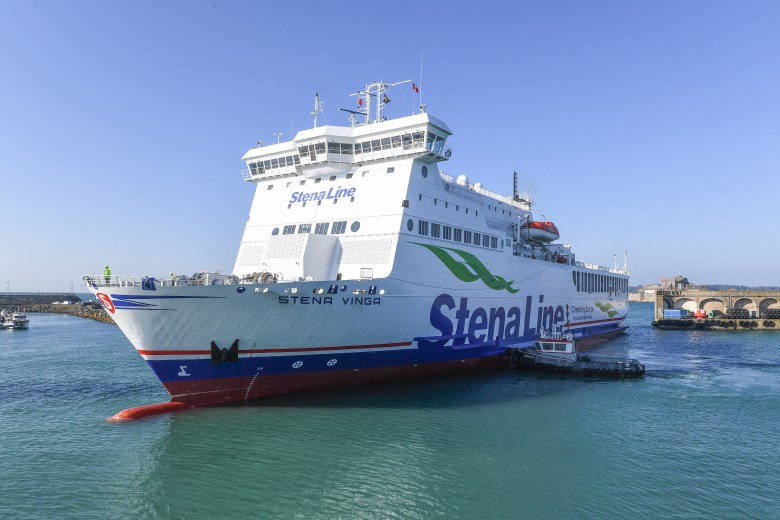
This summer, DFDS had proposed a regular service between the islands using the Stena Vinga vessel. The proposal would have seen the ferry arrive in Guernsey from Jersey on Friday evenings, returning late on Monday afternoons.
However, Guernsey’s Economic Development Minister Sasha Kazantzeva-Miller said that that the Friday sailing was “not acceptable” because the ship would only arrive after the Ports of Guernsey closed.
Criticism has been levelled at both governments over the lack of travel options following the ferry dispute.
Responding to Deputy Wilson, Deputy Voisin said that the government has not ruled out providing financial support to help establish or maintain an inter-island service.
Deputy Voisin said: “Demand for inter-island travel has, in recent years, not been especially strong, particularly outside the peak visitor season.
“For example, during DFDS’s high-speed inter-island trial in 2025, passenger volumes were reported to be significantly below commercially sustainable levels. Any investment in services must represent value for taxpayers’ money.
“As we continue to examine sustainable options in Jersey, and with our partners in Guernsey, any financial support, and our approach to it, remain under evaluation.”
The minister also confirmed that the government’s existing concession agreement with DFDS does not cover inter-island services.
The agreement, he said, is primarily focused on Jersey’s freight supply chain and its core passenger routes to the UK and France.
“I would prefer first to see market-led solutions over further government contract expansion or regulation but I am of course prepared to consider any approach which secures sustainable inter-island connectivity,” Deputy Voisin continued.
The government is also considering whether there could be opportunities to increase competition in the air market.
The minister said discussions would continue with Guernsey over its Air Route Licensing framework and whether additional operators could improve capacity and connectivity.
Guernsey’s Transport Licensing Authority – which is responsible for deciding which airlines can operate different routes – rejected Loganair’s bid to provide the “essential route” between Jersey and Guernsey.
