


Several historical artefacts went on display at St John Parish Hall this weekend as part of a exhibition marking the 80th anniversary of the island’s liberation.
Maritime items that were present at some of Jersey’s most notable moments during and after the Occupation have been loaned to the parish by Ports of Jersey.
One of the items on display is ‘Navigation Buoy No.1’ – one of the first of the new ‘ballasted’ Type II navigation buoys to arrive in Jersey, where it has been operational since 1929.

Constructed of a riveted steel plate and originally carrying a heavy bronze bell, it was stationed on the La Raudière mark.
It is also the only working buoy to retain its original wooden waterline fendering.
The bouy was stationed at St Helier’s Hinguette mark from June 1940 to September 1941, and would have been used as the last primary port mark by the occupying forces as they approached St Helier harbour at the start of the Occupation.
Following repairs after an incident in 1942, the buoy was fitted with a German provided light and placed on station by a German vessel on the Raudière mark in July 1943, where it remained until September 1945.
It would have been used by the SS Vega as she made her final approach into St Helier on 30 December 1944, carring lifesaving Red Cross parcels for the island’s population.
The buoy would have also been used by the liberating naval forces as they approached St Helier on 9 May 1945.
Today, it is painted yellow and dressed with a North cardinal top mark.
The upcoming exhibition in St John will mark the first time in its 96 years of service that the bouy has ever been placed more than 50 metres away from the sea.
It is due to be placed on the Passage Rock station later this summer.
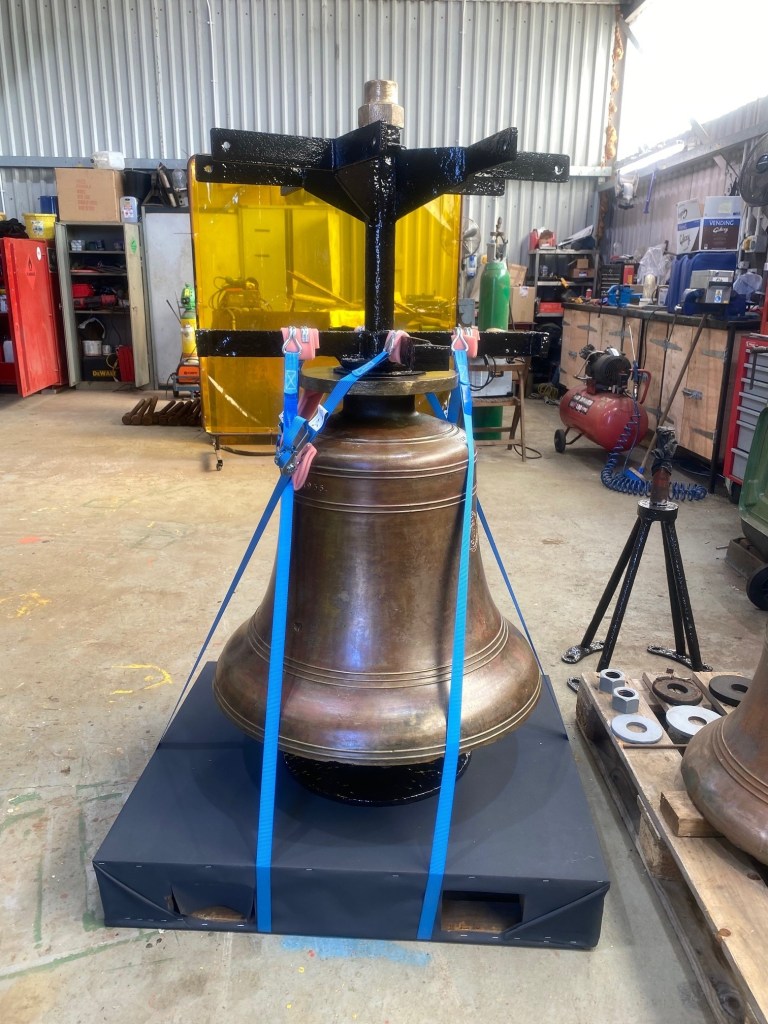
Another item on display at St John Parish Hall is a 1935 fog bell, which suffered the impact of a projectile.
It has been loaned by Ports of Jersey from the Maritime Museum.
Thought to have been located on Noirmont Tower during the Occupation, the navigation bell is the only one of its kind still in Ports of Jersey’s care that is complete with four hammers.
Visitors to St John’s Parish Hall will see the bell has three distinguishing marks, which show that it has suffered from the direct impact of a projectile – although the date of that is unclear.
Together with the artefacts, two handwritten ledgers – written accounts – will also be displayed.
These show information about the navigation aids, and the people responsible for maintaining them under German command.
The historic documents – also owned by Ports of Jersey – record the efforts made by the harbour workforce and the duties requested of them, providing a glimpse into their lives during the Occupation.
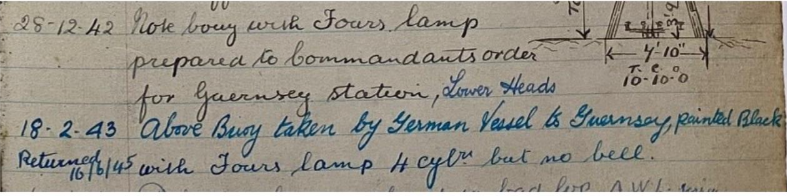
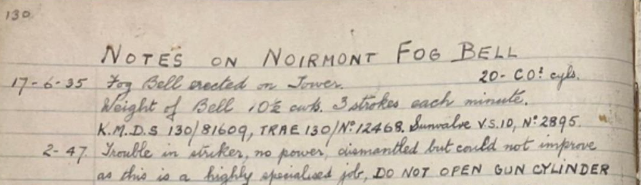
Harbour Master Captain Bill Sadler said he hoped islanders would enjoy visiting the exhibition.
“We are pleased to loan these important artefacts to be part of an exhibition that portrays the liberation of Jersey from Germain occupation 80 years ago,” he said.
“We hope as many people as possible will enjoy finding out how our predecessors at the harbour managed these difficult times.”

Leading provider of trust, corporate and fund administration solutions VG is proud to support Bailiwick Express's Liberation 80 coverage.
