

The proposals include demolishing 13 polytunnels and two disused glasshouses, at the site on Grande Route de St. Clement, and constructing a barn containing two two-bed apartments, as well as converting the existing main farmhouse to create four one- and two two bedroom apartments.
One outbuilding will be converted into a two-bedroom home, three three-bedroom properties, and one four-bedroom house. Another will be changed into a three-bedroom home.
The application is separate from and unconnected to the family-owned Homefields fresh produce wholesaler and farm shop, which is on a nearby site and will continue to trade as normal.
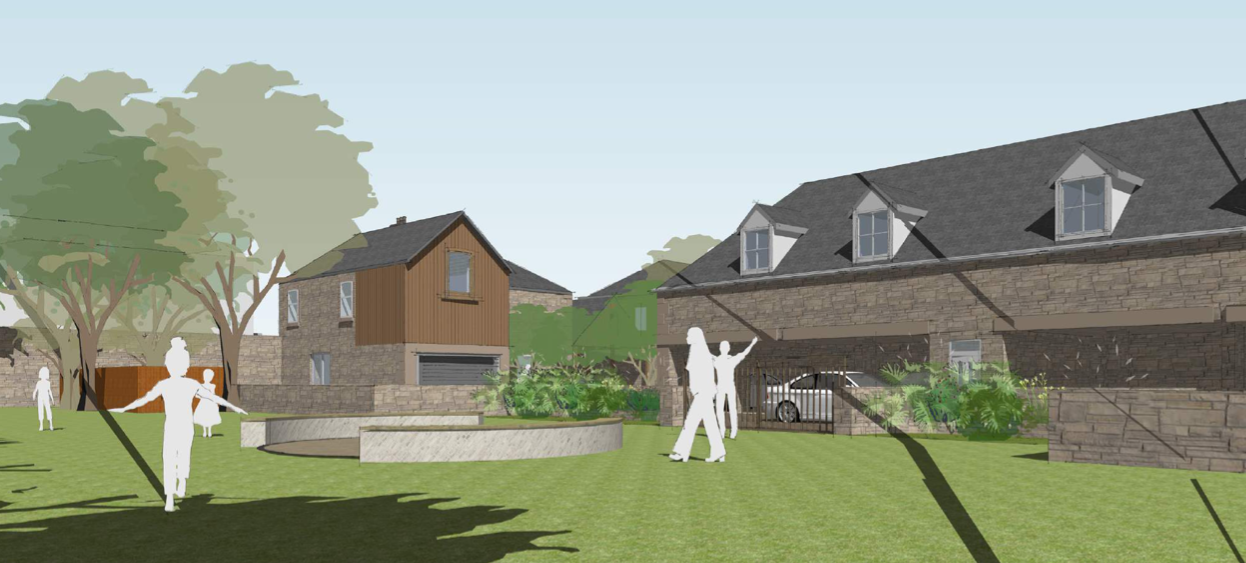
Pictured: An artist’s impression of the proposed development (Credit, and main image: Axis Mason).
In an assessment report published by the Planning officer in charge of the application, they said that permission was granted taking into account the relevant policies of the Bridging Island Plan 2022. However, a number of conditions were attached as part of the approved application.
This included a percentage for art agreement, an updated site-waste management plan and disposal plans for both foul and surface water.
The application also received a number of public comments praising the decision to reinvent a site which has been out of use for a number of years.
In a design statement submitted to the planning website on behalf of the applicant by architects Axis Mason, they said that the regeneration aimed to
“bring new life” to what was a “largely disused site”.
“The proposed refurbishment of Homefields intends to regenerate the site, by providing a local and community-focused residential development, while still maintaining the integrity and historic uses of the existing buildings on site.
“Without investment and refurbishment, these listed buildings will fall further into disrepair. The proposed regeneration of the site will help provide homes in the countryside, without having to develop greenfields sites,” they said.
“The reinstatement and enhancement of the existing listed buildings further protects the character of the countryside, by accommodating the modern need for housing within a traditional setting,” they added.
Pictured: The main house will be converted to four one- and two-bedroom apartments, if planning agree. (Google Maps)
Part of the plans also includes demolishing the polytunnels on field 230A and returning the land to agricultural use.
“The removal of the disused and dilapidated polytunnels, and return of the land to agricultrual use, further reinforces the site of its countryside character, while enhancing the overall aesthetic of the site.
“The removal of the glasshouses and swimming pool enclosure also allows for increased landscaped area, which further complements the traditional countryside location,” they said.
