

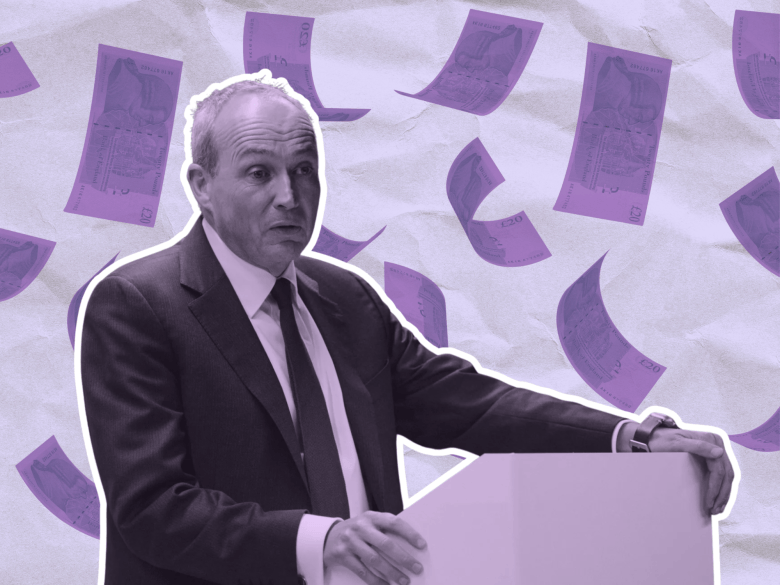
The government said consultants are now used only as a “last resort” as a new spending breakdown reveals hundreds of thousands of pounds are being poured into external advice on projects ranging from pensions and healthcare to digital systems and major infrastructure.
The report shows a 54% fall in external workforce costs from £82.8 million in 2023, to £38m last year.
Chief Minister Lyndon Farnham said he was pleased that the culture in government around recruitment issues had shifted from being a default response to a “last resort”.
After taking the reins in January 2024 following the vote of no confidence in his predecessor, Deputy Farnham and fellow ministers have been focused on reducing staffing costs.
Tighter controls on third-party spending were introduced in mid-2024, with a drive to reduce the reliance on external support and to improve the way staff are recruited and retained.
Among the highest-value consultancy contracts were:
- Up to £700,000–£750,000 paid to Deloitte for a major “Integrated Technology Solution – Delivery Partner & Licences” programme
- Between £400,000–£450,000 spent with KPMG on “Project Denali” linked to sea connectivity
- Up to £350,000–£400,000 to a public safety sector recruitment agency linked to Operation Spire, the investigation into the explosion at Haut du Mont in December 2022
- Between £300,000–£350,000 on external support for the “Revenue Transformation Programme”
- Around £250,000–£300,000 for healthcare facilities work by Ernst & Young
- A further £200,000–£250,000 with KPMG on a financial recovery programme within Health and Care Jersey
- Between £175,000–£200,000 to executive recruitment company Odgers Berndtson to seek an interim director role within Children, Young People, Education and Skills
But the report showed that spending on consultants fell by 69% over two years, while reductions have also been achieved in spending on contingent labour (47%), agency health and social care staff (50%), and other agency staff (53%).
“A stronger and more sustainable public service”
Although he said there hadn’t been a set numerical target for the reduction in external workforce costs, Deputy Farnham said he believed the 54% fall witnessed within two years was “a good start”.
“We’ve managed to curb the growth across these sectors without seeing any detriment to the public service, which I think is important,” he said.
“In particular with agency staff, with the Health Department managing to recruit more permanent staff – it’s a much better scenario as you get much better continuity of care than with rotating agency staff, who are also typically more expensive because they are on day rates.
“This is about building a stronger and more sustainable public service, while making sure we continue to protect the services islanders rely on every day.”
Figures released last month showed that the overall government workforce grew by 153 people across 2025, but that this rise was accounted for by recruitment in frontline positions in health and education, with a decrease of 181 people once these areas were excluded.
The frontline health and education roles were the only ones not subject to a recruitment freeze brought in during 2024.
Deputy Farnham said he agreed with recent comments by government chief executive Dr Andrew McLaughlin that the freeze should remain in place until at least 2030.
“Whoever takes over the new government [following the election in June] must maintain the policy on curbing growth, leaving the restrictions on recruitment and consultancy in place,” he said.
“We don’t want to start undoing the good work, so that would be my very firm advice to the next administration.”
