


The creation of a new dedicated Planning Minister has moved a step closer after legal proposals were lodged to establish the new ministerial office – with the politician nominated for the role having previously described the Island’s planning system as “not fit for purpose”.
The proposals, presented to the States Assembly this week, are the next stage in plans first announced by Chief Minister Lyndon Farnham when he unveiled his ministerial team following the recent election.
Senator Sir Mark Boleat was identified as the preferred candidate for the new portfolio, while planning responsibilities would be split away from the Environment Ministry.
All ministerial appointments have since been confirmed, with Senator Boleat currently serving as Assistant Environment Minister with full delegated powers pending the formal creation of the role.
The Chief Minister is required to give the States Assembly 14 days’ notice before making an order to amend ministerial offices and transfer their responsibilities.
Once that process is complete, States Members will hold an election for the newly created ministerial position.
What will the new Planning Minister do?
According to the report, the dedicated Planning and Regulation Ministry would “focus on planning matters and work to deliver an improved regulatory environment”.
It adds that separating responsibilities will allow the Environment Minister to concentrate on environmental matters while also taking over agriculture and marine responsibilities, which currently sit within Economic Development.
“The separation and reassignment of functions will support a greater focus for each of the ministers on specific areas,” the report states.
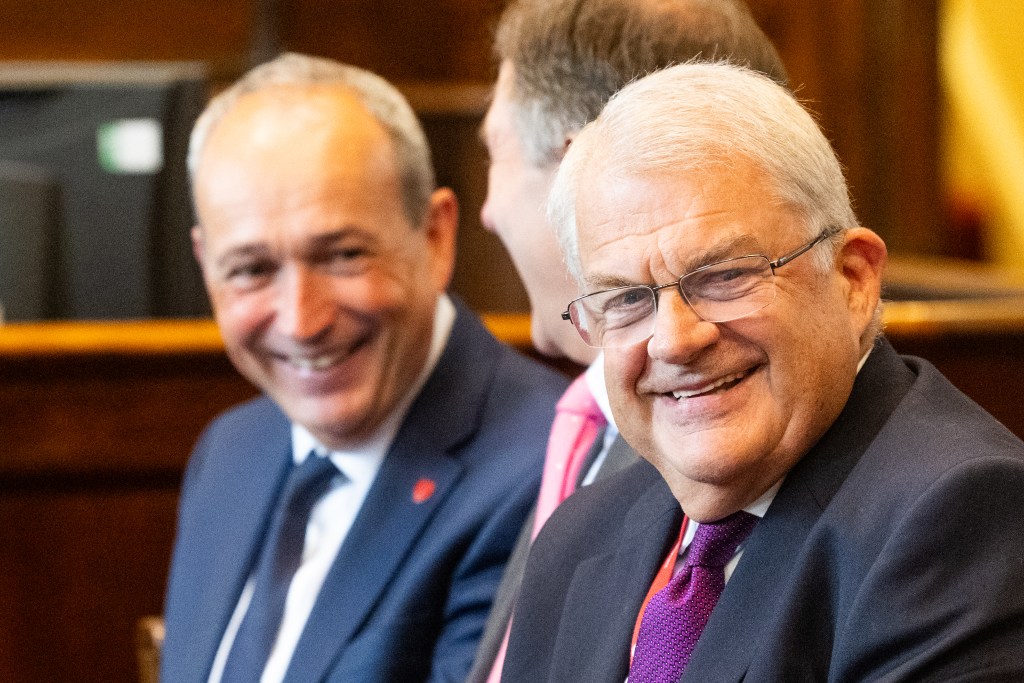
For Islanders, the proposals mean planning applications, building regulations, and a wide range of regulatory responsibilities would no longer sit with the Environment Minister but instead become the responsibility of the new Planning Minister.
The draft order transfers powers under numerous pieces of legislation, including the Planning and Building (Jersey) Law, High Hedges (Jersey) Law, Waste Management (Jersey) Law, Public Health and Safety (Rented Dwellings) Law, and several agricultural and plant health laws.
The new minister would also inherit responsibility for a number of consumer protection and regulatory functions currently exercised by the Economic Development Minister.
These include consumer safety, unfair trading practices, distance selling, weights and measures and price indicators.
Meanwhile, agriculture and fisheries responsibilities would transfer from the Economic Development Minister to the Environment Minister under the proposed changes.
What has Senator Boleat said about planning?
Senator Boleat made clear during the election campaign that he wants to pursue significant reform of Jersey’s planning system.
His manifesto described the current system as “not fit for purpose”, arguing it had become “slow, inflexible and overly complex” and was “a major obstacle for businesses, homeowners and developers”.
Jersey’s planning system is not fit for purpose. It is slow, inflexible and overly complex, and it has become a major obstacle for businesses, homeowners and developers.
Senator Sir Mark Boleat’s election manifesto
He also criticised the continued reliance on the Bridging Island Plan 2022-25, saying: “The fact that we are now well into 2026 and still operating under a bridging plan which is out of date speaks volumes about the system’s failings.”
Senator Boleat argued that Islanders viewed the planning process as “frustrating”, “bureaucratic” and “inefficient”, with decisions often appearing inconsistent and applications requiring excessive paperwork.
Among the reforms he pledged to pursue were:
- amending the existing Bridging Island Plan while preparing a more flexible long-term replacement;
- extending permitted development rights;
- substantially reducing documentation required for planning applications;
- making heritage requirements more proportionate;
- reducing planning conditions attached to approvals; and
- simplifying the planning process to make it more predictable and user-friendly.
Planning reform also featured prominently in his housing proposals. He pledged to “provide more affordable housing through reforms to the planning system, increasing the supply of social housing and developing low-cost home ownership options.”
Elsewhere in his manifesto, Senator Boleat said that “housing must be affordable, healthcare preventive and accessible, and planning responsive to the needs of people and business alike”.
