
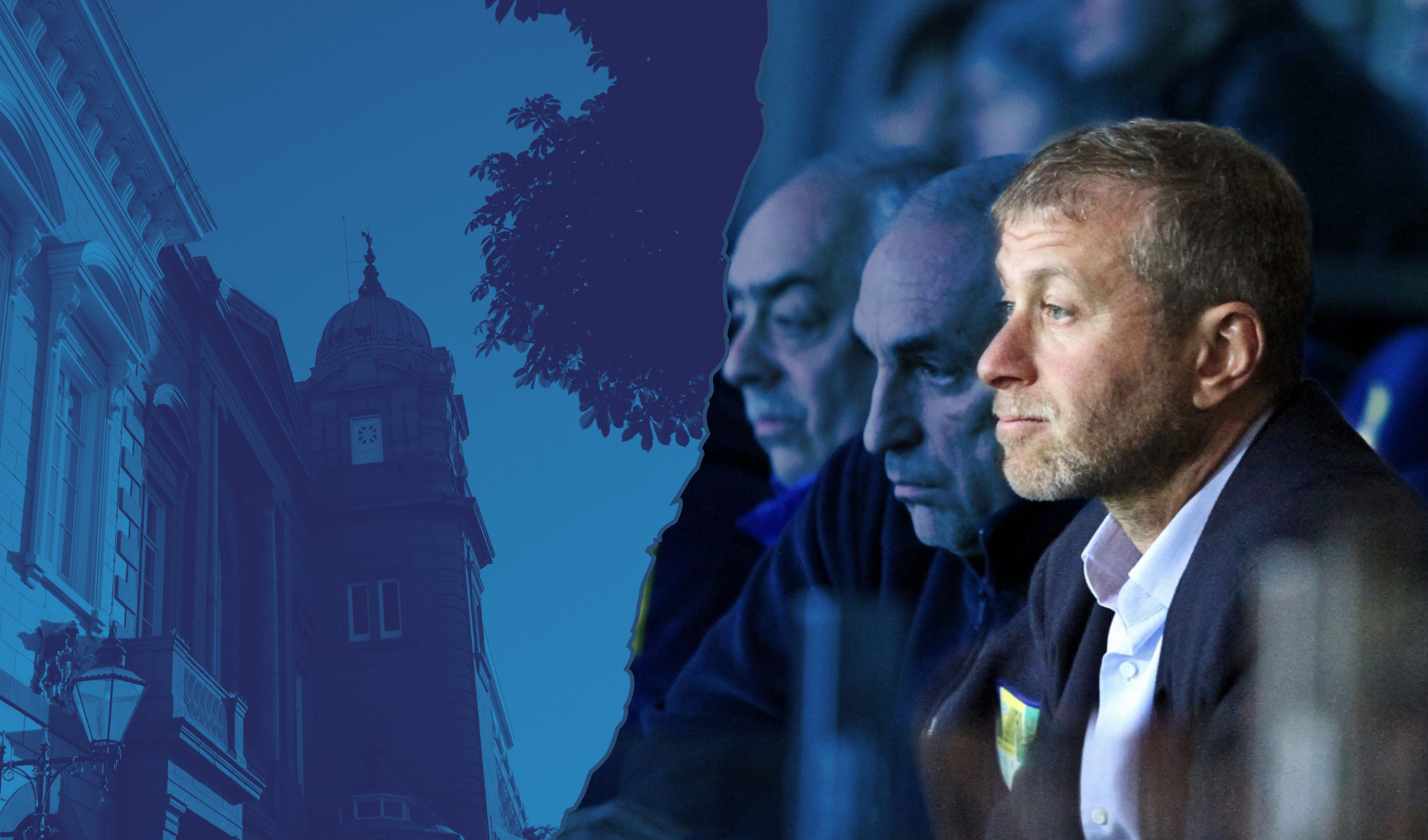

Allowing Jersey court hearings involving Roman Abramovich to be conducted behind-closed-doors was a “substantial derogation from the open justice principle”, the Court of Appeal has ruled in a victory for transparency.
Judgments regarding the Russian billionaire were published yesterday after a gagging order was lifted, meaning that the details of the two-year battle have been made public for the first time.
The documents show how the Court of Appeal ruled that the Royal of Court’s decision to conduct wide-ranging hearings behind closed doors excluded both the public and the media and delayed publication of key rulings.
The judgment said that there had been “a substantial derogation from the open justice principle by the exclusion of the public and the media from the hearings”.
The criticism centred on a procedural choice made by Commissioner Sir Michael Birt, who had concluded that because part of the case – an application for ‘production orders’, orders that certain material should be disclosed in a legal case – had to be held in private, the entire combined case should also take place behind closed doors.
The “eyes and ears of the public”
The Court of Appeal said that it was “unfortunate” that the Commissioner did not consider the wider impact on open justice.
It said: “With the benefit of hindsight, it is unfortunate that consideration does not appear to have been given at that stage to the legitimate interests of the media, as the eyes and ears of the public at large, and their role in supporting the open justice principle.”
In future, the court said, steps should be taken to notify media representatives so that they can make representations before any such decision is made.
It is unfortunate that consideration does not appear to have been given at that stage to the legitimate interests of the media, as the eyes and ears of the public at large, and their role in supporting the open justice principle
court of appeals judgment
It followed representations from All Island Media – parent company of Express and the JEP – arguing that it was in the public interest for the case to be heard openly.
Editor-in-chief and chief executive James Filleul said: “We welcome confirmation from the Court of Appeal about the importance of the principle of open justice.
“The media here have a long history of court reporting, which essentially means acting as the eyes and ears of the public as to what goes on in our court, and then reporting that accurately within established rules.
“It is a vital part of local journalism, and one which we will continue to champion, as we have done throughout this case.”
Abramovich to pay Attorney General’s legal costs
The newly published court documents following the lifting of the gagging order also show that attempts by Mr Abramovich to overturn Jersey’s earlier rulings have been thrown out – and the former Chelsea football club owner and his daughter Anna have been ordered to foot the bill for Island’s legal costs in the proceedings.
In a statement yesterday, a spokesperson for the Law Officers’ Department said: “The Attorney General is pleased that the Judicial Committee of the Privy Council has refused applications by Roman Abramovich and Anna Abramovich for permission to appeal… and ordered them to pay the Attorney General’s costs.”
The Department also confirmed that the wider criminal investigation into Mr Abramovich remains “live”.
Further accusations against Jersey
Last week, Mr Abramovich accused Jersey authorities of “paralysing” his company structures and blocking the release of money he pledged to donate to those affected by the Ukraine war.
A spokesperson for the oligarch then issued a statement this weekend confirming his intention to bring legal claims of “conspiracy” against the Government of Jersey.
It also pointed out that no charges had been brought against him.
What happened to the review into “unlawful” raids?
In 2023, the States of Jersey Police were ordered to pay tens of thousands of pounds in legal fees to lawyers representing parties with alleged links to the oligarch after carrying out unlawful searches.
At the time, then-Chief Minister Kristina Moore commissioned a review after it emerged that search warrants – used by police officers seconded to the Economic Crime and Confiscation Unit to raid two properties in April 2022 – were obtained unlawfully.
At the time, Deputy Moore said the review would “ensure any lessons learned can be considered and implemented in the most expedient manner”.
However, the government refused to provide further details about when the review would start, who would lead it and its terms of reference.

In January 2023, when Commissioner Sir William Bailhache handed down a judgment regarding the amount of legal bills the police would need to pay, a statement approved by Deputy Chief Minister Kirsten Morel and Treasury Minister Ian Gorst said measures had been put in place “to ensure that such an operational error concerning the application for warrants does not happen again”.
There was no suggestion in the statement that an independent review had been undertaken – instead, the statement said that “the Attorney General and the Chief of Police have reviewed the circumstances around how the operational error with the warrants arose”.
Despite repeated questions from Express, no clarification on what the new measures were has ever been provided, and whether there were any consequences for the individuals involved.
