

A testing programme to discover the levels of PFAS in local food – including potatoes, fruit, milk, eggs, beef and pork – took place this summer, and the results are expected to be published soon, it has emerged.
Members of the regulation team have been testing produce over the past few months for levels of several types of the manmade carbon-based compound, which collectively are called ‘forever chemicals’ – with the Government due to release the results of the scheme next month.
PFAS – which was added to everyday items such as frying pans, floor tiles and outdoor clothing because of their ability to resist oil, water and heat – have now been linked to several illnesses, including various cancers and thyroid disease.
It was also an ingredient of firefighting foam sprayed at the Airport which then entered water sources flowing from the aerodrome.
People living or working close to the Airport have been found to have high concentrations of certain types of PFAS in their blood.
In response, the Government has established an independent panel of scientists to make recommendations for action.
The panel’s next report, its fourth – which will include the findings of this summer’s testing programme – will focus on PFAS in food, biosolids and private boreholes and is expected to be shared at its next public meeting at St Brelade’s Parish Hall on Wednesday 17 December.
The food and soil programme has also included testing Jersey seafood, offal and root vegetables, such as carrots and cauliflower.
Addressing why testing crops for PFAS is recommended, the panel stated: “Vegetables and fruit grown as crops in Jersey will be tested to ascertain the level of PFAS compound contamination.
“Additionally, where possible, produce grown in areas of proven increased exposure will be compared to produce grown outside of these areas to determine the effect of the contaminated area on fruit and vegetables grown for consumption.
“A range of fresh produce grown as commercial crops will be sampled for PFAS testing. These will include root vegetables such as potatoes and carrots and low growing vegetables such as cauliflower and courgettes. These are more likely to absorb PFAS from contaminated soil or irrigation water due to their proximity to the ground and the nature of their edible parts.
“A range of commercially grown fruit will also be tested, such as grapes and strawberries. This targeted approach ensures that testing focuses on the most likely exposure pathways for consumers, supporting accurate dietary exposure assessments.”
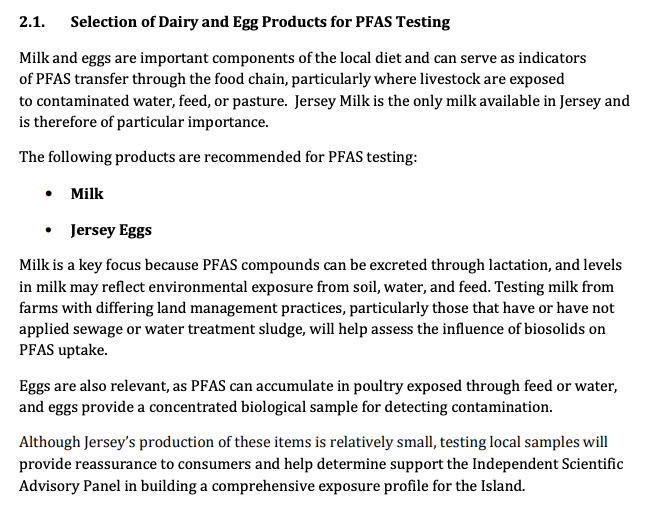
And concerning the testing of dairy and eggs, the panel added: “Milk and eggs are important components of the local diet and can serve as indicators of PFAS transfer through the food chain, particularly where livestock are exposed to contaminated water, feed, or pasture. Jersey Milk is the only milk available in Jersey and is therefore of particular importance.”
It added: “Milk is a key focus because PFAS compounds can be excreted through lactation, and levels in milk may reflect environmental exposure from soil, water, and feed.
“Testing milk from farms with differing land-management practices, particularly those that have or have not applied sewage or water treatment sludge, will help assess the influence of biosolids on PFAS uptake.
“Eggs are also relevant, as PFAS can accumulate in poultry exposed through feed or water, and eggs provide a concentrated biological sample for detecting contamination.”
The first part of the panel’s fourth report – looking at PFAS in mains water – has already been published in draft form. This recommended that the Government sets a new regulatory limit for PFAS levels in mains drinking water.
Although Jersey Water’s public water supply currently meets both UK and EU regulatory standards for PFAS, the panel recommended that the Government sets a new, lower combined limit for four key types of PFAS of four nanograms per litre.
Jersey Water has committed to comply with this limit and recently announced a £2m investment over the next two years for interim treatment and pilot trials for long-term PFAS treatment solutions.
