


The overturning of a domestic abuse sentencing yesterday has been welcomed as a “landmark” case by campaigners, who said they hoped it would restore confidence in the justice system again.
Terence Michael Tremarco (62) had originally been handed 456 hours of community service for nine grave and criminal assaults and one common assault, committed between 1994 and 2000.
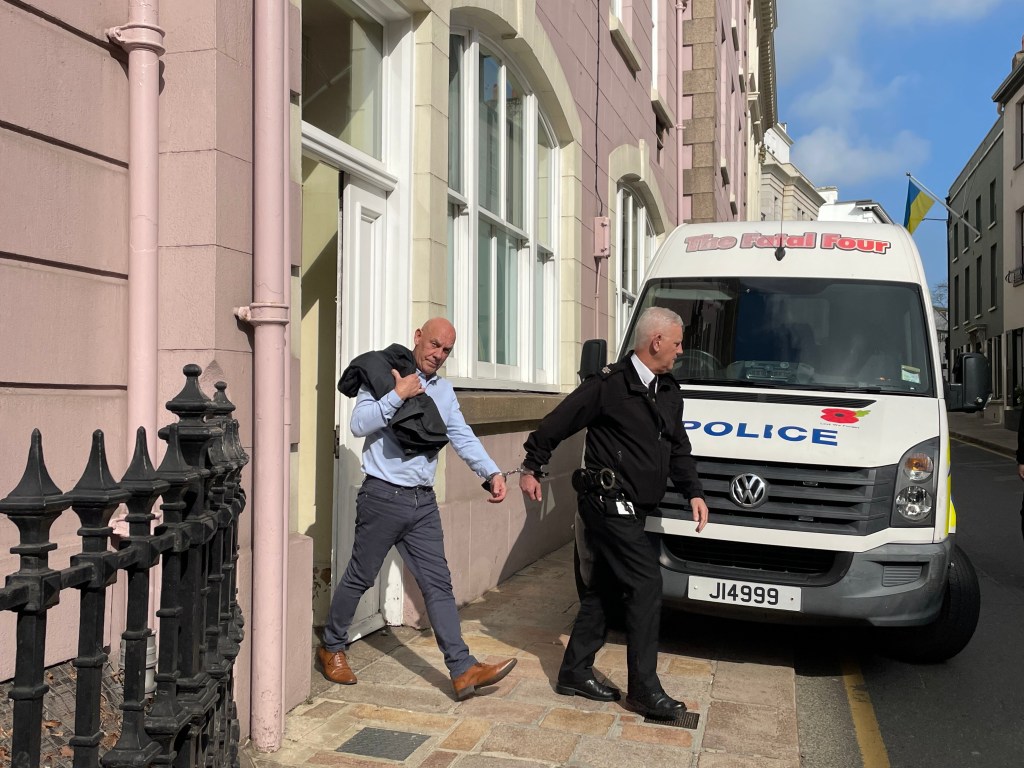
The Court of Appeal decided yesterday that this was “unduly lenient” and sentenced Tremarco to three years’ imprisonment.
“Rehabilitation shouldn’t come at the expense of justice”
Kate Wright, the CEO of domestic abuse charity Freeda, said that the case “sends a very important message to the community that domestic abuse will not be tolerated”.
This might be the first time that the survivor “will have really felt truly heard”, she said.
She said: “Rehabilitation of offenders is important – and credit should go to perpetrators of violent crime who able to genuinely show remorse, turn their life around and address and change their behaviours.
“But rehabilitation shouldn’t come at the expense of justice, even when that crime occurred years ago.”

Ms Wright added: “Justice for a survivor – and in this case it may be the first time in all these years that she will have really felt truly heard – is validating and is an important part of healing.
“Ensuring that perpetrators are held accountable is also crucial to affirming the severity of domestic abuse, as well as upholding the rights and well-being of victims.”
“A landmark case”
Sarah Hamon, who leads Jersey Domestic Abuse Support said that the “landmark case” would help repair trust in the justice system.
“This is key for public confidence,” she said.
“It’s just so logical. You have to have a punishment that fits the crime.
“The other bits of mitigation, they come after, but you have to have your basic level where the punishment fits the crime.
“And we’re delighted that they’ve taken the view that the basic starting point is a custodial sentence, and there is hopefully now no deviation from that.”
Ms Hamon added: “I’m really pleased for [the woman] and for anybody else that’s contemplating or in the process of going through the criminal justice process, because it’s a challenging process, and we absolutely understand the principles of fair justice.
“Sometimes it just feels as if that’s still a little bit weighted against a complainant.
“We’ve never been involved in an appeal brought by the prosecution for a case such as this, so it is a landmark case.”
Ms Hamon said that “a number of people” had contacted the Jersey Domestic Abuse Support service after having experienced abuse, but weren’t willing to report it after seeing the outcome of the Tremarco case.
She added: “One of the things that people are daunted by is that cases can take a number of months or even years to actually be heard.
“But in that time, there’s often much work going on behind the scenes to really pull together a case, but also to make sure that people’s lives can continue whilst there is an investigation ongoing, or whilst we’re waiting for a court date.”
Praise for the “bravery” of the victim
For some people, it was about knowing they had done “the right thing”, while in other cases, such as this one, the sentence was an important factor.
Ms Hamon said she hoped there would be support for “the bravery of our client in sticking with it”.
She added: “She’s been so driven to make sure that this is heard and dealt with in a way that will impact on other people’s decisions. And that was really important for her.
“It wasn’t just the justice for her, it was the justice for other people who you know are considering reporting things to the police.
“We can try and encourage people to come forward and access support, but when you’ve got a survivor of serious domestic abuse coming forward and saying: ‘No, that’s not acceptable, that’s too lenient, and I’ve put myself through this process, and I’m not accepting that outcome’.
“We’re lucky that we get to advocate for her, with the judiciary and with the Law Officers’ Department and that there was no hesitation in this case about accepting that an appeal was was necessary.”
“You have to see the person beyond the details”
Ms Hamon said the victim had been “very grateful” to the Law Officers’ Department, who had developed “an expertise around domestic abuse”.
The Violence Against Women and Girls report recommended training for legal professionals, and the Home Affairs Minister recently pledged to lodge new legislation which would make non-fatal strangulation a standalone offence.
“From our point of view, the Law Officers’ Department have been so approachable and very victim-focused whilst trying to be an effective independent prosecution,” said Ms Hamon.
“Our client feels really listened to. And she’s just given that feedback to the prosecutor, because it is difficult, and there are guidelines, clear guidelines so that those boundaries aren’t blurred.
“But in cases with such significant violence, you have to see the person beyond the details and recognise the impact. And I think that’s what the court have done today. “
Why was the sentence overturned?
Announcing the court’s decision yesterday, Court of Appeal Judge Michael Furness said they had taken into account:
- The fact that the offences were committed in the matrimonial home and by someone who the victim should have been able to trust
- The high level of violence, including kicking, punching, grabbing by the neck and manual strangulation
- The severity of the injuries, including permanent scarring left behind
- The repetition of the assaults, with ten assaults committed over the course of six years
- The violent language used during the attacks, including the wish that she should die
- The level of violence which meant that “on more than one occasion, she quite reasonably feared for her life”
- And the long-lasting psychological damage caused.
The long time between the offending and sentencing was “an unusual feature” of the case, but did not in itself mean Tremarco deserved a more lenient sentence.
Tremarco had left the island shortly after the last of the attacks. He returned to the island in the mid-2000s, when the woman reported the abuse to the police. He left the island again and didn’t return until 2023. He was investigated by the police and pleaded guilty to the charges last year.
His “unblemished” record in the intervening years and positive references from other partners could be taken into account, the court heard.
The mitigation used in his favour was:
- His guilty plea
- His rehabilitation and remorse
- That he had already completed 100 hours of community service
- And the fact that he has already been sentenced and brought back to court to be jailed after all.
The Court of Appeal sentenced him to three years in prison.
SUPPORT…
Jersey Domestic and Sexual Abuse Support (JDAS) offer specialist support and guidance in relation to domestic or sexual abuse incidents. Support is provided before, during and after any police investigation or court hearing. It is also available when police are not involved. Tel: 01534 880505 or email JDAS@gov.je.
The SARC at Dewberry House provide expert independent and confidential support to victims of sexual abuse. The Centre comprises of a team of experts with a wealth of knowledge and experience in advising, supporting and treating anyone who has been raped or sexually assaulted. Tel: 01534 888222.
Jersey Action Against Rape (JAAR) provides and maintains a supporting framework for survivors and their families. Tel: 01534 482801.
FREEDA (Freedom from Domestic Abuse) offer a 24-hour helpline, access to safe accommodation, as well as help and support for victims of domestic abuse. Tel: 01534 281271.
Victims First Jersey is a free and independent service offering confidential support to victims and witnesses of crime. Tel: 0800 7351612.
