
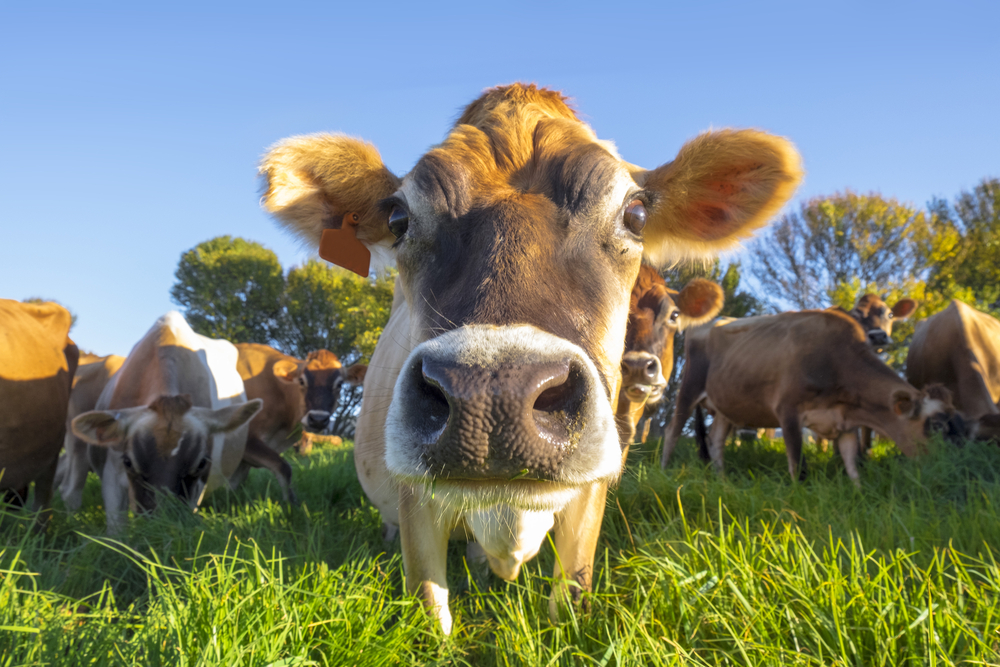

The Jersey Cow’s pure breed status became protected almost 250 years ago this week when the States of Jersey voted to introduce penalties worth the equivalent of almost £40,000 for those bringing cattle over from France.
On 8 August 1789, the States Assembly attempted to prevent the importation of French cattle into the Island by introducing harsh penalties for doing so.
The legislation stated that “anyone who introduces into this isle a cow, heifer, calf or bull from France will be subject to a fine of two hundred pounds for each piece of livestock”.
£200 in 1789 is equivalent to almost £40,000 in today’s currency, when accounting for inflation.
The crew and captain of the boat who transported the cow would also be fined or could even face a six month jail term if they were unable to pay.
This did not prevent the importation of livestock, however, as legislation was further strengthened in 1791 and the fine doubled in 1801, alongside the confiscation of banned livestock.
The Jersey breed is now the second largest breed of cattle in the world with between five and six thousand cows inhabiting the island and around six million globally.
