

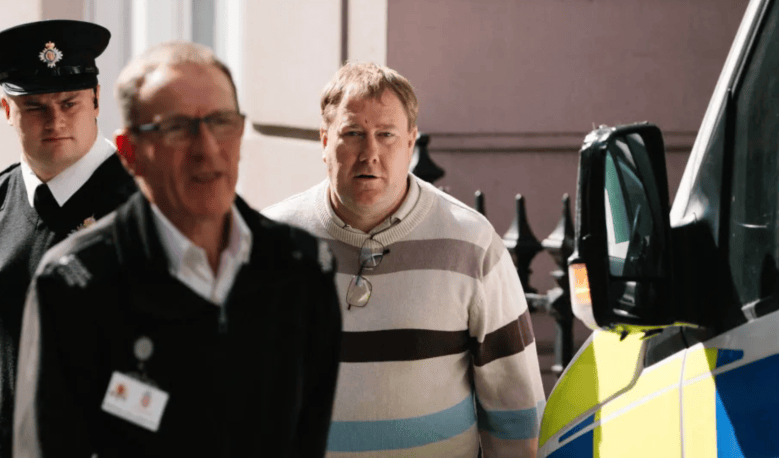
A man described in court as a “sexual predator who targeted vulnerable teenagers” could spend the rest of his life in prison after he didn’t accept any responsibility for abusing them.
On Friday, Shay John Edward Bester became the second person in Jersey to be given a life sentence for offences other than murder.
The 50-year-old will have to serve a minimum term of 15 years before he can apply for release.
Bester was convicted in February on ten counts committed against three different women when they were teenagers.
He raped and assaulted one woman, who the court referred to as A.
In relation to the second woman, referred to as B, he was convicted of two counts of unlawful sexual intercourse and one count of rape.
And in relation to the third woman, referred to as C, Bester was convicted of four rapes and one count of procuring an act of gross indecency.
Crown Advocate Emma Hollywood, prosecuting, said he “took advantage of each of his victims’ lack of life experience and their isolation from support networks”.
The three women came forward separately, she said, and didn’t know one another.
The victims described how he would have sex with them despite their protests.
A had told the jury: “I’d already said ‘no’. How many times does a person have to say ‘no’?”
B also recounted: “All the while I was thinking, I’d actually said ‘no’ and you’re still doing it. You’re still taking what you want from me.”
C said he would call her names and force her to have oral sex. She also described how she hated having sex with Bester, but that “it was either have sex with him or get loads of abuse”.
Crown Advocate Hollywood said that C recounted how Bester would become “turned on” by films starring American teenagers Mary-Kate and Ashley Olsen, who would have been around 15 or 16 years old at the time.
All three victims were diagnosed with PTSD or complex PTSD linked to Bester’s abuse, the advocate added.
Speaking in court, B said that to this day, she was scared of Bester, seeing his face on “random men” in the street.
Advocate Olaf Blakeley, defending, said Bester should be “reasonably dealt with” and that risks could be dealt with through orders from the court.
Commissioner Andrew Oldland, presiding, commended all three of the women.
Detective Constable Elianne Jones was the officer in charge of the case. She told Express that she was “so proud” of the three women – praising their patience throughout the investigation, which lasted three-and-a-half years.

She oversaw a hugely complex investigation – made up of three separate investigations that were only brought together when the time came to charge Bester.
The offences spanned a number of years, with some going back several decades.
Investigating historic offences meant going through years of records, she said, and finding witnesses who remembered important details – though these are “not always the witnesses we expect to have”.
Depending on the complainant’s background, there might be records they weren’t even aware of.
“It’s like putting pieces of a puzzle together,” she said.
“Our investigation focuses on things that we can say. So we can say, this happened at this particular time and the victim is saying this. How can we build a picture around that to build our investigation?”
She added that investigators “only focus on things that are relevant to the investigation”.
The police worked closely with Dewberry House and Jersey Domestic Abuse Support, which supports victims of all sexual offences, to provide “ongoing support”.
DC Jones said the two services had been “invaluable”.
“I don’t know how we ever coped without them, to be honest,” she said.
The increased support – and an improved culture within the police – had encouraged more victims of historic abuse to come forward, she said.
“They probably haven’t reported it previously because there was no support. They maybe felt like they wouldn’t be believed, the approach to the police was too scary. So we’ve seen an increase in historic reporting because of the support that’s now in place, and also the media in relation to that.”
Video interviews allow victims to speak freely, replacing written statements, and can be “not necessarily in chronological order, just however they remember it, because quite often you’re dealing with really traumatised people”.
She said she stayed in regular contact throughout the investigation, which lasted three and a half years, and that victims she worked with were welcome to contact her for updates.
Bester was given a life sentence and will have to serve a minimum term of 15 years.
Commissioner Oldland was presiding with Jurats Dulake, Averty, Cornish, Entwistle and Gardener.
