

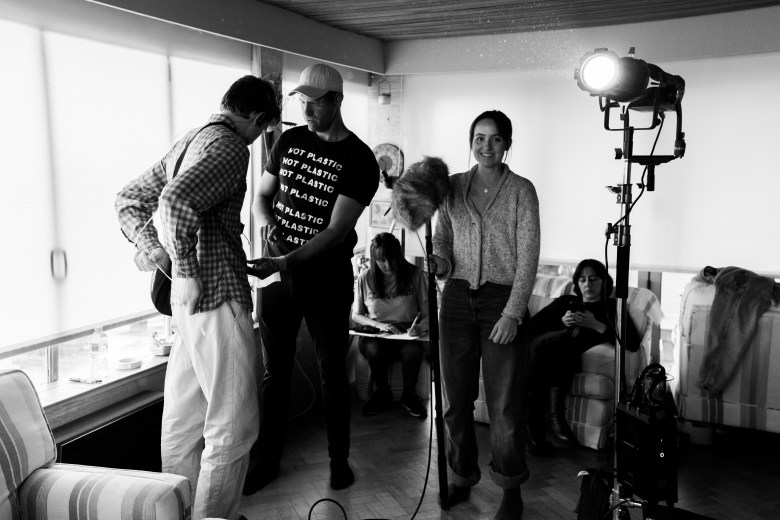
A record number of Jersey filmmakers submitted their work to the 13th Parish Film Festival this year – prompting organisers to hold a second showcase for them.
Industry professionals also noted a growing sense of “momentum,” especially after the rebooted Bergerac used the island as a filming location.
But despite the buzz, filmmakers say serious barriers remain for those wanting to tell Jersey stories or shoot on the island.
Michael Pearce, director of BAFTA-winning film Beast which was shot in Jersey, said most in the industry still view filming in the island as “throwing away money” – with other locations offering far more attractive tax incentives.
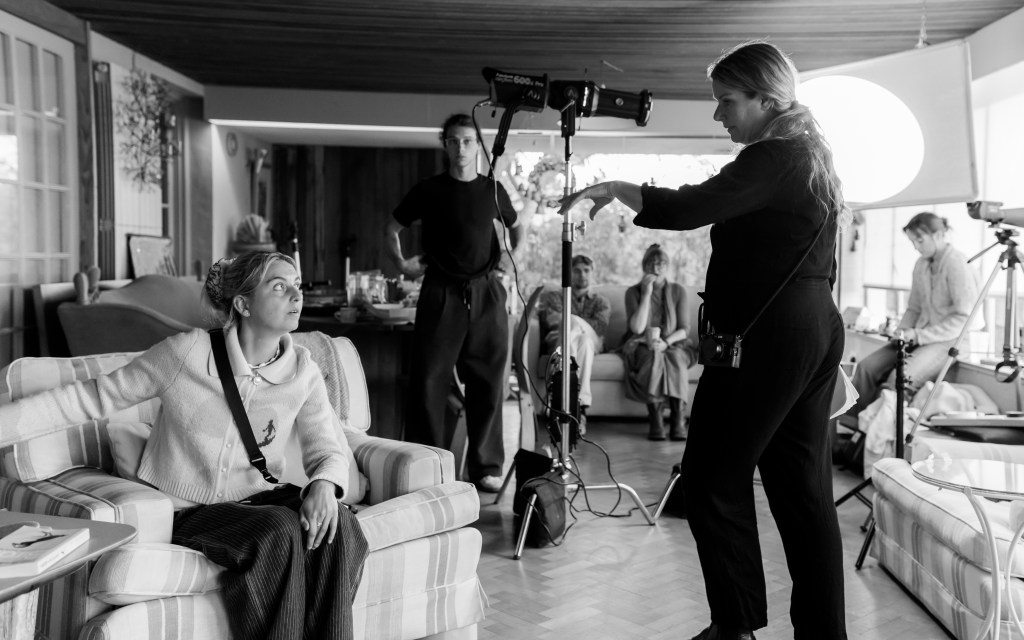
Express sat down with Rebecca Coley, a Jersey filmmaker who has worked both locally and further afield.
She was also recently commissioned by the Government to research the future of film in the island.
What does Jersey have to offer?
Rebecca said: “Jersey has got amazing locations, and we have a very film-friendly local society.
“People are very open to filming.”
The island’s small scale makes logistics easier for crews who don’t have to drive for hours between locations, she added.
But local expertise and infrastructure don’t exist yet – so crew members and specialised kit would need to be brought over from abroad.
Bergerac saw around 80 people travel to the island with lorries and trucks, basing themselves at Highlands College while they were here.



Rebecca explained that the team had a “fairly small footprint” whilst in Jersey.
“They’re only in the locations that they’re filming in for that day,” she explained.
“It was quite minimal disruption but at the same time, it has a huge benefit.
“I think at least £500,000, probably more than that, was spent on the island.”
What measures could help?
Jersey is one of the last remaining places in the British Isles that doesn’t have a screen office, agency or commission: from Norfolk Screen to Filmwight, regions have sought to support filmmakers by creating a government- or industry-backed body to promote the industry.
These organisations help filmmakers navigate local red tape – from securing permits and closing roads, to finding the right Constable to call.
But they can also offer funding, promote local talent, and attract big productions with tax incentives or location support.
Setting one up in Jersey would be “the first step” to helping promote the film industry locally, according to Rebecca.
The filmmaker recalled how, at a panel at the Santa Barbara Film Festival, Oscar-nominated producers were asked how they pick a location.
Their number one priority was financial incentives; tax credits, tax shelters, and rebates draw producers to destinations like Eastern Europe.
Ireland, for example, offers a 32-34% tax credit – but films have to pass a cultural test that shows they will be of value to the country, and they have to spend at least €125,000.
Ireland’s cultural test
Productions have to meet at least three of the following criteria to receive the Irish film and TV tax incentive:
- The is an effective stimulus to filmmaking in Ireland, and is of importance to the promotion, development and enhancement of creativity and the national culture.
- The screenplay (or, in the case of a documentary film, the textual basis) from which the film is derived is mainly set in Ireland.
- At least one of the principal characters (or documentary subjects) is connected with Irish or European culture.
- The storyline or underlying material of the film is a part of, or derived from, Irish or European culture and/or heritage; or, in the case of an animation film, the storyline clearly connects with the sensibilities of children in Ireland or elsewhere in the EEA.
- The screenplay (or textual basis) from which the film is derived is an adaptation of an original literary work.
- The storyline or underlying material of the film concerns art and/or an artist/artists.
- The storyline or underlying material of the film concerns historical figures or events.
- The storyline or underlying material of the film addresses actual, cultural, social or political issues relevant to the people of Ireland or elsewhere in the EEA; or, in the case of an animation film, addresses educational or social issues relevant to children in Ireland or elsewhere in the EEA.
Meanwhile, Malta offers a cash rebate of up to 40% and isn’t strict about using local crews.
The archipelago has a quick turnaround and offers “a really simple form” for producers to use.
Rebecca explained that, despite the nation not initially having much of a film industry, the Maltese government “decided to become attractive” for productions.
