

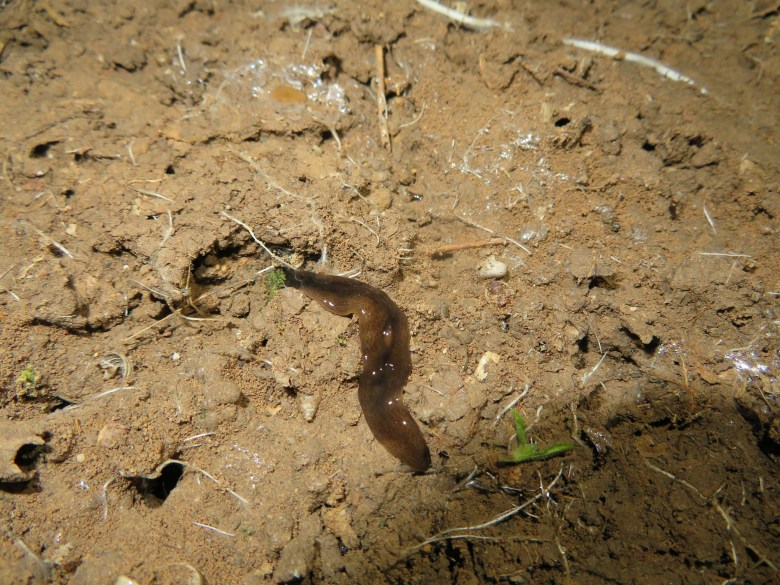
Islanders have been reminded to report sightings of invasive worms that have hundreds of eyes that are “likely” to be present in Jersey, after Alderney recorded its first-ever Obama flatworm this autumn.
The invasive worm – reported to have hundreds of tiny eyes dotted along its body – could be a risk to birds and earthworms, and gardeners in Alderney have been advised to take extra precautions when moving plants or planting them.
This includes checking the soil around new plants, checking equipment for flatworms and eggs, not using plants or soil from infested areas, and treating infested plant pots in hot water (above 30 degrees) for 40 minutes.
The Natural Environment Department said that, while only one flatworm had been confirmed in Jersey by an expert in 2022, it was “likely” that Obama flatworms exist in the island.
They added that they are hard to identify because flatworms all look very similar to each other.
Any potential sightings in Jersey should be reported to the invasive species team at invasives@gov.je.
The Channel Islands have similar environments, they added, and teams in Jersey, Guernsey and Alderney regularly compare reports.
What is an Obama flatworm?
Originally from South America, the Obama – or Obama nungara – was brought to Europe on imported plants and it is now widespread in France and has been found in UK garden centres.
At 10cm long, Obama flatworms have a wide, dark-brown body and a pale underside.
They feed on earthworms and snails, which can have a knock-on impact on small birds and other animals that also eat worms.
The flatworm is not in fact named after former US President Barack Obama – its name comes from the indigenous Brazilian language of Tupi, where it translates to “leaf animal”, a reference to its shape.
Invasive species in Jersey
Obama flatworms are just one of the invasive species that have come to Jersey in recent years.
They join the ranks of Asian hornets as well as carpet sea squirt that is sometimes known as “sea vomit”.
In 2022, holm oaks – also an invasive species – were felled at Beauport following fears that they would become “too dominant”.
