

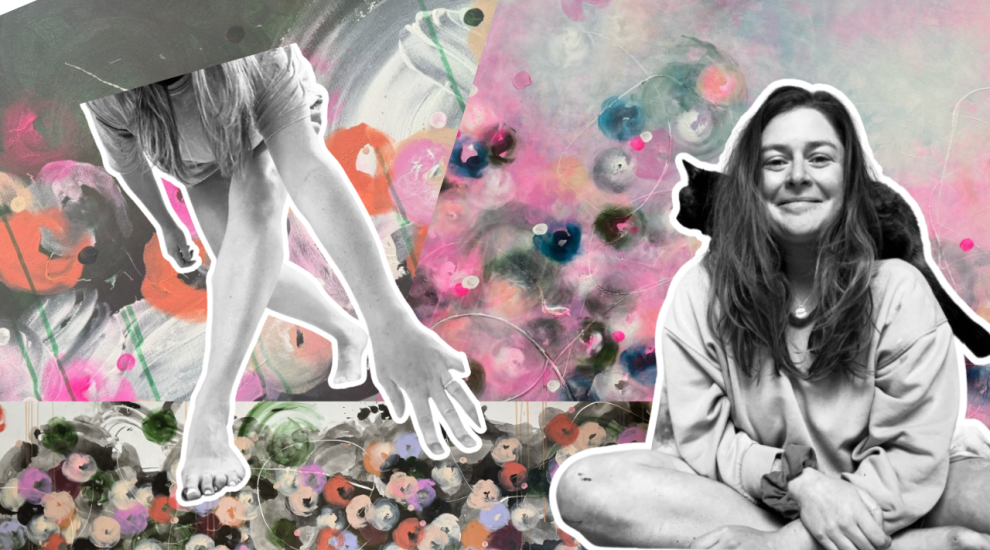
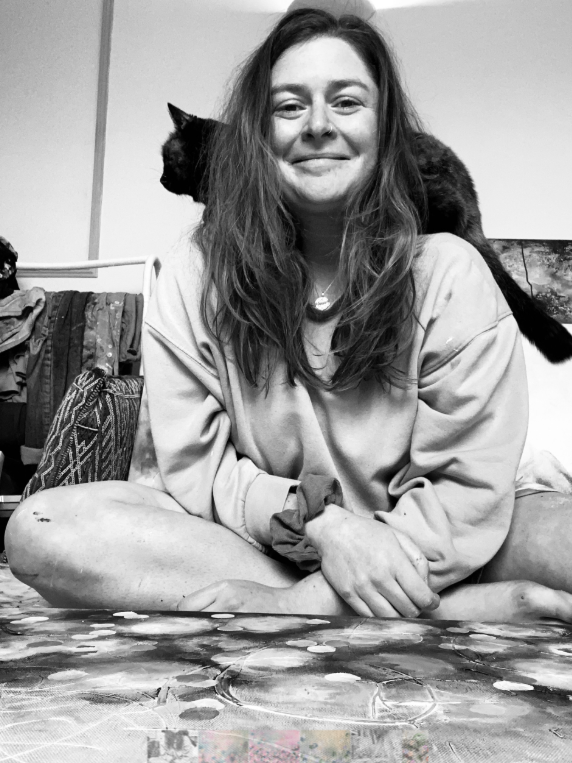
As an abstract expressionist painter, Emilie Knight is used to approaching a canvas without a plan, choosing to keep her practice as “subconscious as possible”.
One thing she could have never planned for was being diagnosed with autism, which happened early last year… and is now inspiring her work.
The 36-year-old explained that her art is almost a “language,” a “kind of happening”.
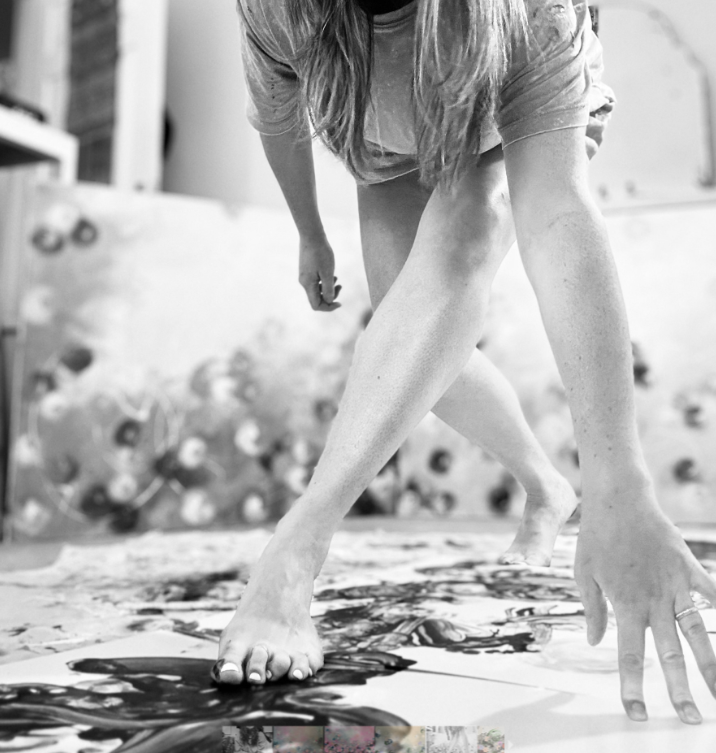
Driven by aesthetic and colour palettes, she uses not only her hands and fingers to paint, but her feet and toes too.
Having first explored this technique while in her final year of a Fine Art degree at Plymouth University, many years before she realised she was autistic, she said she has “always loved dancing and moving”, so the decision to incorporate her lower limbs happened “quite naturally”.
“I didn’t really purposefully or consciously develop it. It’s just kind of what came out in my final year of university,” she said.
“I always painted with my fingers and hands, and then I suddenly had this great big studio space, and all the time in the world, and I just started using my feet. I’ve always loved dancing and moving and things like yoga, so it happened quite naturally.”
Soon after completing her studies, Emilie began exhibiting her work around her hometown of Falmouth before relocating to Jersey in 2016.
Describing her craft as an introverted or introspective exploration of the human condition, she said she uses art as a way of questioning how people “experience life”.
“Like another language”
“[Painting] is almost like another language that I have to express. By human condition, I mean how we experience life. Asking how does [life] make us feel?
“How does it make us respond? How do we respond to it as well? It’s exploring and explaining how we see the world and how the world sees us.”
And her view of herself, following a formal autism diagnosis last January, has indeed changed a lot over the last 12 months.
“I didn’t know I was autistic”
Following her move to the island, she explained that she took on work that took her away from art.
Though she enjoyed the work, it was making her “exhausted”, and she “could not work out why”.
“I was good at the job, but at the time, I didn’t know I was autistic, so I couldn’t work out why [I was exhausted]. I was having some talking therapy late [in 2023], and my therapist basically said she thought I might be autistic, and that was the first time it ever crossed my mind,” she said.
With confirmation that she is neurodivergent, she said she now feels more “at home” with herself.
“Grief with the relief”
But having lived 36 years before that, Emilie said that there is still “a grief with the relief”. She is now learning to navigate with autism as a permanent part of her life – something “pretty challenging” in a neurotypical world.
“It’s like turning a light on 36 years into your life, but, at the same time, you realise that actually this is something that you’re going to have to live with, and it is pretty challenging being autistic in the modern world,” she said
Being an artist for the last 15 years and an artist knowing she has autism for just one of those has also been an adjustment, Emilie explained.
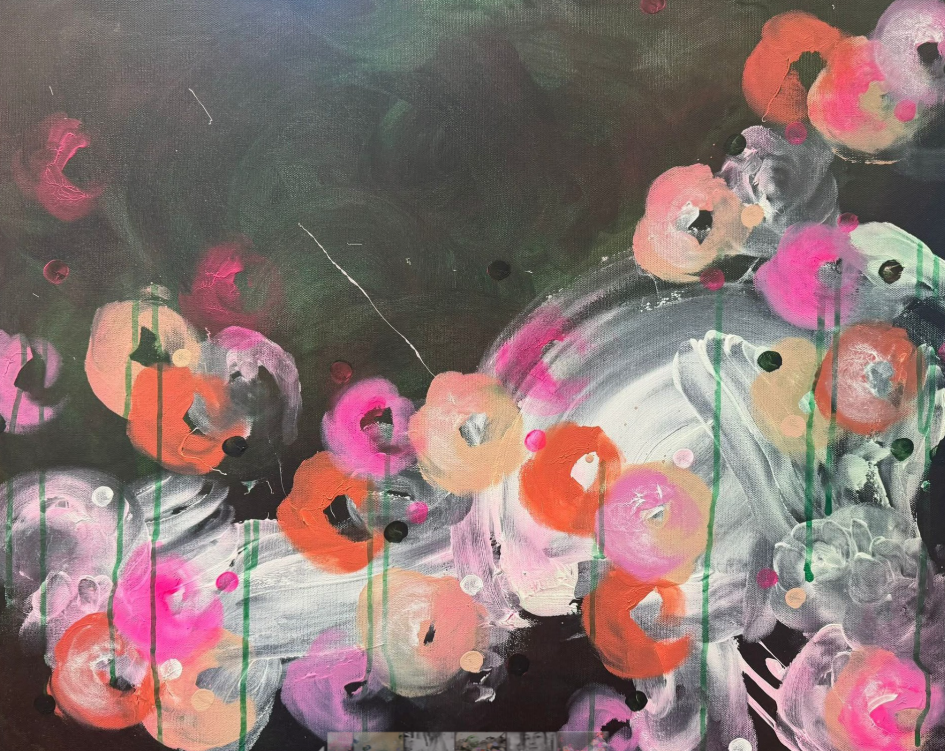
However, reflecting on her work with this new knowledge about herself, Emilie said that she realised her common spherical markings she makes on canvases, which she has done pre and post-diagnosis, are actually a form of ‘stimming’ – a typical autistic behaviour that channels energy or self-soothes.
“Almost like stimming”
“As an autistic person, I stim. It can be constantly clicking or twiddling or using fidget toys, and I’ve realised that this movement that I do that creates the marks on my paintings is almost like stimming. It’s almost like a stim coming to life.”
“My hands make the smaller spherical ones, and then this most recent series that I’ve got in progress at the moment has gone back to the foot painting that I used to do towards the end of my degree,” she explained.
“So, any bigger marks are made by my feet, like I’m dancing and moving in the paint,” she said.
“Underdiagnosed in women”
The Autism Advisory Council is a group of autistic people in Jersey who assist the charity in making decisions as they support others with autism in the community.
Late to neurodiversity, Emilie also wants to advocate for autism in Jersey. Having become a member of the Autism Advisory Council for Autism Jersey after her diagnosis, she wants to assist others with autism, especially women, who she explained, present very differently and are often undiagnosed, just like she was.
“Autism is really underdiagnosed in women because it presents very differently. So, I’m trying to use myself as a platform to raise awareness and kind of break down misconceptions.”
Emilie added that her experience of low mood, anxiety, and “general overwhelm” are now evidence of autism that she had not recognised previously due to her ability to “mask” those feelings to match her surroundings.
“As women, we are very good at masking – we’ll kind of ‘mirror mask’, almost copy whoever we’re around. We’re basically hiding the fact that we are autistic, but the act of masking is absolutely exhausting,” she said.
“Misconceptions are really rubbish”
“If you’re not aware that you’re doing it, you’re just constantly suffering from exhaustion and wondering why you’re so tired,” she added.
“There’s something called synaptic pruning, which is where neurotypical people’s brains have a way of kind of pruning the thought processes in their heads, which autistic people don’t have.
“The amount of time I’ve heard, ‘You don’t look autistic’, these sorts of things and misconceptions are really rubbish.”
As she begins her first full year with the knowledge of her neurodiversity, Emilie plans to tap into a “rawness” in her work that she did not do previously as a result of masking.
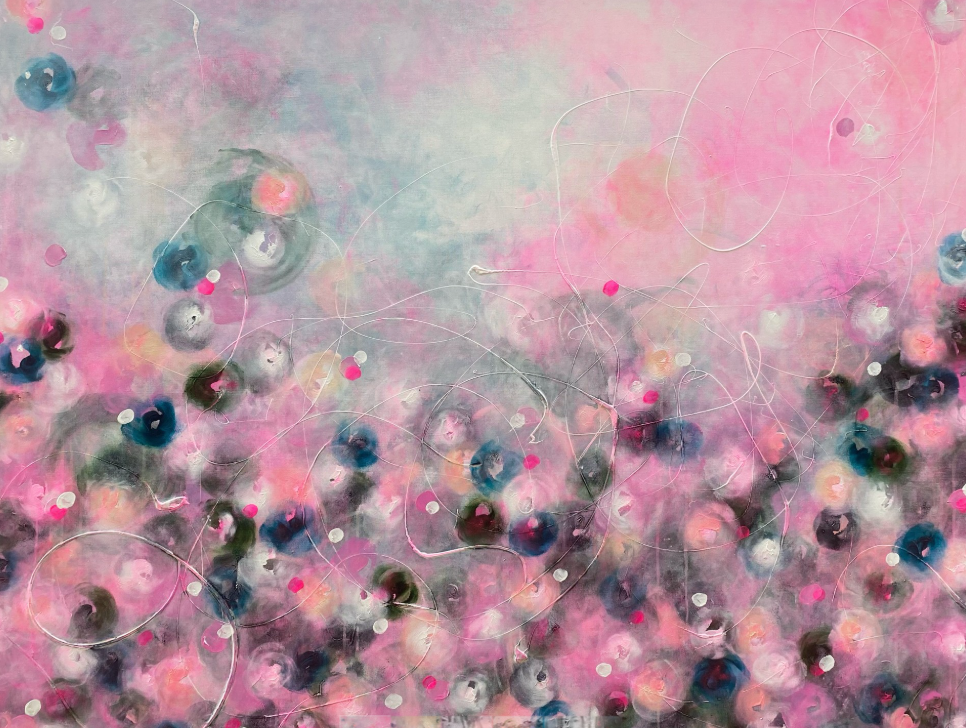
Following her first solo exhibition, ‘Bloom’ at JARO last year, Emilie last month appeared in ArtHouse Jersey’s Pop Up Exhibition series at the start of 2025.
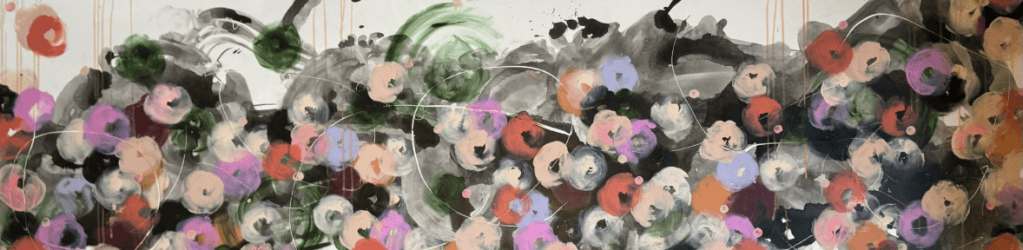
“I exhibited my first solo show last May and all the paintings are really, really pretty – they’re almost like masking. So, this next series is not darker as such, but it’s just tapping into the more raw experience of the last year. If ‘Bloom’ is masking, then this series is quite like unmasking.
“…As you unmask, you start to reveal all of the different versions of yourself. So there’s quite different colour palettes in this one, which kind of represents a different kind of masks,” she added.
Looking forward to “keeping the momentum going” in 2025, Emilie wants to broaden her horizons as an artist with a newfound sense of self.
“Last year was amazing and I had quite a lot of firsts, so I want to keep raising awareness and try to break out of Jersey and see how far I can get.”
READ MORE…
This article first appeared in the February edition of Connect Magazine – read it in full below or via the Bailiwick Express app…
