
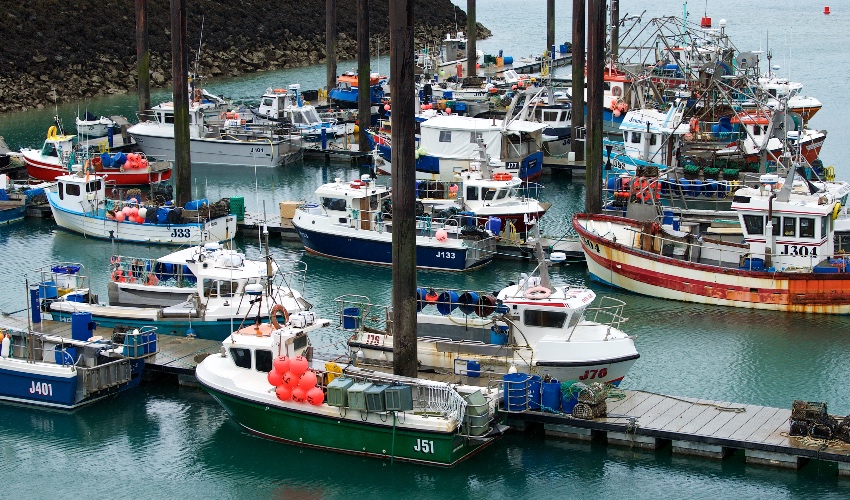

New guidelines on Jersey’s proposed Marine Spatial Plan – which includes protected areas around the island and no-fishing zones – will be published this winter after additional research and an economic-impact study have been completed.
Environment Minister Steve Luce said that the extra information he had requested might change who could fish where, but he added that he would not be changing the no-take zones.
The Government’s Marine Spatial Plan, which the States Assembly passed last year, is a strategy to ensure a sustainable fishery.
It also aligns with Jersey’s commitment to protect 30% of the island’s marine environment by 2030.
However, commercial fishers from Jersey and France, who share the island’s territorial waters, fear that the plan threatens their livelihoods by closing off rich fishing grounds.
At a meeting involving Norman, Breton and Jersey fishers on Friday, they called for next year’s implementation date to be pushed back to 2030.
Giving an update on his plans to Scrutiny this week, Deputy Luce said: “Progress on the Marine Spatial Plan has been good.
“The plan was very extensive but the most controversial, or perhaps interesting, part was the section on fishing, and in particular the marine protected areas, where we are proposing to increase the areas that we protect from certain métier of fishing, and in one case, increasing the no-take zones, where nothing is allowed to be caught.
“As you might expect, that was of great interest to the whole fishing community, both in Jersey and in Normandy and Brittany, because we share our waters with our French neighbours for fishing purposes.”
He added: “Most recently, we’ve had a number of discussions about that, but I think one of the significant things that has happened fairly recently is that I published a timescale of how the plan will be developed, and part of that – significantly – is the commitment to increase the protected areas next autumn.
“Alongside that, I made some changes to the plan as it had been originally published. I ‘grandfathered’ some areas – where it was clear to me that certain French fishermen relied pretty much extensively for their livelihood on these areas, and I’ve told them that those areas can stay open till 2030.
“I also asked the [Government] Marine Resources team to go away and conduct additional research on quite a number of areas where I wanted to be assured that there was something to protect, and the team have been doing that over the course of the summer.
“I’m expecting a review and a report from their work in November and, after that time, I feel I will be in a position to issue some new guidelines and some new areas.
“I would hope that we will have found some areas that are definitely in need of protection, and likewise, some areas that may not be in need of protection from dredging and mobile gear.”
Deputy Luce continued: “We will also shortly be in receipt of some economic data [to show the] effects of these closures on various parts of the industry.
“It’s clear that closing a section of our territorial waters to mobile gear will potentially affect dredgers and trawlers adversely, but it may also be that the closure of those areas to mobile gear will make it better fishing for the static gear, so for the divers and the potters.
“This economic work needs to be done and understood. Moving forward, my intention will be to continue to consult with the industry, to see where they are, to look at the economic data, to see how badly or otherwise it will affect certain fishermen, and then I’ll have to have further discussions.
“But at this point in time, my intention is to proceed as we have said. It may be that we need to make some concessions, depending on some of the economic data.”
However, Deputy Luce added that some matters were not up for discussion, including the no-take zones and the ‘grandfather’ rights.
