

Jersey’s mantra as the warmest place in the British Isles brings thousands of tourists to the island each summer…
But the recent spate of extreme heat may have played a role in new visitors heading to these shores.
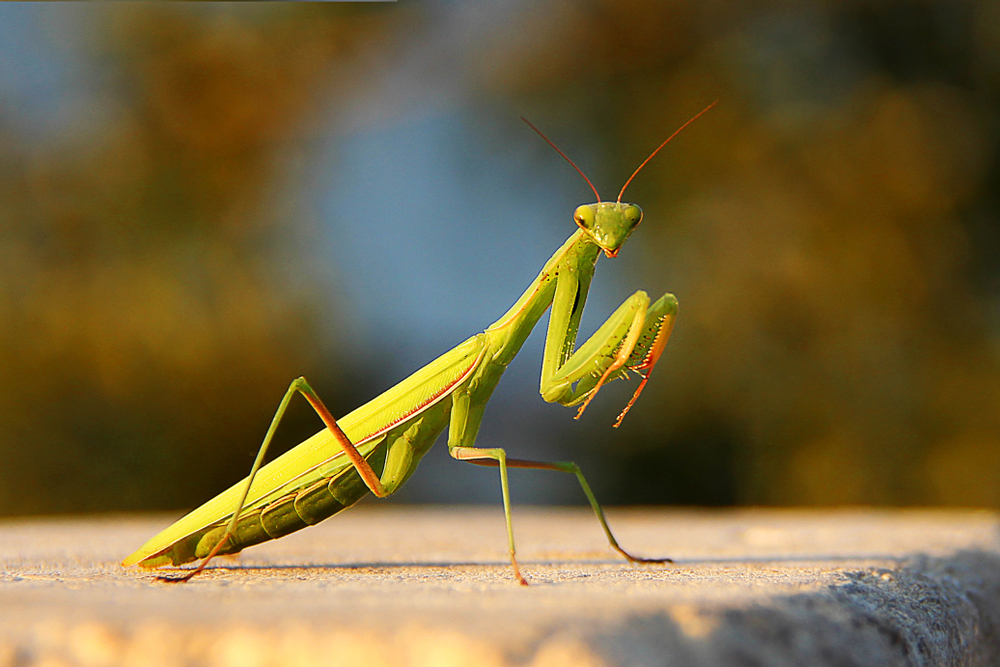
A number of European praying mantises have been spotted in Jersey this summer after being driven northward and now look set to have an established population in the island.
Escaped pets?
Previously thought to be escaped pets, the natural arrivals of the slender green insect are increasingly noted across the Channel Islands.
Enviornmentalist Bob Tompkins said: “They are rapidly increasing across northern Europe and the south of England and are now classified as climate migrants.”
As a result of the warming climate, the island is seeing a natural shift with bluefin tuna and Asian hornets among the invasive species now spotted in Jersey.
The European Praying mantises are not harmful to humans, as they have no venom or stinging capabilities. Instead, Islanders are being told they should not disturb them or cause harm to their surrounding environment.
“The European Praying Mantis is here all the year round now”
The southern European species “is taking advantage of our changing climate to move north because of the increasing arid conditions they have been experiencing in the south,” according to Mr Tompkins.
He added that we have experienced three milder winters the past few years which aids the insects migration north.
Th environmentalist also said that due to changing wind patterns as a result of “dominating high pressures”, the Island is experiencing increased easterly winds. This means that “juvenile instars and the winged adults” are transported from France to the Channel Islands.
Look out for foamy twigs…
He explained that European praying mantises prey on a range of insects and even small amphibians such as newts. They wait motionless for hours and are “voracious ambush hunts”.
“They are rapidly increasing across northern Europe and the south of England and are now classified as Climate migrants,” he said.
“If you find one in your garden late summer early autumn look out for any eggs that will be on nearby twigs encased in foam which hardens to form a protective case. These will over winter to emerge in mid to late spring.”
Similar to the Asian hornet invading Europe and the UK there are two highly invasive Asian species of Mantis – Hierodula tenuidentata and Hierodula patellifera. These have now been recored across southern Europe and are migrating north.
Mr Tompkins said: “These are much larger capable of taking prey up to small rodent and bird and could pose as much of a threat as the Asian hornet does now.”
