

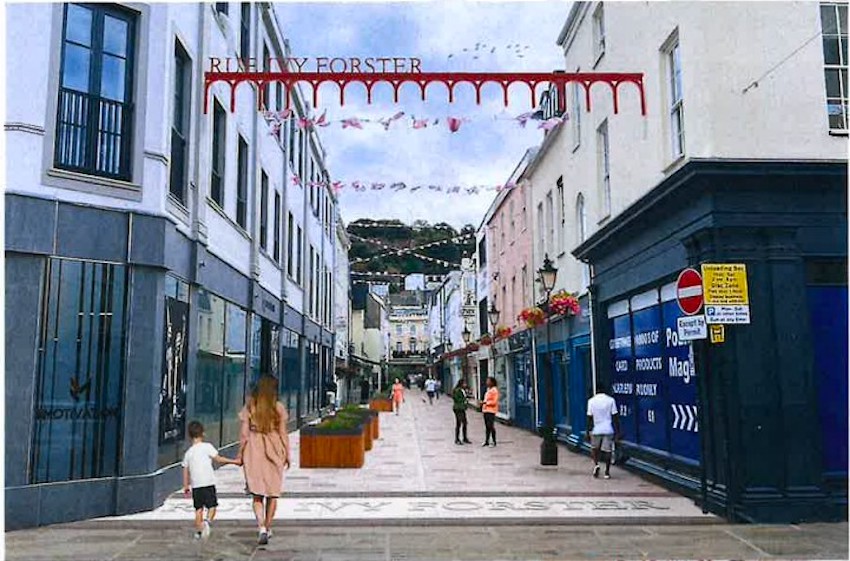
The renaming of Halkett Street to ‘Rue Ivy Forster’ was part of a wider plan to transform an area of town that has “been the source of lots of complaints” into a thriving new spot with fresh paving, benches and a new archway celebrating the trailblazing States Member.
The St. Helier Roads Committee originally proposed the renaming to mark the centenary of women obtaining the right to vote in Jersey. At the same time, a portrait of Ivy Forster was unveiled on the main staircase of the Town Hall.
Following a meeting of the committee earlier this month, it was agreed that the name change would be debated at a Parish Assembly meeting on Wednesday 30 August.
However, Constable Simon Crowcroft announced this morning that the Parish would no longer be going ahead with that element of the plan.

Pictured: A visual showing what the scheme could look like.
“We had thought that the refurbishment of Halkett Street would be an ideal opportunity to rebrand this important part of the town centre whilst also removing any confusion between Halkett Place and Halkett Street,” he explained.
“However, I recognise that there is little support for a name change at the moment, and the refurbishment of Halkett Street is too important a project for it to be sidetracked by the renaming proposal.”
Constable Crowcroft added: “Both Ivy Forster and Caroline Trachy before her took important steps towards the States Assembly we see today, with almost 50% female representation.”
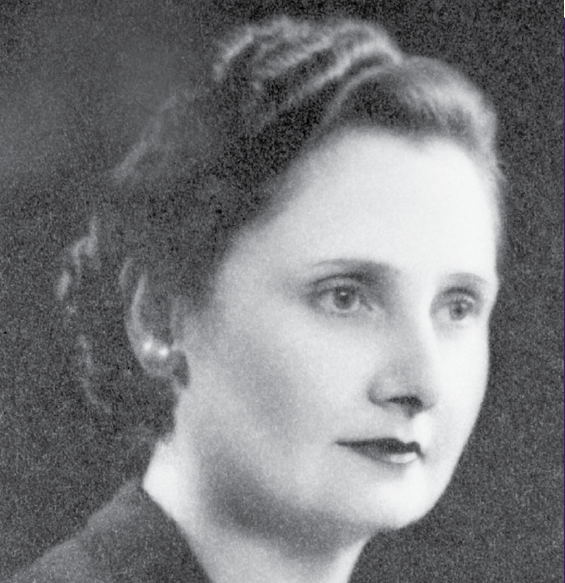
Who was Ivy Forster?
-
The sister of Louisa Gould, a woman deported to her death at Ravensbrück concentration camp after she was found to have harboured an escaped Russian slave worker.
-
In late May 1944, Mrs Forster was arrested by the Nazis for harbouring Russian prisoners of war after an Island resident had informed on her sister’s activities.
-
She escaped deportation because a doctor pretended she had tuberculosis, so that she was allowed to serve her sentence in St Helier’s Newgate Street prison.
-
After the Occupation, she was elected as a St Helier Deputy, becoming the first woman to serve in the States Assembly.
-
She served as Deputy until she lost her seat in the 1954 election.
-
She died in 1997, aged 90.
READ MORE…
FIRST LOOK: Parish unveils vision for ‘Rue Ivy Forster’ in town
