


A long-awaited update to Jersey’s treasure law is set to move forward, the Economic Development Minister has confirmed – with the draft legislation expected to come to the States Assembly before the summer.
Responding to a question from Deputy Jonathan Renouf, Deputy Kirsten Morel said that the draft Heritage Law is now in a “mature form”, and that both the primary law and necessary subordinate legislation have been developed.
A public consultation is planned for the second quarter of 2025 and the legislation is due to be brought before the States Assembly for approval.
Currently, Jersey law requires the reporting of treasure finds only if they contain gold or silver.
However, significant archaeological discoveries – such as ancient stone, bone, or ceramic artefacts – are not subject to the same legal protections, despite their potential historical importance.

The development of Jersey’s treasure law started in 2020 following a rise in amateur metal detecting, with then-Economic Development Minister Lyndon Farnham – who is now Chief Minister – signing a Ministerial Decision in 2020 to bring forward a Heritage and Antiquities Law to “provide clarity on heritage matters”.
Work on drafting the legislation was still underway at the end of 2021 when ‘A Heritage Strategy for Jersey’ – a document aiming to provide a 20-year vision for the heritage sector – highlighted Jersey’s failure to meet some international standards for heritage conservation and management.
As the Heritage Strategy notes, the discovery of stone plaquettes from Les Varines shows the “wealth of information” that can come as a consequence of responsible reporting of a find which was not ‘treasure’.
A Heritage and Antiquities Working Group was established in Jersey in 2022 with a primary focus on objects of particular archaeological or historical significance.
It came after a similar surge in the number of amateur detectorists unearthing historical artefacts prompted the UK Government to change the legal definition of treasure so that more artefacts could go on public display and help deepen people’s understanding of the country’s history.
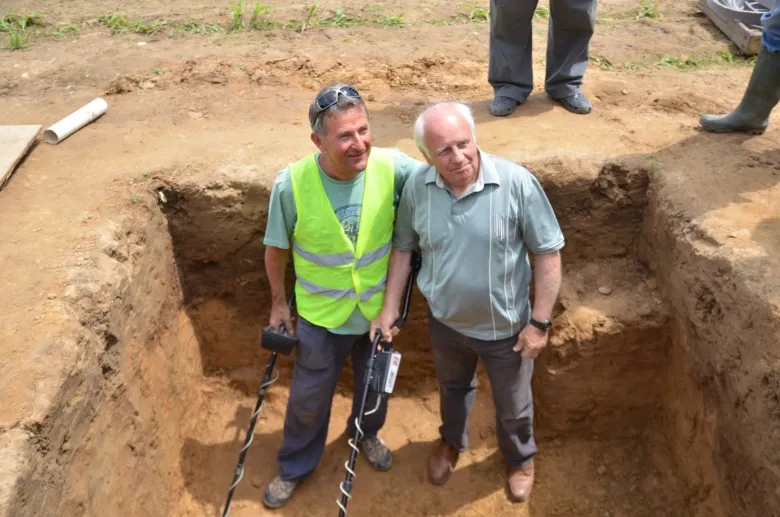
Under the UK’s previous definition, newly discovered artefacts can only be legally classified as treasure if they are more than 300 years old and made of precious metal or part of a collection of valuable objects or artefacts.
However, the new criteria applies to the most exceptional finds over 200 years old – regardless of the type of metal of which they are made – so long as they provide an important insight into the country’s heritage.
Discoveries of treasure meeting these new criteria will be assessed by a coroner and will go through a formal process in which they can be acquired by a museum and go on display to the public.
