


Of course, we have always been fascinated with crime fiction and detective stories. The way in which the formulaic style of books, shows or films allows a logic to be applied to the most unthinkable human acts is deeply satisfying.
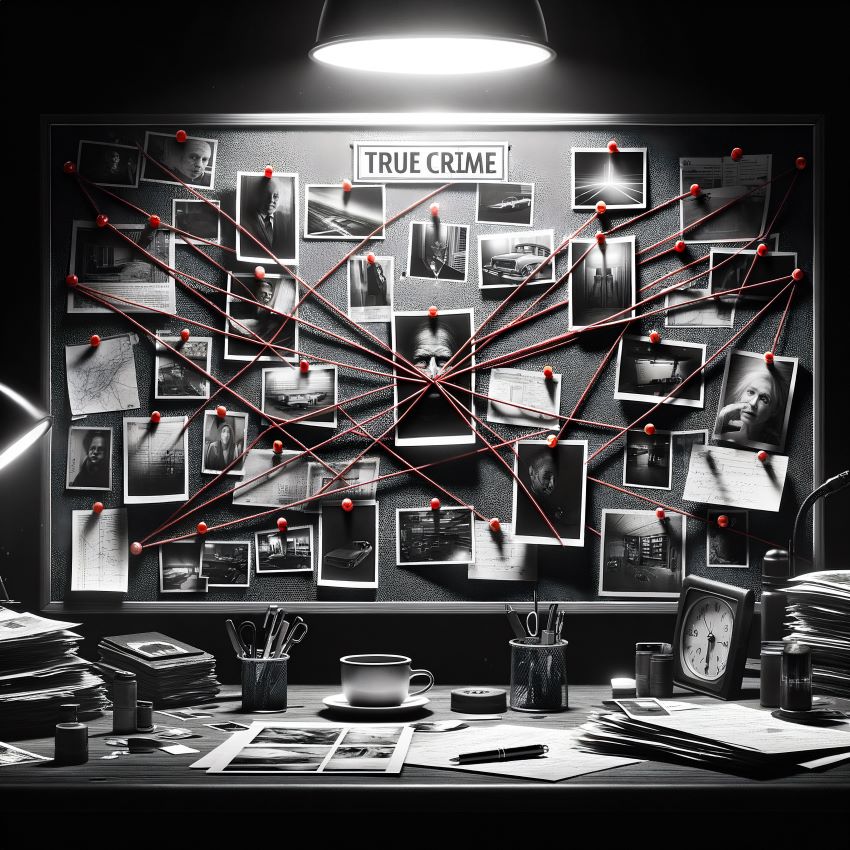
Pictured: “#Truecrime is media – fiction or non-fiction – based on real crime cases.”
But with the explosion of the true crime phenomenon in the era of bingeable content, it can feel like our obsession has gone slightly overboard.
My own personal fascination with #truecrime began when the podcast documentary Serial first came out in 2014. It re-examined the 1999 death of high schooler Hae Min Lee in Baltimore County via interviews with the person accused of killing her – a man who had always maintained his innocence.
Rather than applying the cut-and-dried, reassuring conclusions of your run-of-the-mill Sherlock Holmes or Hercule Poirot, Serial dwelled in the uncertainties of this tragic case – did law enforcement tick every box? How do you prove your innocence when accused of a crime like this? What if they have the wrong person behind bars for this young woman’s murder?
Morbidly, these provocations were like catnip to my 17-year-old brain and all I wanted was to consume more and more #truecrime content.
Looking back, it was rather unsettling just how much of these gruesome stories I was inhaling as a young woman living away from home for the first time. My idea of relaxation was to make myself pasta and pesto whilst listening to the grisly machinations of serial killers – that’s not disturbing at all, Martha…
Of course, with social media growing in tandem with this addictive genre, the world has only become more and more enthralled by #truecrime. Now, we can all play armchair detective together and delight in the twisted gratification we get from these stories.

Pictured: “We can all play armchair detective together and delight in the twisted gratification we get from these stories.”
But the thing is that they aren’t just stories. The thing about #truecrime is that it’s true. These are real things that happened… to real people. It was my time working as a journalist that made me realise this.
When I would go to court to report on real trials and actual crimes that had taken place in my local community, I completely fell off the #truecrime wagon.
All of a sudden, I became painfully aware that these cases are complicated, nuanced and tragic events which ruin lives on both sides – victim and perpetrator. I could no longer see this #truecrime content, often generated to take advantage of this ‘trend’, as a means of entertainment.
Through my work, I had seen the actual impact of these experiences on people’s lives, and I couldn’t go back to the #truecrime life.
So, now I have sought refuge in bingeing another toxic kind of media: programmes about people selling luxury real estate…
READ MORE…
This artivle first appeared in the November edition of Connect Magazine, which you can read in full below…
