I moved to Guernsey with my husband in 2009 from my hometown Fukuoka in Japan, but my story with calligraphy goes much further back.
Starting at age 6 in Japan, calligraphy has been my lifelong companion.
I first held a calligraphy brush at the age of six or seven.
My best friend went to an after-school calligraphy class. That small childhood choice became the first stroke of my journey.
I studied calligraphy throughout my early years, later setting it aside as Kendo training came to fill my days. Although the brush rested, the discipline and confidence I gained remained within me.
Want to learn the art of calligraphy?
Now’s your chance – click here for info about an exclusive workshop on 24 March.
Years later, calligraphy returned at a time of great vulnerability. Caring for my two young daughters- my days were shaped by movement between home and school, leaving little space for myself. After my mother returned to Japan, homesickness led me back to my former calligraphy association through a distance-learning course.
When I picked up the brush again, memory returned through my body- the scent of ink, the stillness of breath. Writing became a quiet refuge. Shared with others, my work revealed its power to connect.
A simple question followed: “Why not teach?”
And a new chapter began.
The tools
In Japanese calligraphy, there is a term Bunpō Shihō, meaning ‘the Four Treasures of Writing’.
These are the essential tools through which calligraphy comes into being: the brush, sumi ink, Japanese calligraphy paper, and the suzuri, the ink stone.
The suzuri is more than a tool, it is where ink is born. A small amount of water is poured onto its surface, and the solid ink stick is slowly ground, releasing colour, scent, and depth. This quiet act prepares both the ink and the mind.
Alongside these four treasures, we also use a paperweight to hold the paper still, allowing the brush to move freely. Each object has its role, and together they create balance between movement and stillness.
Japanese calligraphy begins before the first stroke is written.
In the careful preparation of tools, the body slows, the breath settles, and the mind becomes present. Only then does the brush touch the paper.
The philosophy
At Gyokubai Studio, the workshop begins not with technique, but with awareness.
I focus on helping participants feel the connection between body and mind, and on inviting them to experience Japanese calligraphy both emotionally and physically.
Many people tend to feel nervous when they hold a brush for the first time. In our workshops, that feeling is welcomed. Accepting the waves of emotion that come with a new challenge is part of Shodō itself. There are no mistakes here. We do not aim for exams or grades; instead, we focus on the joy of the practice.
I am always moved when participants tell me how much they love the quiet ritual of making sumi ink at the writing preparation time, or the simple pleasure of writing. One participant recently shared that although she felt very nervous at first, she soon found the experience deeply enjoyable.
I love observing the room as it changes- gentle conversation at first, then a natural stillness as each person enters their own space. When the writing ends, voices return.
Shodō is both solitary and shared.
That balance is its quiet beauty.
Finding balance
I believe Japanese calligraphy creates a quiet space in which to speak to oneself.
Each line reflects the condition of the mind and body in that moment. Writing becomes a private mirror- an honest way to notice where you are, without judgement. Through this awareness, calligraphy offers a way to gently adjust and rebalance yourself.
In Japanese, calligraphy tools are called O-dōgu. Without the prefix “o,” the word becomes simply dōgu, meaning tools. Adding “o” transforms it into respectful language. This small change reflects an important mindset. Caring for our tools with respect nurtures an attitude of appreciation- not only toward objects, but toward people and daily life itself.
Shodō teaches us that respect begins with attention.
In looking after our tools, we learn to look after ourselves.
Japanese calligraphy writing is the world of simple “black and white” as it’s ink and paper. However, there is a much deeper “black and white” world like we have various fades of colour of black for example, so zooming into the world of Shodō is great fun!
The achievement
Being a Shihan in 2026 means holding tradition with care and helping my students develop their Japanese Calligraphy skills and bring experiences.
As a woman, and as the founder of Gyokubai Studio, my role is shaped by lived experience: motherhood, migration, care, and creativity existing side by side. Shodō has accompanied me through different stages of life, and today I share it not as something to be mastered quickly, but as something to be felt, questioned, and enjoyed.
Being an ambassador means creating access. It means removing fear, perfectionism, and the idea of “mistakes”, and offering Shodō as a human practice- one that supports wellbeing, connection, and presence. In a fast-moving world, Shodō invites slowness, attention and self-care. I would like to be bridge between Japan, Guernsey and the Channel Islands- delivering the energetic and beautiful Guernsey vibe to Japan through my writing.
In 2026, representation matters. As a woman teaching Japanese calligraphy internationally, I stand between cultures, generations, and expectations. My aim is not only to preserve tradition unchanged, but to carry its spirit forward, open, inclusive, and alive.
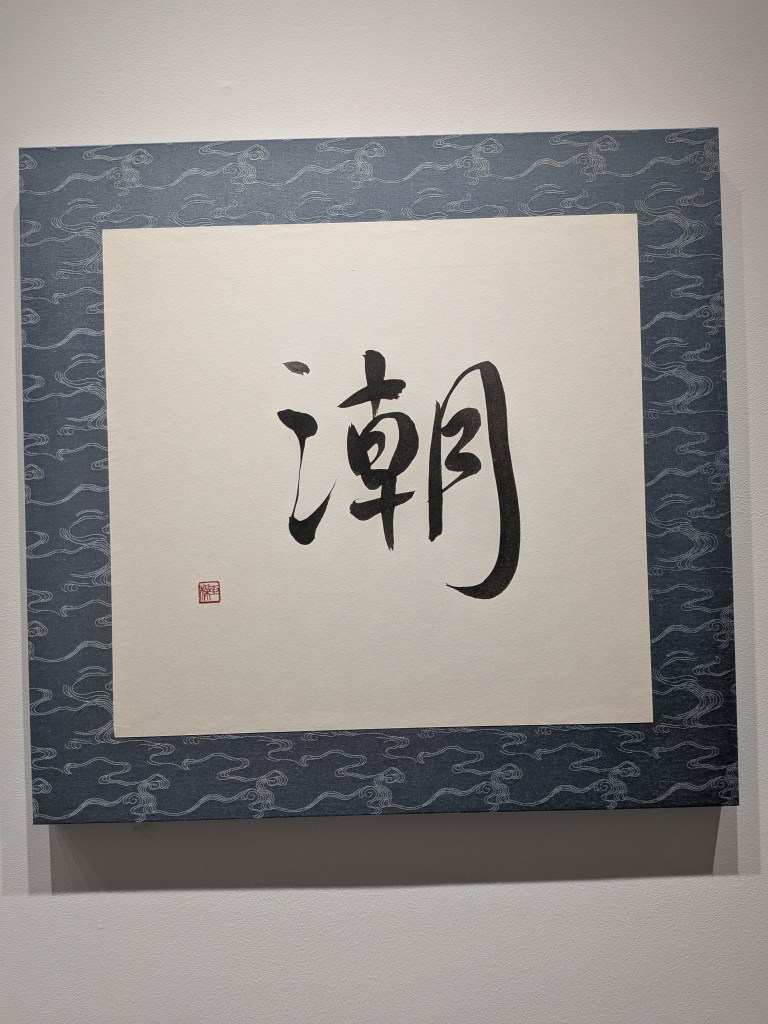
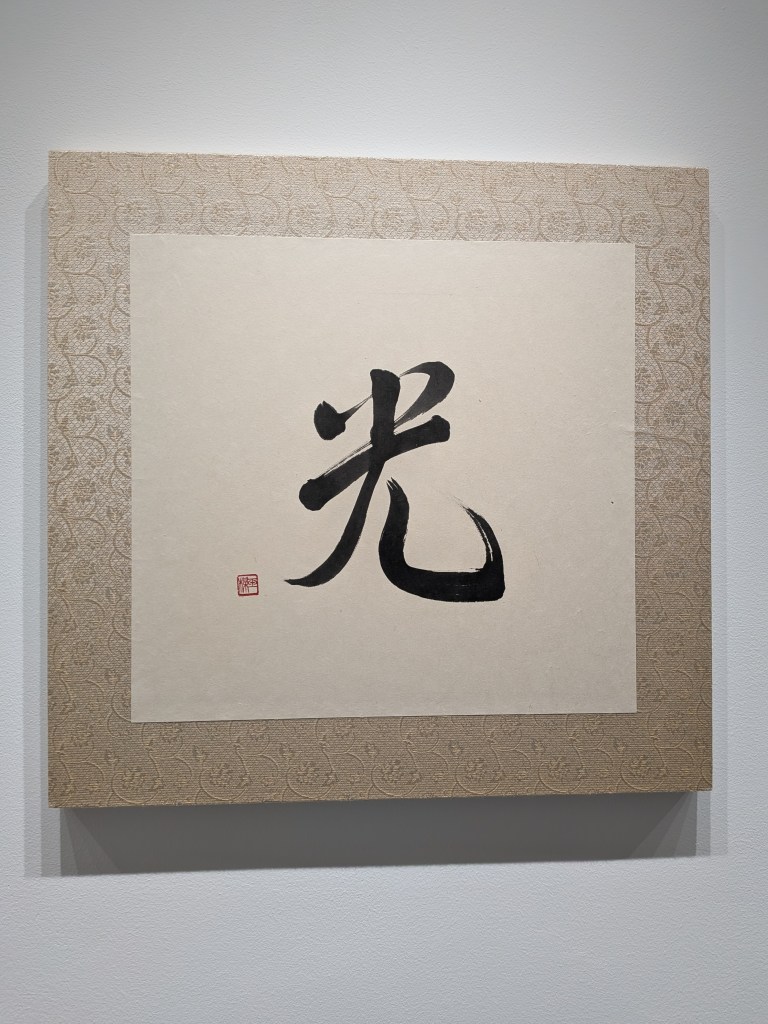
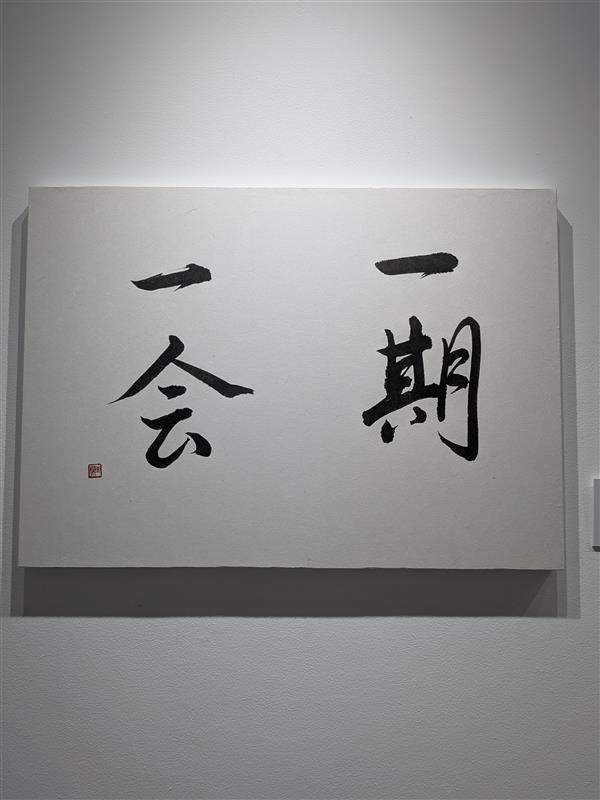
The fantastic Art for Guernsey 10th Anniversary celebration ended last week, but it was an amazing opportunity to run my Zen workshop at their gallery, and I was truly honoured to run the workshop at such a special occasion.
AFG kindly exhibited my latest Japanese calligraphy work which wasinspired by beautiful Guernsey nature, and it was mounted in Japan by Japanese art mount specialist Mr Hayashi at Mannendo shop in Fukuoka. This was the first time my work was mounted in a traditional mount way since I started Japanese Calligraphy in Guernsey.
YOUR INVITATION…
Gyokubai Studio is celebrating our 2nd Anniversary on 24 March and we are running a special celebration workshop at a wonderful Japanese Sake shop in Trinity Square in St Peter Port. Tickets are now on sale but, spaces are limited so I recommend booking fast!
In this beginner-friendly session, you will:
- Learn where Kanji comes from and how it’s used today
- Try the essential tools of Shodo – each person will have their own brush and ink set
- Practise basic brush strokes
- Create your own piece to take home
Book your place by clicking here.