


Female participation in cricket has more than doubled since the pandemic, according to one of the sport’s local leaders.
Lee Meloy, Head of Cricket Operations and former Women’s National Team Head Coach, said that numbers have grown from around 30 junior female players to over 80 in just a few years.
As part of a series by Express exploring the challenges and opportunities for women in sport, Lee discussed how attitudes toward cricket are changing and what’s being done to encourage more young women to get involved.
Creating a dedicated space
He explained: “Previously, the mindset was, ‘If you’re good enough, you can play with the boys’. But that approach was dated.”
This situation, he said, created an environment where women were often in the minority –which could make it a daunting experience for those lacking in confidence.

Now, with dedicated pathways, girls have their own teams, training environments, and opportunities to progress, from the grassroots level to high-performance squads.
“Everything’s mirrored with the same opportunities across both sides,” said Lee.
The importance of role models
Another important shift that Lee thinks has led to a rise in female participation has been the increased presence of women coaches and role models.
“The role models available now are completely different from what was there before,” he explained.
“In the past, coaching was led by men, teams were managed by men, and what you saw on TV was men’s cricket.
“Girls weren’t seeing women playing or coaching the game, so they struggled to see a future for themselves in it.”
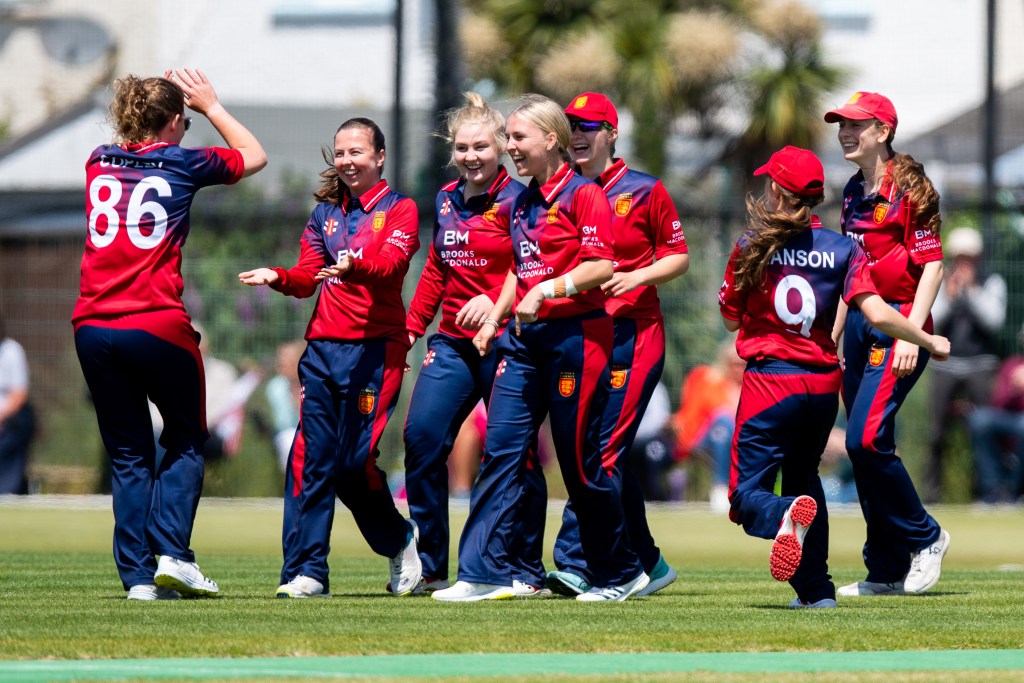
Now, Jersey Cricket places a strong emphasis on having female coaches and mentors involved.
Seeing women in these roles, Lee explained, helps young girls feel represented, boosts their confidence, and creates a more welcoming environment.
Building confidence through familiar faces
Confidence remains one of the biggest barriers for young girls in sport – with cricket presenting its own unique challenges
“One person bats at a time and one person bowls at a time,” explained Lee.
“So there’s an element of it being quite challenging, and it tends to single individuals out.

“It can be quite daunting standing there with everybody watching you.”
He continued: “We’ve generally found, with girls who are new to the sport or who are coming into an environment that they’re not confident in, it can be quite a daunting prospect for them.”
To counter this, Jersey Cricket has made it a priority to create a welcoming atmosphere – identifying and removing any obstacles that might make newcomers feel uncomfortable.
“We’re trying to get more girls into the game, and generally, the first experience they have has a lasting impact,” said Lee.
One key approach is ensuring new participants are introduced to familiar faces – whether coaches or peers – so they don’t feel like they’re stepping into an unfamiliar environment alone.
“We try to have the same coaches running school sessions and club training,” he said.
“Girls want to know who will be there before they turn up.
“Encouraging them to bring a friend or making sure they know the coach can make all the difference.”
Offering new programmes
To bridge the gap between beginner cricket and high-performance squads, Jersey Cricket has recently launched the HERA Girls Legacy Club programme for under-12s and under-15s.

This, Lee explained, aims to ensure players are with others of similar skill levels – helping create an environment that is more suited to their needs and abilities.
The programme is designed to provide a “middle ground” for girls who want to improve their cricket skills but aren’t necessarily looking for elite-level competition just yet.
Beyond junior cricket, multiple entry points now exist for female players. The Women’s Premier League is in its third year, and last year saw the introduction of a development league designed for casual players or those new to the sport.
Despite these advances, Lee believes there’s still room for growth.
“We’re still just reaching the surface,” he said.
“Cricket hasn’t established itself as a traditional women’s sport like netball or hockey.”
One strategy to change that is encouraging girls who play winter sports like football and hockey to take up cricket as a complementary summer sport, he added.
Taking the first step
For girls interested in getting involved, details about upcoming opportunities can be found on Jersey Cricket’s website and social media channels.
Lee’s advice for those hesitant to give it a go? “Just try it,” he said.
“It’s always good to try new things.
“We at Jersey Cricket consider the environment to be the most important for planning sessions.
“So I would encourage girls to chuck themselves in at the deep end and to give it a go.”
