

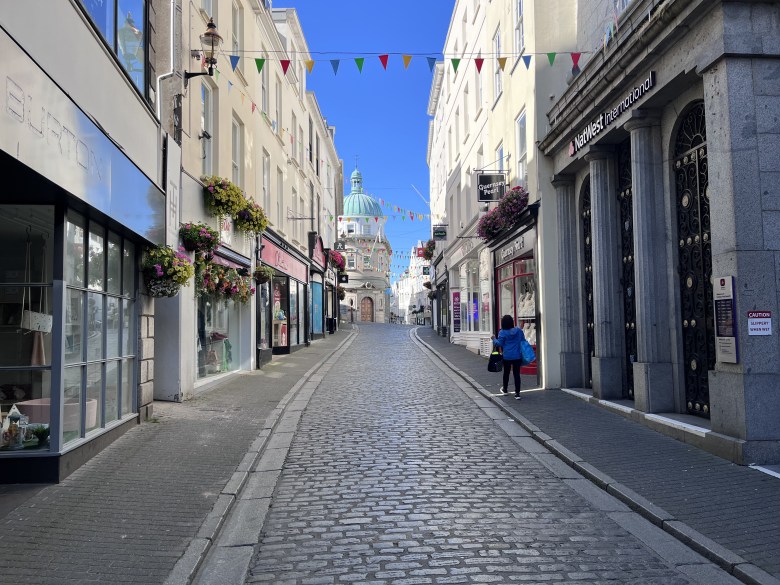
Guernsey’s business community is becoming increasingly divided over the Policy and Resources’ (P&R) tax reform plans, with retailers warning that economic growth cannot be an afterthought.
The Guernsey Retail Group (GRG) has entered the increasingly heated GST debate by arguing that fixing the island’s finances cannot be achieved through taxation alone.
The group says any reform package must be matched by policies that encourage investment, support local businesses and strengthen the economy that ultimately pays for public services.
But its intervention also adds to a growing battle over who speaks for Guernsey business.
Does GST have the backing of business?
The split follows comments from P&R Finance Lead Deputy Andrew Niles, who pointed to support from major business organisations as evidence that the private sector wanted action.
The Institute of Directors, Guernsey International Business Association and Chamber of Commerce had cautiously supported the GST proposals, warning that continued uncertainty itself was damaging the economy.
Deputy Niles said the three organisations represented more than 600 resident companies, 700 directors and almost 17,000 employees.
“When organisations of that collective weight speak with one voice, it matters,” he said.
However, critics pointed out that the employees themselves were not asked for their views, while not all company directors support the proposals.
Now there’s a growing chorus of voices from other parts of the business community casting doubt on the “business backs GST” narrative.
The Guernsey Hospitality Association warned last week that the States should “get its own house in order” before introducing GST, arguing businesses needed public sector reform and greater confidence in government finances.
Now retailers have added another perspective – not rejecting reform outright, but warning that economic growth must be central to the conversation.
Growth comes first
The GRG says the debate has become too focused on raising revenue and not enough on growing the economy.
Director Malcolm Woodhams said the group’s concern was that proposals were being viewed too narrowly “through the lens of taxation and revenue extraction alone”.
He warned that economic sustainability could not be achieved if policies weakened consumer confidence, reduced local spending or discouraged investment.
“If Guernsey wants stronger public finances in the future, it must also focus on strengthening the economy that supports them,” he said.
The group wants greater focus on business investment, improving town centres, boosting productivity and reducing the amount of spending that leaves the island.
Retail warning
The GRG said retail employed more than 3,500 people and supported a wider network of suppliers and local services.
Mr Woodhams said spending locally created wider economic benefits through the “multiplier effect”.
“When local businesses succeed, the benefits are felt across the wider economy,” he said.
The intervention means the GST debate is now about more than the tax itself.
There is broad agreement across business that Guernsey’s finances need to be addressed.
The disagreement is over how that should happen – and whose voice represents the island’s business community.
