


We’ll continue to receive low carbon electricity direct from France until at least 2032 under a new contract signed by both Guernsey Electricity and its equivalent in Jersey.
The Chief Executive Officer of GEL said he’s “delighted” to have agreed the contract which secures the importation of electricity into Guernsey as part of the partnership with Jersey Electricity through the Channel Islands Electricity Grid (CIEG).
The new contract begins on 1 January 2028 when the current arrangement with EDF comes to an end.

The new contract has a four-year term and will build on GEL’s long-standing relationship with EDF and help to secure Guernsey’s immediate energy future, said Alan Bates.
“Importing low-carbon electricity enables us to lower Guernsey’s carbon emissions and reduce our use of the fossil-fuel Vale Power Station,” he explained.
“We can also import low-carbon electricity at a price generally lower than that of generating on-island, which helps to manage the impact of electricity prices on islanders.”
The electricity supply bought from EDF reaches Guernsey via the underground cable connecting us with Jersey. There are three cables connecting Jersey with France.
Mr Bates said importing our energy from France, via Jersey, is the best option money-wise for both the company and customers.
“When we purchase electricity from Europe, we use forward price hedging arrangements to help mitigate against any price volatility in wholesale energy markets and to ultimately smooth out the immediate impact on electricity tariffs locally.
“The new contract allows the continuation of such forward hedging.”

More than 90% of Guernsey’s annual electricity demand is provided to us through the subsea cable linking our power station with Jersey.
Jersey has three cables to France, which are used to import low carbon electricity from the European grid.
That is then fed to Guernsey via the CIEG network.
GEL explained that the import contract with EDF is shared between itself and Jersey Electricity.
“The contract agreed with EDF for the importation of electricity is agreed jointly by Jersey Electricity and Guernsey Electricity and the Channel Islands Electricity Grid (CIEG) which is a joint venture set up between the two companies to manage the operation of the grid assets, including the import of electricity between France and the Channel Islands,” explained a spokesperson.
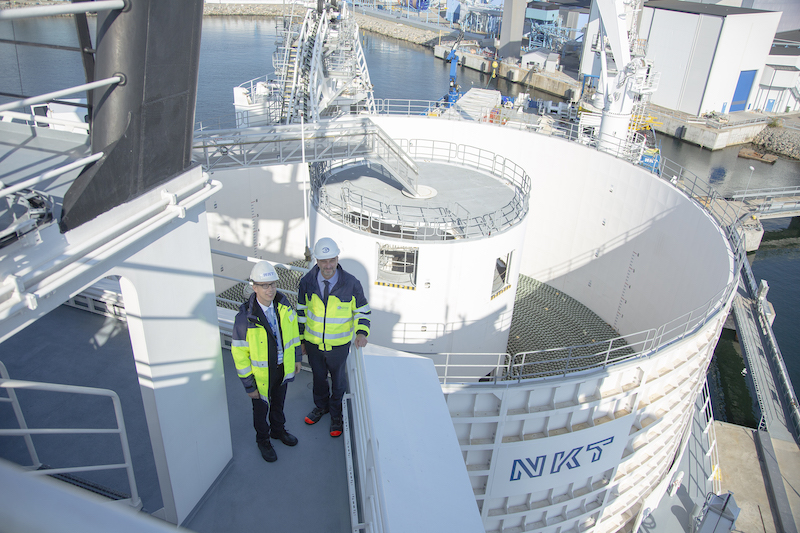
The current cable linking Guernsey and Jersey was laid in 2019 replacing an older version.
Despite being relatively new, the cable can’t meet all of Guernsey’s power needs with the diesel powered generators being used during the winter months to satisfy demand.
GEL has previously made the case for installing a second cable, connecting Guernsey directly with France, but that proposal was never taken any further.
Guernsey’s Electricity Strategy instead focused on reducing demand at peak times, with a politically charged aim of making the island carbon neutral by 2050.
