

Over the course of a year, around 90% of Guernsey’s electricity is imported from France via the cable, meaning we can meet most of the demand with low carbon power.
But that stat only tells part of the story.
The cable itself can carry around 60MW of electricity – direct from certified renewable sources on the continent to our light switches, ovens, and phone chargers.
During our recent visit to the Power Station, we could see that the island was using around 38MW of power – with that number fluctuating as everyone went about their daily lives with demand varying as a result.
Operations Engineer at Guernsey Electricity, Joel Bramer said the overall fluctuation throughout the year can be from as low as 20MW – seen during very warm weather – to more than 90MW – recorded last December.
When demand drops as low as the 20s, the cable has ample capacity to deal with any sudden power hungry surges such as the peak seen each evening when families sit down to have their dinner and watch TV together.
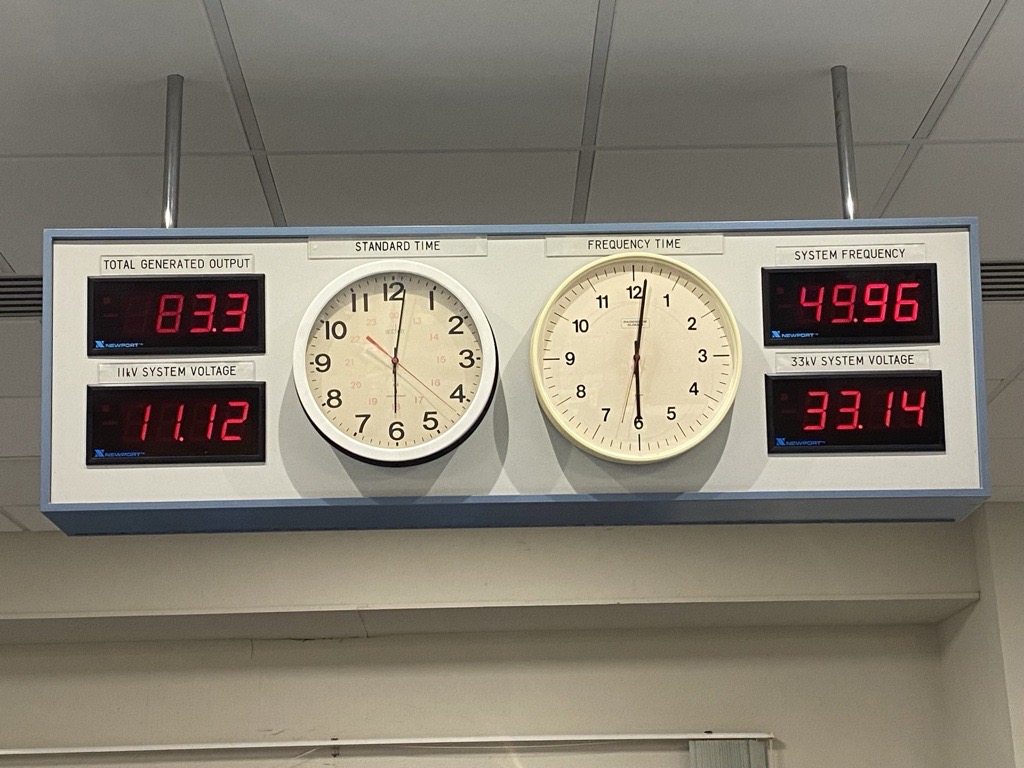
However, when demand peaks in the 80s and 90s – as it routinely does during our cold winters – the cable can’t meet our needs and the power station’s generators have to be fired up daily.
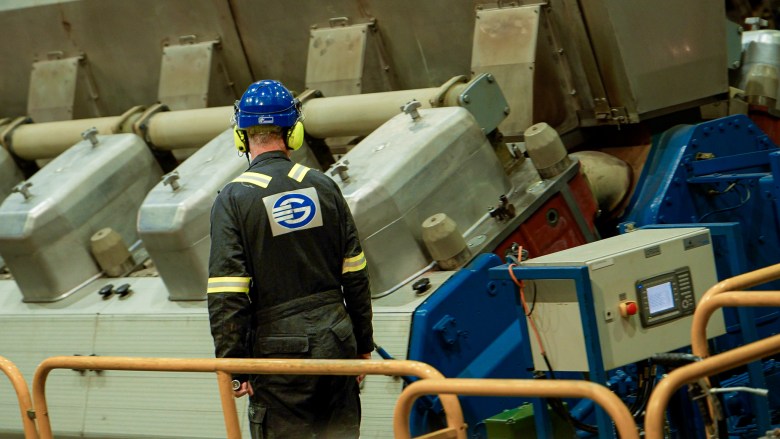
To be ready to do that, and to be ready to meet any sudden emergencies including problems with the cable, Guernsey Electricity has to keep enough diesel on site at the Power Station to be able to switch to on-island generation immediately.
The legal requirement is four week’s worth of fuel.
“It’s actually mandated by the States as a requirement as an electricity generator that we have to maintained enough on island generation to provide all the power demands throughout the year. So, we periodically test start our generators to make sure that they’re still operational and running with no faults or anything like that. So, it’s a little bit like your car. You can imagine your lawn mower as a good example. You keep your lawn mower in the shed all winter, you come out in spring, try and start it, and it just won’t go on, so to avoid any of that trouble, if we were to need an engine urgently for any reason, we periodically test start them just to make sure that they are still running and everything working correctly.”
To make sure they’ve got the diesel ready to go to test start the generators as and when they are needed, GEL keeps a months supply of fuel in a ‘tank farm’ at the Power Station.
Joel said the actual numbers involved – and the capacity of that tank farm – are huge.
“In 2024 we used 5800 tons of fuel to generate electricity. That’s about 5 million litres of fuel, which would be enough to run your car for a million kilometres. That’s 25 trips around the globe.”
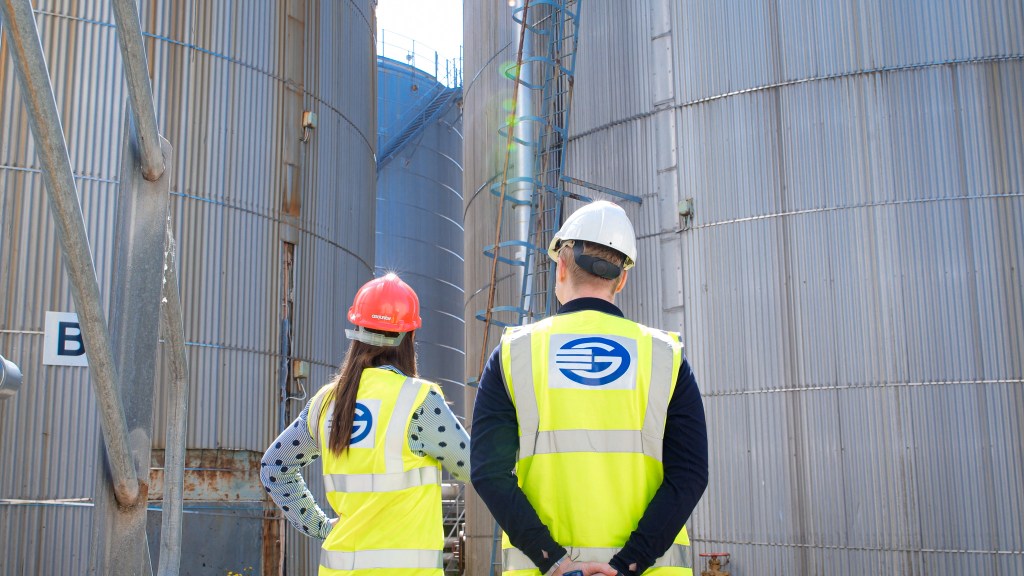
The tank farm contains numerous large storage vessels – some of which are newer than others.
These tanks themselves are subject to regular and rigorous maintenance schedules.
“They’re insulated tanks, so it’s a heated product, and because they’re insulated, we’re required to do what’s called an out of service inspection every seven years. That involves scaffolding the entire tank, removing all of the insulation, and then inspecting the entire tank for any defects, repairing any of those defects, painting re insulating, and then putting the tank back into service. We’ve got six tanks, and it’s a tank a year.
“Every year we have to do this job. And it will just it will continue forever and ever.”
Joel added that, the island currently copes with six vessels in the tank farm – but if demand for on-island generation, on top of what can be imported through the cable continues, then GEL might need to invest in another tank or two, or more.
“Going back to this requirement that we must maintain four weeks of on island operation capacity. As we are today with the six tanks that we have in service, we’re about there. That’s fine. But if demand continues to increase, particularly at the peaks, because we have to cover the peak, it’s not just the average or the best case scenario, it’s whatever the recorded peak is, so if 93MW today becomes 100MW this year or next year or the year after, then we’re going to have to put in more fuel storage to make sure that we’ve still got that capacity on island.”
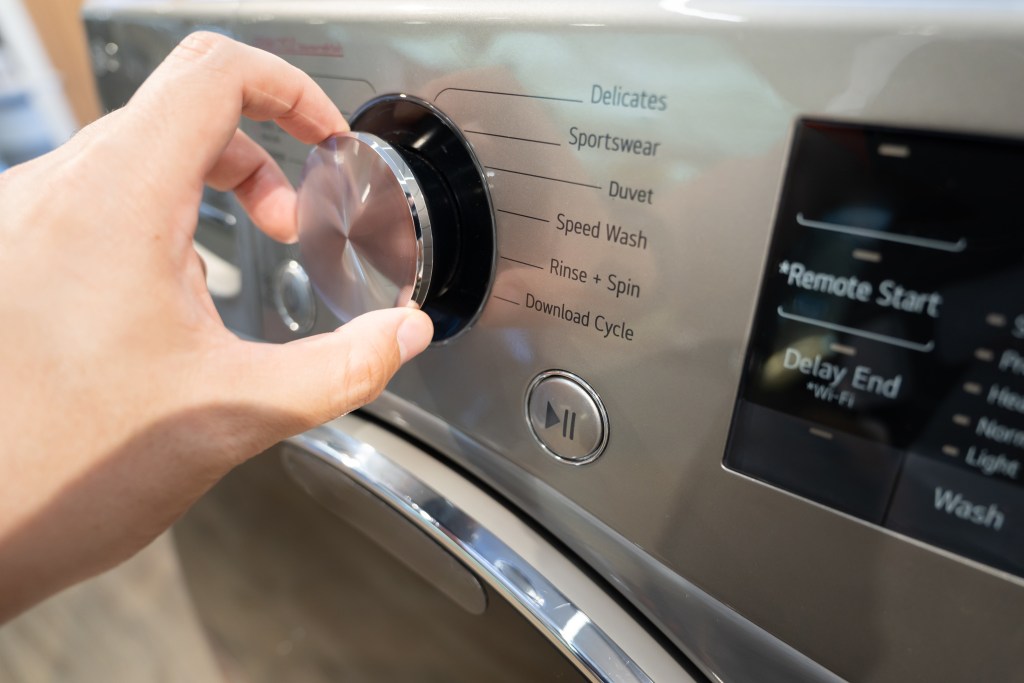
To reduce the need for huge tanks holding millions of litres of diesel to be stored on Northside, GEL tries to encourage everyone to spread their electric use to flatten the peaks caused by everyone using the network at the same time.
Putting your washing machine or dishwasher on overnight, rather than early evening can help, along with using storage heaters or heating your hot water cylinder overnight.
With so many people following similar routines are currently doing these things at the same time, that reflects in how often we see black emissions coming out of the chimneys at the Power Station, particularly during the colder months.
“It’s exactly the same sort of emissions that come out your car exhaust,” explained Joel.
“A lot of it’s CO2 , and there is a small amount of carbon, like soot or that kind of thing. That’s what you can actually see.
“Initially on startup, there is very little load on the engine, and it’s not very good for the engines to run like that. It’s like idling your car at traffic lights, it’s not brilliant for combustion. Once the engine gets loaded up, all the emissions will slowly clear and then you’ll barely notice anything coming out. You’ll see a bit of heat is coming out but after that point the vast majority coming out is CO2 .”
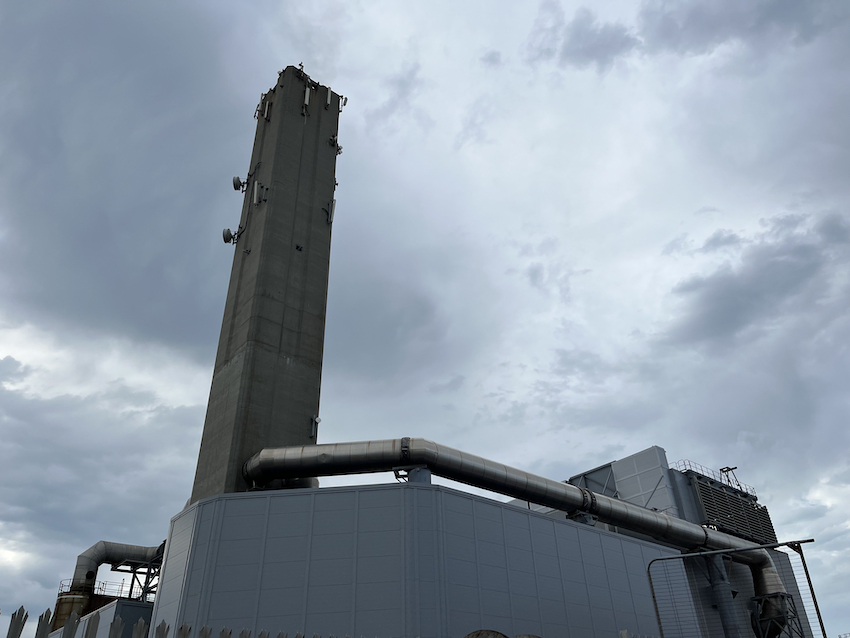
Joel said during the spring, summer, and autumn months, we’ll most likely see emissions coming from the Power Station’s chimneys when the generators are being put through their regular tests.
But as we approach winter, and the demand for heating, hot water, and cooked meals all increase, so does the need for on-island electricity generation.
“From about February/March time, typically when the clock changes, it’s quite a good measure and when we are between the two clock changes during the year we can normally supply everything we need through the subsea cable. There are some exceptions to that, but generally once we get into the summer months we’re completely reliant on the subsea cable imports only. And there’s no need to run generators for island electricity demand.”
Tomorrow…what needs to change at the Power Station.
