

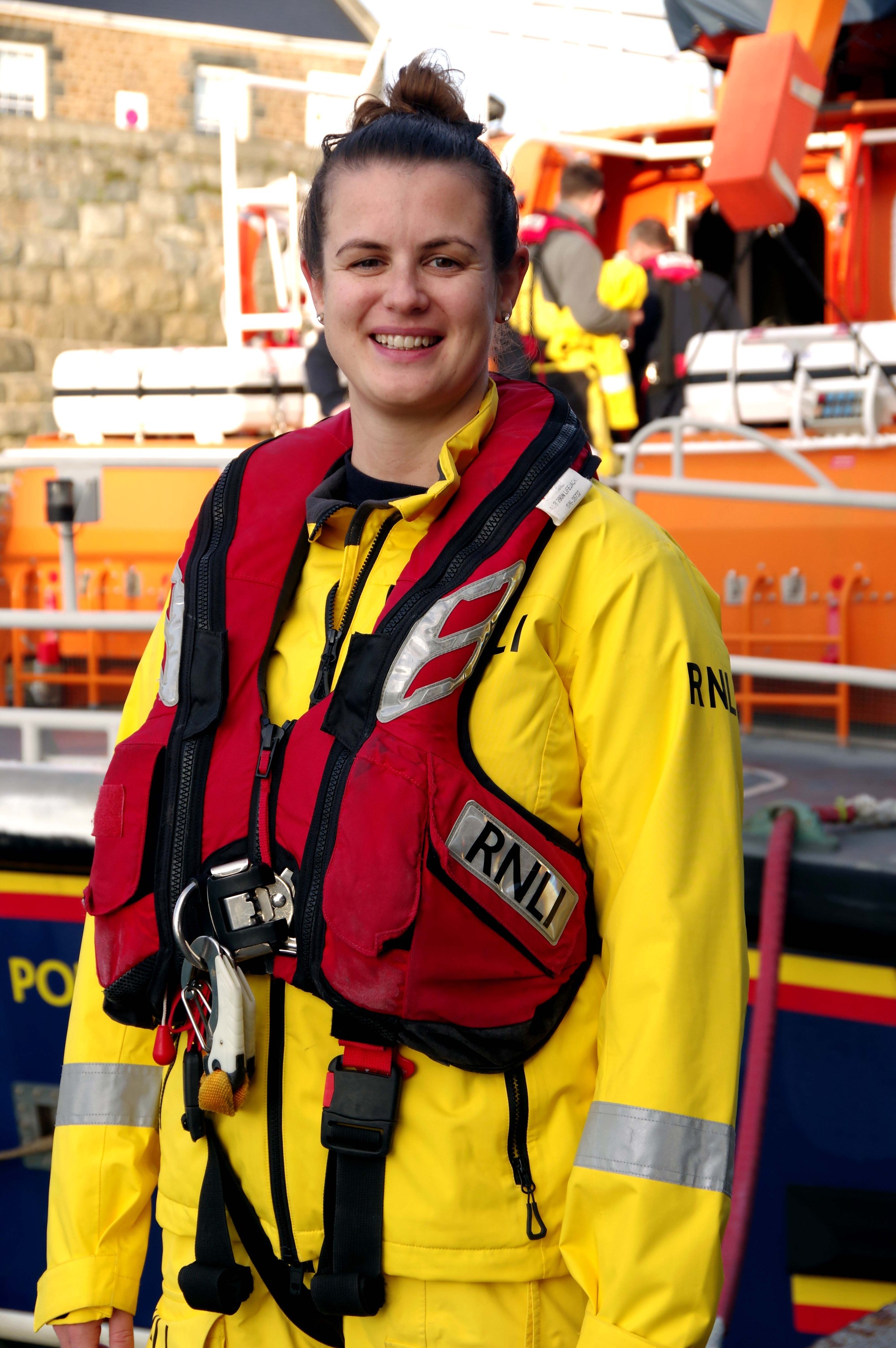
A new chapter has begun at St Peter Port Lifeboat Station with the arrival of its first female crew member – alongside the recognition of three volunteers who have each given 30 years of service.
Three decades of dedication
Robert Alder, Carl Bisson and John Le Tissier are each celebrating three decades of dedication to the lifeboat station, answering call-outs year-round and in all conditions to support the island community.
Richard Evans, Lifeboat Operations Manager, said the station was fortunate to have such an experienced and committed crew.


“The St Peter Port Lifeboat Station is extremely fortunate to have an experienced, committed and dedicated crew,” he said, adding that the RNLI had recognised the commitment Rob, Carl and John had given freely over the past 30 years.
New volunteers… including an historic appointment
Alongside those celebrations, the station has also welcomed five new volunteers into what it describes as its “one crew” lifeboat family.
Alex Broad, George Melbourne, Luke Le Poidevin and Luke Robert have all joined the crew, bringing with them a wide range of professional skills.
Ms Broad, a nurse with A&E experience, holds a master’s degree in adult nursing and is a qualified life support instructor.
Mr Melbourne is a skipper and Mr Le Poidevin an engineer, both working for Sark Shipping, while Mr Robert works for Travel Trident and brings experience as a former naval engineer and commercial diver.


Ms Broad said she was proud to be joining the crew – and to be making history.
“I am so excited to be a part of the lifeboat crew, and I’m especially proud to be the first female crew member,” she said. “It means a lot to be a part of this incredible organisation and I look forward to getting stuck in, learning the ropes (literally!) and saving lives at sea.”
Getting stuck in
Already, the team have got stuck into training.
The new volunteers began their journey by learning the layout of the lifeboat station and vessels, health and safety procedures, use of personal protective equipment, operational protocols, VHF radio communications, teamwork and ropework.
They then progress to practical exercises to prepare them for going to sea on lifeboat shouts.
