


There’s a lot we don’t know about Policy and Resources’ (P&R) tax modelling.
We don’t know what it looks like, as we’re not allowed to see it (the data is apparently too sensitive).
We also don’t know how the modelling works (we’ve asked for the methodology used or the equations – but been ignored).
And now, there’s a new thing we don’t know: whether the people who created it have ever done this kind of thing before or hold any relevant qualifications.
It seems like an important question, given Guernsey’s elected politicians are about to vote on whether to introduce the biggest package of tax reforms in living memory, including GST at 3%.
So Express asked the States a series of questions about the experience of the modelling team.
The answers? We didn’t get any.
Boley Smillie, the Head of the Civil Service, told us he doesn’t believe it would be “fair or appropriate” to provide any information about the modelling experience of the team doing the modelling.
However, he said he was “happy to provide reassurance” that the people doing the modelling were “suitably skilled and qualified to undertake this work”.
Why does it matter?
We’re told the sums all add up.
Policy and Resources (P&R) says its proposals will bring in more than £36m a year in extra taxes, while making the poorest people on the island better off.
What’s more it will only cause inflation to rise by 1.9%, won’t damage employment, and will have a minimal impact on shops and other small businesses.
How do we know? Because P&R told us so.
The members of P&R haven’t actually seen the models themselves – we’re told the underlying data is too sensitive to share, even with our elected deputies.
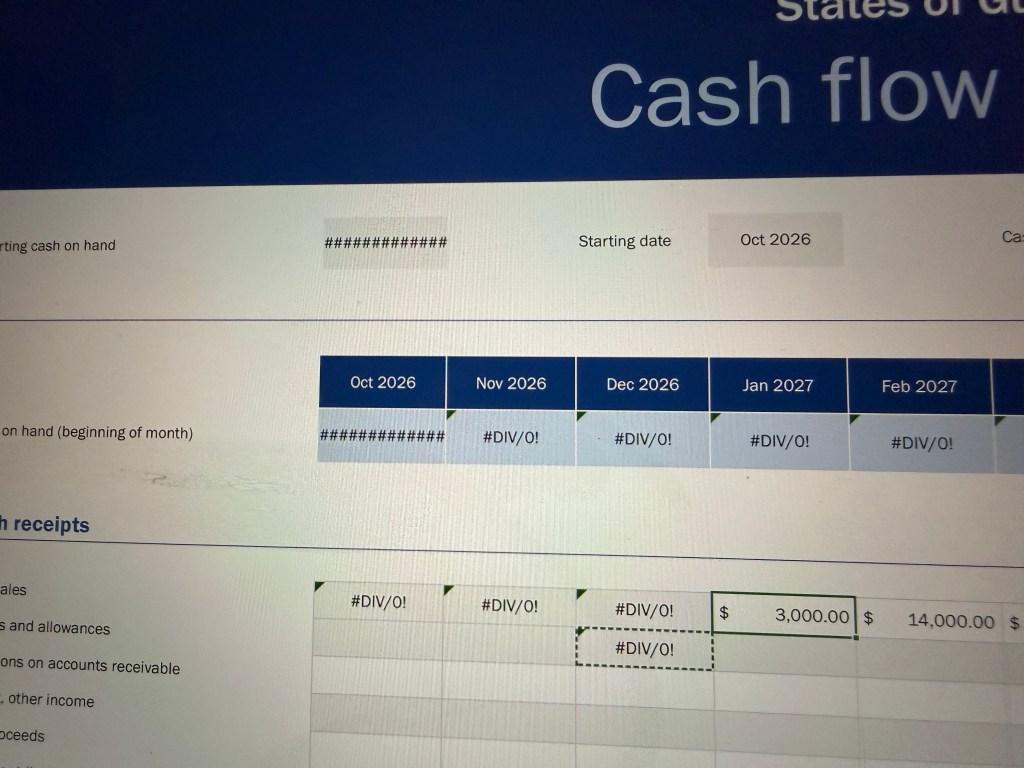
Instead, we now know that just five civil servants have seen the models, which were built in Excel and Microsoft Power BI.
How do the models work? We don’t know.
Are there any typos in any of the Excel or Power BI formulas? We don’t know.
We’ve asked repeatedly to be shown the methodology, equations and formulas behind the modelling. And we’ve repeatedly been ignored.
Anyone who’s ever used Excel knows how easy it is to make a mistake in a formula.
So, if we’re not able to see the model or even find out how it works in principle, then it’s reasonable to ask about the experience and qualifications of the team behind the modelling.
It’s not about blaming them as individuals or about naming them.
We have no reason to doubt they’re doing the work honestly and without an agenda.
Mr Smillie pointed out that civil servants don’t make policy, and he’s right.
But if their sums are wrong then politicians could be making policy based on faulty projections.
We – and more importantly our elected deputies – are not able to examine the evidence directly, and are being given minimal information about how the model works.
Without that, the experience and qualifications of the team doing the modelling matter.
We don’t know if they’re using a standard approach to tax modelling, hold relevant academic qualifications, or if any of them have done similar tax modelling for other jurisdictions.
If so, that would go some way to reassuring the public that the modelling has a better chance of being sound.
If not, how can the public be confident in the modelling?

Mr Smillie previously called for “warts and all transparency” to rebuilt public trust.
That’s something that’s been lacking when it comes to P&R answering questions about the tax reforms and the modelling.
P&R has made it clear over the past few months we are expected just to trust that that people doing the modelling got it perfect.
So whether those people have ever done this kind of work elsewhere is, we believe, a very valid question.
Absence of evidence is not evidence of absence, so it would be unfair to assume that none of the civil servants doing the modelling hold any relevant qualifications or have any suitable experience.
All we can say for sure is that this is yet another question Express has asked the States about its modelling – without getting an answer.
What did we ask – and was it answered?
We put questions to the States about five areas.
Here’s what Mr Smillie said – and what he didn’t.
We’re putting together a piece ahead of the upcoming tax reform / GST debate looking at the technical side of the economic modelling and the experience of the team behind it.
Just to be clear, we’re not looking to identify any civil servant individually. We’re interested in the collective experience and specialist background of the five people who have worked on / had access to the States’ internal modelling.
To help us get our facts right, could you give us a quick high-level breakdown on the following:
- Academic background
Of the five people:- How many have an undergraduate degree in Economics?
❌ Not answered. - How many have undergraduate degrees in related quantitative fields such as Maths, Statistics or Data Science?
❌ Not answered. - How many have a higher degree (Masters, PhD etc) in Economics?
❌ Not answered. - How many have a higher degree in related quantitative fields such as Maths, Statistics or Data Science?
❌ Not answered.
- How many have an undergraduate degree in Economics?
- Professional qualifications
How many hold formal professional qualifications relevant to economics, econometrics, statistics or economic modelling?
❌ Not answered. - Professional membership
How many are members of relevant professional bodies, such as the Royal Statistical Society, Society of Professional Economists or equivalent?
❌ Not answered. - Previous modelling experience
Has anyone within the team previously built or worked on jurisdiction-level economic, fiscal or tax models outside Guernsey, for example at a treasury, government department, consultancy or economic institute?
❌ Not answered. - Description of team experience
Could you provide a brief, non-identifying description of the team’s overall professional experience relevant to economic and tax modelling?
For example, the broad areas of expertise and qualifications represented within the team, the types of economic or fiscal modelling they have worked on previously, and whether that experience includes work outside Guernsey.
❌ Not answered. Mr Smillie did say that he was “happy to provide [a] reassurance” that the people who did the modelling were “suitably skilled and qualified to undertake this work”. However he provided no detail of their skills and qualifications.
—
We’re interested in experience relevant to the technical modelling itself, rather than people’s wider employment histories.
Again, for the avoidance of doubt, we are not asking for names or any other information that would identify an individual.
Boley Smillie’s full statement
“I respect the right of a journalist to ask any questions they consider appropriate, but equally I reserve the right not to answer them where I believe doing so would be unfair to our staff. Having considered these questions carefully, and in the context of wider reporting, I believe the intention is to invite criticism of officers and enable their credentials to become part of the wider political debate.
“If I have misunderstood the purpose of your questions, and they are intended simply to reassure the community that the officers involved are suitably skilled and qualified to undertake this work, then I am happy to provide that reassurance as the person ultimately accountable for their performance.
“Senior leaders should expect to be challenged about the work and decisions for which we are accountable. As Chief Executive, ultimate accountability for the quality of the Civil Service’s work rests with me. However, individual members of staff are increasingly being drawn into political debate simply for carrying out their professional duties. I do not believe that is fair or appropriate.
“Tax reform is one of the most significant issues before the States, and it is right that policy choices are robustly scrutinised. Civil servants do not decide what form of tax reform is adopted. Their role is to provide the professional and impartial information and analysis requested of them. Political committees have a responsibility to test and challenge that work before placing proposals before the Assembly, and it is ultimately elected Members who make the decisions.”
