


Women in Public Life launched a campaign last month to help increase the number of women standing for election in Guernsey’s general election this year.
As part of this, the organisation is continuing to host its ‘Train to Campaign’ skills-based program offering free training on various aspects of campaigning, including door knocking, hustings, and social media.
The ‘Train to Campaign’ program began in February, and the Practical evening sessions are ongoing.
Women in Public Life Chair, Shelaine Green said: “If you’re a woman thinking of standing in June 2025, talk to us. We can help you get up to speed on current issues, understand the election process and plan your campaign. And give you moral support – your island needs you.”
A repeat of the original launch event is scheduled for Sunday, 23 March, and places can be booked on Eventbrite HERE.
What do the numbers say, and who makes up our current cohort?
Currently, only 20% of Guernsey’s States representatives are women.
Out of the 38 representatives, this list isn’t long, just eight names in fact – Deputies Sue Aldwell, Yvonne Burford, Tina Bury, Lindsay de Sausmarez, Andrea Dudley-Owen, Sasha Kazantseva-Miller, Victoria Oliver, and Heidi Soulsby.
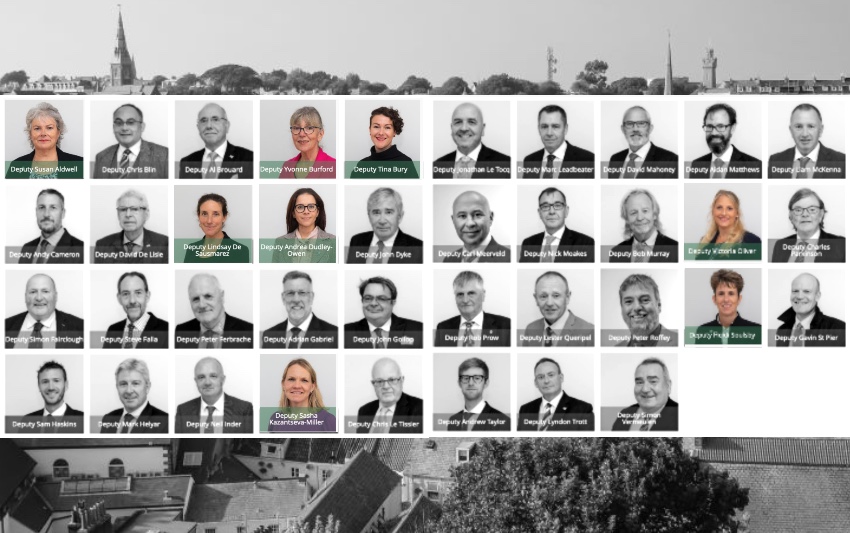
Whilst female politicians may not be as numerous as their male counterparts, there are some extremely important and senior roles held by these Deputies.
Deputy Heidi Soulsby, former President of Health during the COVID pandemic, is now Vice President of Guernsey’s most senior committee, Policy and Resources. Deputy Andrea Dudley-Owen holds the top seat for Education, Sport and Culture, while that committee has Deputy Susan Aldwell as a member, who is also a member of Home Affairs.
Deputy Lindsay de Sausmarez is the Vice President of Environment and Infrastructure, which Deputy Tina Bury is also a member of.
Those are just their committee seats, of which there are only 35 in total.
This doesn’t include the work they all do on various Authorities, Boards and Commissions.
Further afield…
Guernsey currently sits 123rd in the Inter-Parliamentary Union’s global ranking of women in national parliaments.
“On International Women’s Day it’s sobering to look across the world and see that in terms of female representation in government, Guernsey sits just one place above Saudi Arabia and Turkey,” said Ms Green.
“Whereas Jersey, with 43% of women in its Assembly, would be in the top 20 and the UK Parliament is in 26th place with 40.5%.”
Ms Green continued: “If a woman stands for election she has just as much chance of success as a man. Guernsey simply needs more women to put themselves forward in the first place and we are working hard to encourage that. Without better representation, the views and life experiences of women are not being heard when crucial decisions are taken that affect everyone in the island.”
According to Gov.gg, the latest available census information indicates that Guernsey’s population was 64,781 on 31st December 2023.
The previous data showed that in 2021, Guernsey population was split 32,077 women and 31,386 men. It’s not hard to do the math to see what equal representation would look like, but together those populations equal 63,463, meaning women make up 50.54% of Guernsey’s population.
If the split has remained the same over the past four years, and if seats were representative of the population, female candidates would be looking at 19.2 seats of the 38 available.
