

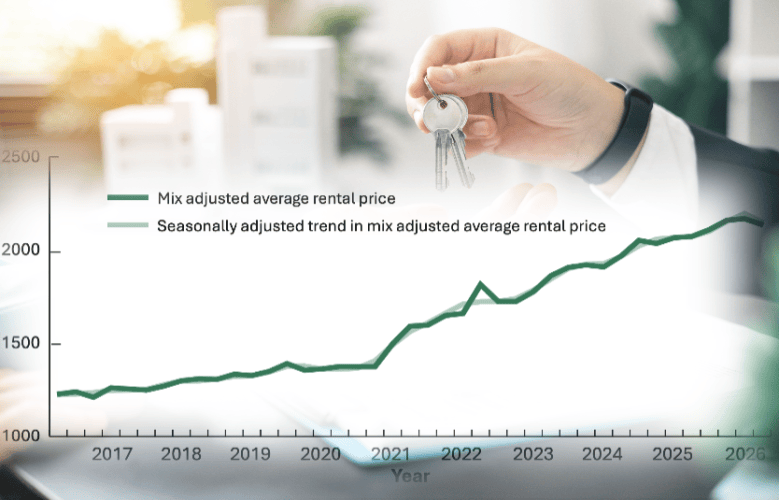
Average residential rents have decreased very slightly over the past few months – but they remain higher than they were a year ago, and much higher than they were five years ago when prices started to escalate during the pandemic.
The latest data released by the States – related to Quarter 3 2026 – shows that renters are currently paying £2,134 per month on average.
The average paid has dropped £4 from the spring, and £36 since the start of the year.
It is the first time that rental prices have dropped in successive quarters for four years.

Estate Agents warn that demand continues to outstrip supply in the rental market, keeping it “resilient” – with “relocating professionals” still looking to take on tenancies.
“The latest figures highlight a resilient rental market, with average rents broadly stable quarter-on-quarter and 1.1% higher than a year ago,” said Emily Rowe, an Associate in the residential lettings and property management team at Savills Guernsey.
“Demand continues to outstrip supply for quality rental properties, which is helping to support values despite a more moderate pace of growth.
“Well-presented homes remain highly sought after and are attracting significant interest from prospective tenants – particularly among relocating professionals and families.”

Political changes in the UK and geopolitical changes elsewhere have been credited for contributing to the continued rise in house purchase prices.
States data shows that the current average purchase price for a home is £613,694 – up 0.8% from earlier this year, 3.6% higher than a year ago, and 10.7% higher than five years ago.
James Starkey, Head of Residential Sales at Savills Guernsey, said: “In the face of political change in the UK and ongoing geopolitical tensions further afield, the island’s property markets have continued to show their strength.
“Where values have aligned with buyers’ expectations there has been robust activity and more deals are now being achieved closer to the guide price compared to last year and the year before.”
Fewer properties were sold during Q3 of 2026 compared to the previous quarter and the same time last year.
Mr Starkey added that wasn’t “unexpected”.

“The fall in the number of sales in the three months to September is not unexpected as it coincides with the quieter summer holidays, and year-on-year the figures are broadly similar. Average values also appear to have stabilised.
“Higher interest rates and the increased cost of borrowing could well affect people’s desire to move as we head into the winter. As a result, needs-based demand will likely continue to fuel activity in the short term, with correct pricing remaining crucial for those hoping to sell.”
28 properties were sold on the open market between July and September, with a raw median price of £1,455,188.
Mr Starkey said this “particularly strong” demand for open market properties has been “largely driven” by “buyers influenced by the UK’s Autumn Budget and those preparing for the end of the tax year”.
He suggests there could be further movement on the open market before the year ends.
“The number of open market transactions in the three months to the end of September was particularly encouraging and it’s also been a strong October – with more sales now completed than for the whole of 2025 put together. The island looks likely to surpass 100 transactions by the end of December, which is a promising sign for 2027.”
