


More Stolpersteine have been laid in Guernsey, with one due to be placed in Sark soon, as part of an ongoing Europe-wide remembrance project.
The ‘Stumble Stones’ were thought up by an artist who wanted to cement the stories of some of the people who suffered during World War Two.
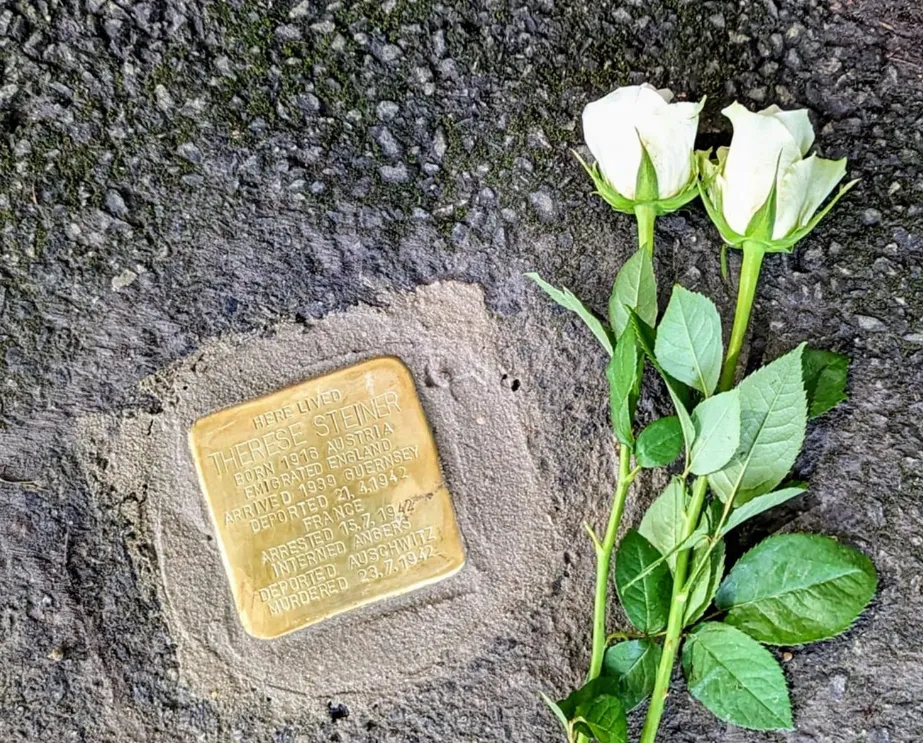
The ‘stones’ are small plaques embedded in the ground or pavements, giving basic details about the life memorialised.
As a continuation of work carried out to place Stolpersteines across Guernsey in 2024 the newest editions include one bearing the name of Ernest Legg who was arrested and deported for acts of resistance and defiance against the island’s German oppressors during the Occupation.
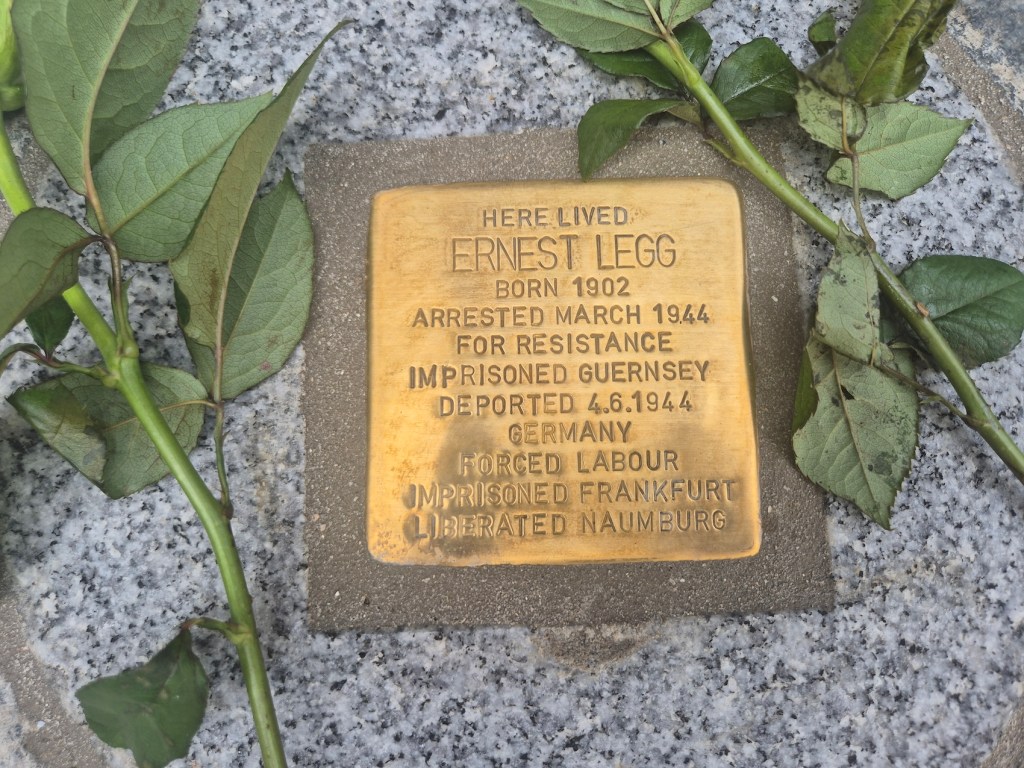

The Stolpersteine commemorating Mr Legg’s memory was unveiled in the Bordage yesterday. It is one of seven that laid across Guernsey yesterday, with six more following today. 15 were laid in 2024.
During a remembrance ceremony at the Sunken Gardens yesterday lunchtime, the Bailiff, the Dean of Guernsey, and politicians joined relatives of Mr Legg and others immortalised in the stones.
Mr Legg’s niece, Amanda Hibbs was among them.
His Stolpersteine is embedded outside number 38 the Bordage, where he lived in St Peter Port. An unsung hero, he was a major part of the Guernsey Underground News Service alongside his brother Joe.
“It’s just lovely to have him remembered,” said Ms Hibbs. “I see him very much as an unsung hero, and it’s just lovely to have his stone there.”
Describing her uncle as “unassuming”, she said he was never one to share what he went through during those war years.
“He never spoke about his time in Germany, and maybe that was one of his ways of coping with it,” Mrs Hibbs said, continuing, “We got the odd snippet because obviously he had a terrible injury.”
Mr Legg had been sent to Frankfurt am Main-Preungesheim Prison, and Naumburg Prison, where he was mistreated and abused.
“He was thrown down a set of concrete steps, and they suspect that he fractured his hip and never got any treatment, so he walked with a terrible limp for the rest of his life, and was in a lot of pain, but he never really spoke about any stories at all,” said Ms Hibbs.
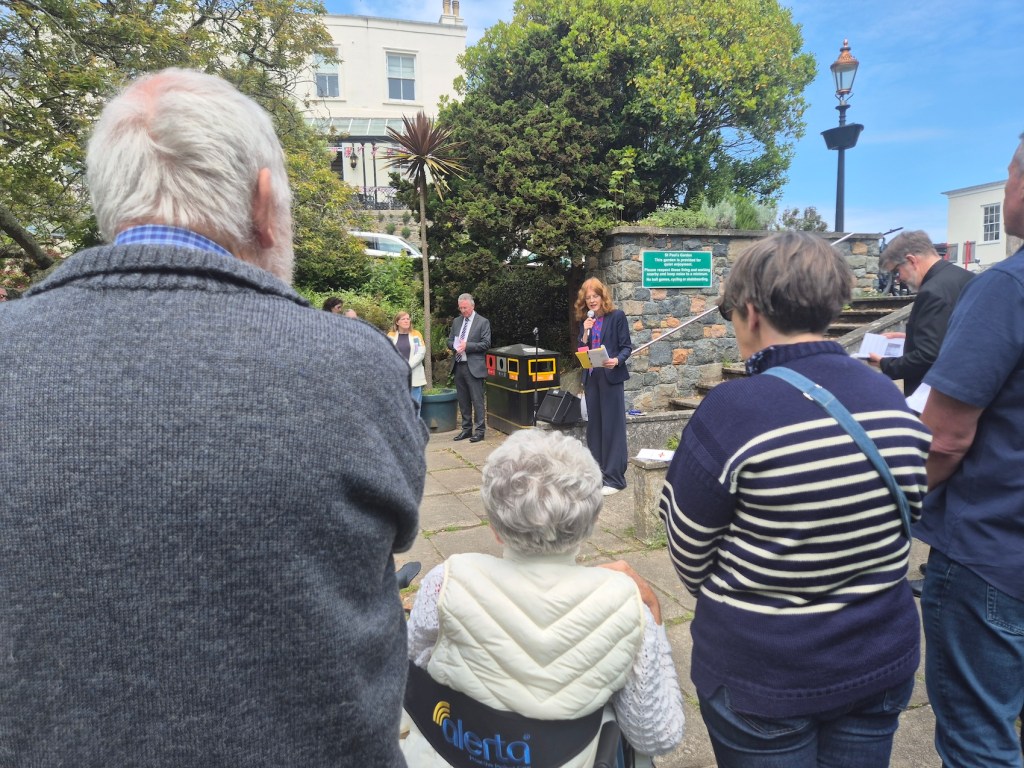
For Mr Legg’s family, the stone serves as a vital way to keep his memory alive and ensure his contributions to the resistance are not forgotten.
The importance of a permanent history
The Head of Culture and Heritage Services at Guernsey Museums, Helen Glencross said she’s pleased that Guernsey is part of the Stolpersteine project, with stones now embedded across Europe.
“There’s over 100,000 stones in Europe across over 2000 locations,” she told Express.
“It’s a 10 centimetre cube with a brass cap that has someone’s name and records, sort of, what happened to them when they were deported, this kind of information.”
The Stolpersteines provide a moment to stop, reflect and keep their stories alive, she said.
“The information is right there for people who are passing by, and the idea is that it’s meant to mark a moment of contemplation as a sort of pause.
“They’re so beautiful in their own right as well. I pass several on my normal routine, and it is an opportunity to just stop and remember the scheme, and remember all the individuals that have been, commemorated in some form with the Stolpersteines.
“All of these people suffered as a result of Nazi persecution, and Liberation Day. What better time to remember those stories, and to stop and reflect and remember.”
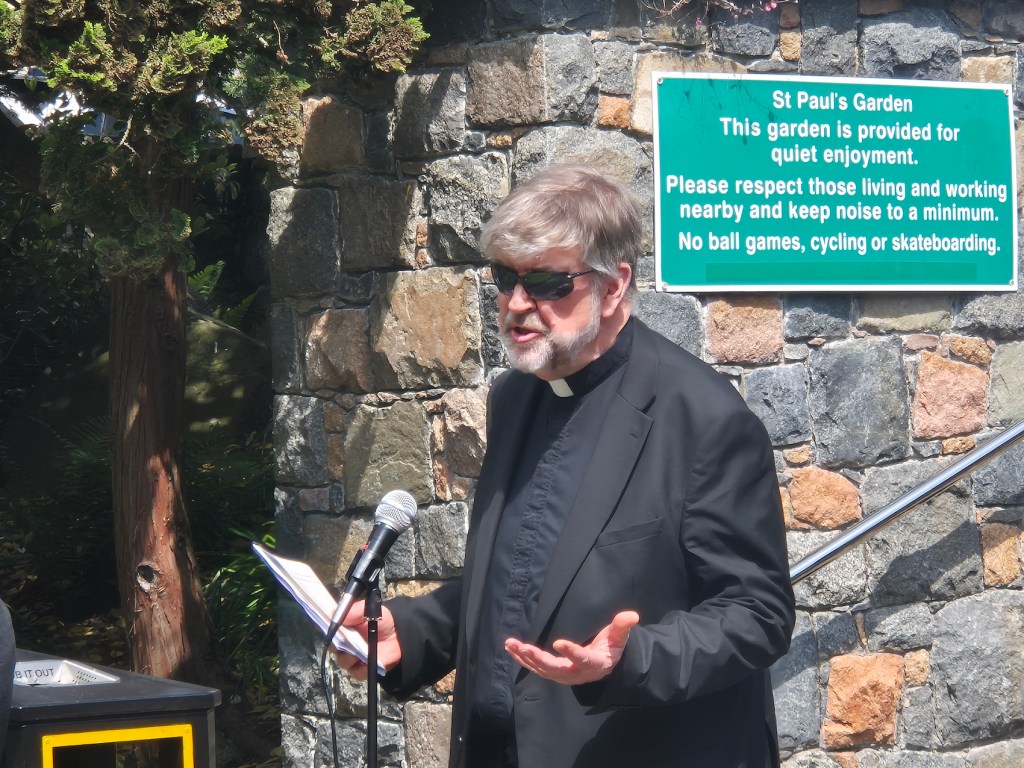
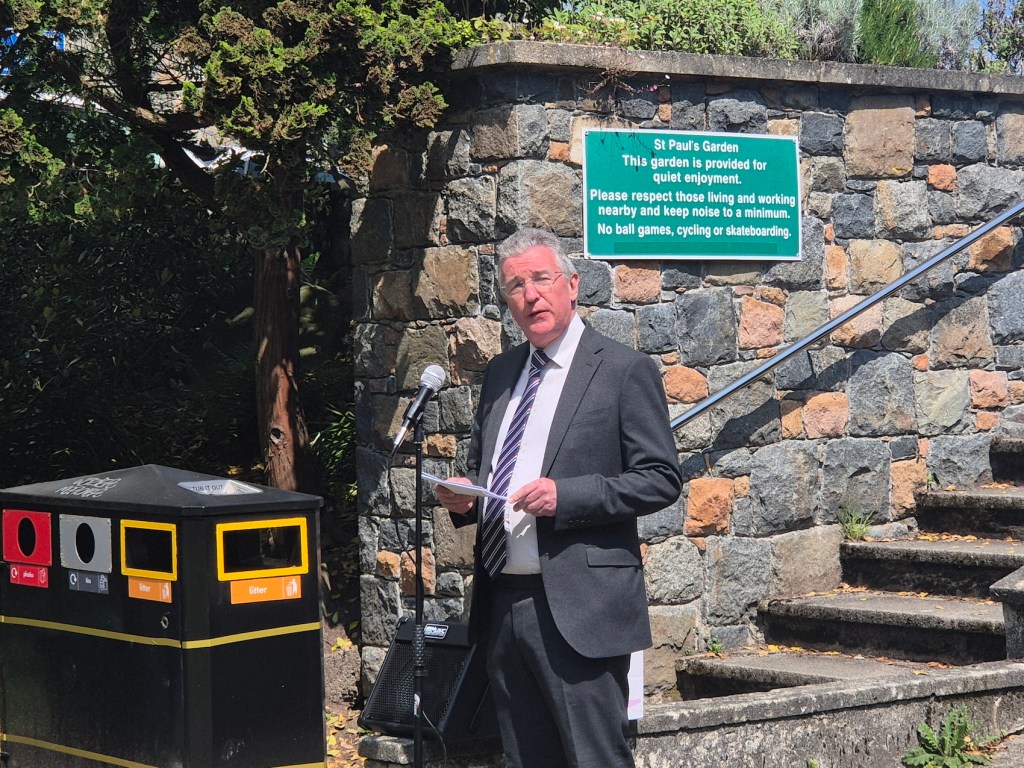
Ms Glencross emphasised the emotional importance of the project for local families, alongside the Island Memories Project, which continues to collect and record the accounts of those affected by the Occupation.
“Last year we were able to collect and record and photograph people who had these stories.
“If there’s still people out there that haven’t yet engaged with that process or been recorded, absolutely get in touch with us, because we’d love to hear from you.”
Cementing stories with Stolpersteines
The Stolpersteine project can be traced back to 1991, when artist Gunter Demnig painted the path that 1,000 Sinti and Roma had been forced to take when they were deported under the Nazi’s.
After that paint had faded, he made the artwork permanent by engraving brass-plates and fixing them into the ground.
Nearly 30 of the stones now lie across Guernsey.
The stones unveiled yesterday and today bear the names of Frederick Duquemin, Ernest Legg, Cecil Duquemin, Gerald Domaille, William Quin, Frank Whare, Jack Harper, Norman Dexter, Walter Laine, Alfred Howlett, Charles Friend, Brian O’Meara, and Alfred Baker.
Stones dedicated to Therese Steiner, Joseph Gillingham, Percy Miller, Auguste Spitz, Charles Machon, Herbert Smith, Marianne Grunfeld, Frank Falla, Frank Tuck, Elisabet Duquemin, John Ingrouille, Kingston Bailey, Sidney Ashcroft, Marie Ozanne, and Louis Symes, were set in place two years ago.
You can find out more about their individual stories on the Guernsey Museums website.
“There’ll come a time one day when it isn’t within living memory”
Dr Gilly Carr is one of the leading voices behind the initiative.
She’s a Professor of conflict, archeology and Holocaust heritage at the University of Cambridge.
“This is something that I care about immensely,” she said. “For many years, I’ve been talking to the families of those concerned, and I know how much it matters to them.”
Dr Carr has local roots, and truly understands the importance of how occupation helped forge the islands post-war identity.
“The occupation is part of Channel Island identity, and I think it always will be.
“I think the occupation is still within living memory, and there’ll come a time one day when it isn’t within living memory, but I think it’s such an embedded part of Channel Island identity that I can’t really see it fading.”
Dr Carr’s work in protecting the legacy of the Channel Island legends who resisted the occupying forces, is shared through the Frank Falla archive, a website with a database stacked with the Professor’s findings.
“Every single archive that I found in existence can be found on the website, people can see it for themselves, they can read it, and they can see the evidence for what I’m writing and where family members have contacted me.
“I’ve included their family stories as well, and the Frank Falla archive really stands as the source of information for anyone who wants to learn about what Channel Islanders did.”
