


Despite the ongoing challenge for the UK and France in dealing with ‘small boat crossings’, Guernsey’s exposure remains limited.
A Freedom of Information request has shown that there has been just one official correspondence between the island’s External Relations Minister and the UK Government since he was appointed last year.
Deputy Steve Falla was appointed as Policy and Resources Lead for External Relations in July 2025.
The FoI said that between then and the beginning of September this year, he had not “engaged formally in discussion on this topic with other ministers, civil servants or other governments in this capacity on behalf of the States”.
It also acknowledged that Deputy Falla received one email, on 14 September, after the FoI had been lodged, “containing information relevant to the request as part of a wider External Relations briefing”.
The content of this email was exempt from being released under the FoI code as it included policy advice for the States of Guernsey.
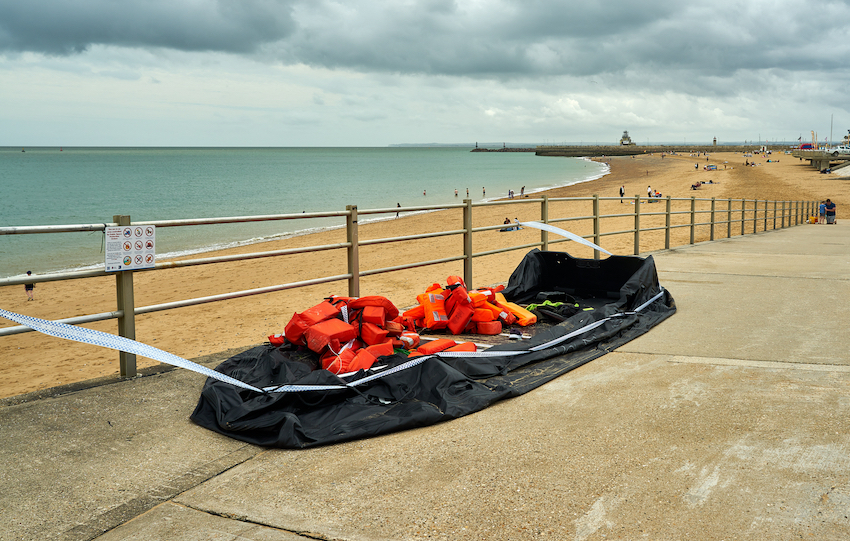
Days after that email was received – the content of which is unknown – a statement was issued by the Committee for Home Affairs clarifying that the “Bailiwick remains well protected against the risk of so-called ‘small boat crossings’ “.
The Home Affairs President made a commitment to ensure “it stays that way”.
Deputy Marc Leadbeater said the update was issued to “reassure islanders that we are not complacent and that we have well-established arrangements in place to respond to any potential incident”.
The statement was published days after a migrant vessel made a direct crossing from Normandy to Portsmouth.
The close proximity of both ports to the Bailiwick had led to commentary on social media with people asking if Guernsey, Alderney, or any of the other islands were a target for the ‘small boat crossings’.
Deputy Leadbeater said it was considered to be very unlikely for various reasons.
“Our geography, maritime environment, and separate immigration arrangements mean the Channel Islands are very different from the routes that have been used for small boat crossings elsewhere,” he explained.
“While we continue to monitor developments carefully, there is currently no evidence that the Bailiwick is becoming a destination of choice for organised immigration crime groups. However, we take these issues seriously and continue to work closely with partners in France, Jersey and the UK to ensure we have access to the latest intelligence and are prepared for a range of scenarios.
“I am confident that the Bailiwick is not an easy route for these crime syndicates. We are not a soft target, and we are simply not an attractive destination as a stepping stone for illegal entry into the UK because any crossing is unlikely to achieve the outcome that organised criminal groups are seeking. We will make sure it stays that way.”

Between July 2025 and July 2026, approximately 34,000 people were recorded as crossing from France to the UK via a ‘small boat crossing’, according to the UK Home Office.
The Committee for Home Affairs said if an attempt were made to reach one of the islands of the Bailiwick, Guernsey Police and the Guernsey Customs and Immigration Service have “a strong track record” of dealing with it.
The committee gave an example of three Albanian nationals who were arrested and returned to France in 2024 after sailing into Guernsey on a pleasure craft.
There have been no other documented attempts by migrants to land in the islands illegally – although the UK government did briefly consider using Alderney as a base to process migrants.
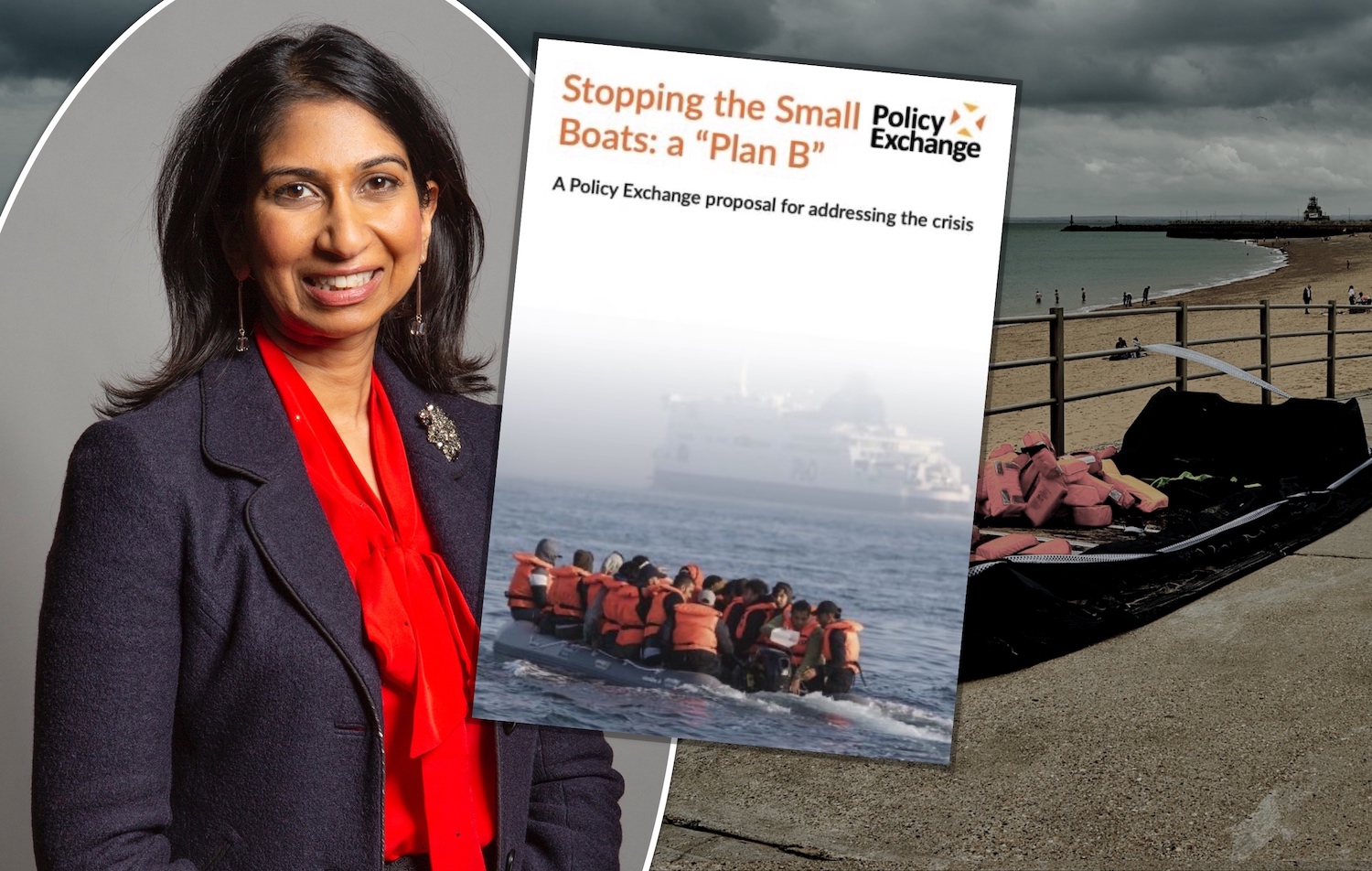
In 2022, the UK’s then Home Secretary had looked at the idea – with a working title of ‘Stopping the Small Boats: a ‘Plan B’ ’.
The 44-page report assessed where migrants who tried to cross the Channel could be taken if their immediate return to France was not possible.
The main locations suggested were British overseas territories including St Helena, Ascension, and Tristan de Cunha – with the Channel Islands suggested as next in line, as they are “outside the UK but proximate to France”.
The report looked at Guernsey and Jersey, but suggested Alderney would be most appropriate – which was strongly criticised by the island’s politicians.
Suella Braverman had to resign as Home Secretary before the idea could be progressed after she shared a sensitive document with an influential right-wing backbench MP using her personal email address.
