


Following Feral Cat Day on Friday, the GSPCA is highlighting the importance of responsible pet ownership, neutering and its ongoing work to help cats across the islands.
Unlike stray cats, feral cats are often unable to adapt to home life and prefer to live outdoors, away from humans.
After decades of work by the GSPCA and the former Guernsey Animal Aid, feral cat numbers are now very low.
This is largely thanks to the GSPCA’s trap, neuter and release (TNR) programme, which is carried out when appropriate, a spokesperson said.
Ali Le Huray, GSPCA Deputy Manager, said: “Every cat is different and it’s important that we assess each one as an individual.
“While some cats may become loving companions in family homes, others are much happier living a more independent life with suitable outdoor accommodation and ongoing care.
“Feral Cat Day is a great opportunity to remind people about the importance of neutering their cats and seeking advice if they come across a cat they are concerned about.
“Early intervention helps prevent unwanted litters and improves welfare for cats across our islands.”
A feral cat that has been neutered can be identified by a small ear tip, where the end of its ear has been removed as a quick visual marker.
The charity also carries out this work in Sark.
Without neutering, feral cat numbers can increase quickly, leading to the spread of disease and injuries caused by fights.
One recent success story is Bear, a black-and-white, long-haired kitten trapped in Castel during the summer.
Although not feral, he had not been socialised with people and was nervous as a result.
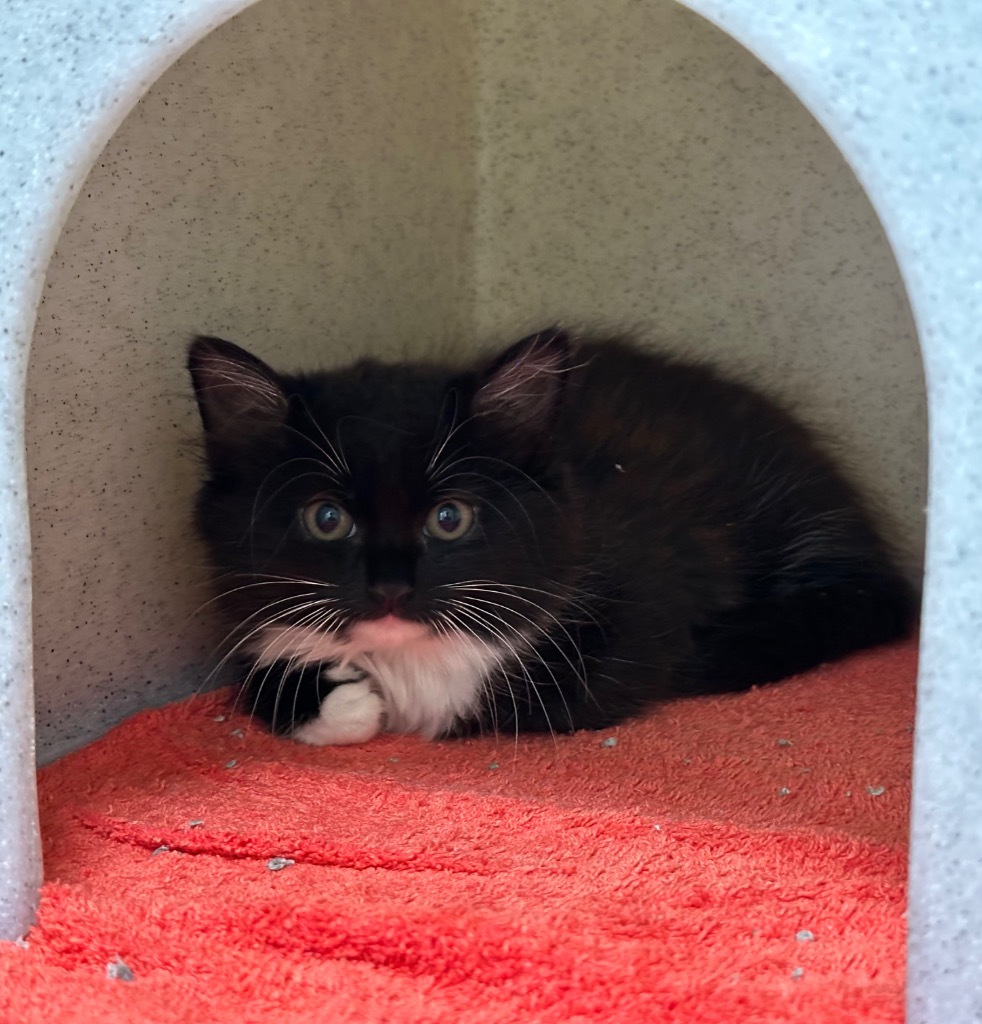
Following care and socialisation, Bear is now flourishing and will soon move to a permanent home.
Another case involved one of the most feral cats the team had encountered in years.
The adult tabby was trapped, treated and neutered before being found a suitable outdoor home where he could continue his independent lifestyle under the care of a dedicated owner.
Steve Byrne, GSPCA Manager, was on duty when the cat arrived.
He said: “He was certainly one of the most feral cats we’ve seen in recent years. He was incredibly lively and full of character, so I nicknamed him ‘Bonkers’.
“While many cats can be socialised and find homes, there are some that are happiest living independently. The important thing is finding the right outcome for each individual cat.
“We’re very fortunate in Guernsey that truly feral cats are quite rare. That is down to many years of responsible pet ownership, neutering campaigns, and the hard work of the GSPCA, Guernsey Animal Aid and our community.
“Neutering remains one of the most important things owners can do to help prevent unwanted kittens and reduce suffering.
“If people are thinking about adding a cat to their family, please consider adopting. Every cat deserves the right home, whether that’s a playful kitten, an older cat, a nervous cat needing patience, or even a more independent farm cat.”
