


Every day, thousands of islanders type two familiar letters without a second thought – gg.
Whether it’s checking this week’s bin collection on gov.gg, ordering pizza from food.gg or even reporting out-of-control weeds at weedwatch.gg, those two little letters are the gateway to a world of websites for thousands of islanders and millions more people worldwide.
But did you know those two little letters are 30 years old today?
The .gg domain officially joined the internet on 7 August 1996 after a successful campaign by Alderney resident Dr Nigel Roberts and colleague Laurie Brown, who argued that Guernsey deserved its own digital identity.
A place on the internet
However, that digital identity was far from guaranteed.
“We were told that all three Crown Dependencies were to be lumped in with the UK under .uk – and that was that,” Dr Roberts said.
“The absurd part was that some uninhabited British territories – rocks whose only residents were penguins and the occasional visiting scientist – already had internet codes of their own.

“The Channel Islands did not.”
After months of emails, research and lobbying, the pair eventually persuaded internet authorities to create separate domains for Guernsey (.gg), Jersey (.je) and the Isle of Man (.im).
On 7 August 1996, .gg officially entered the internet’s master directory.
The internet it joined looked very different to today’s connected world.
Registering a domain name involved forms sent by fax, invoices arriving in the post and payments made by cheque, while most islanders were only just becoming familiar with the World Wide Web through dial-up internet connections.
For years, .gg quietly served as Guernsey’s online home, appearing on government websites, businesses, charities and community organisations across the Bailiwick.
Then came an unexpected twist.
Game on
For most of its life, .gg was simply Guernsey’s address on the internet.
Today, however, millions of people encounter those same two letters every day without knowing they belong to the Bailiwick.
Across the world, “GG” has become shorthand for “good game”, the phrase players often type at the end of an online match.
As esports and online gaming exploded in popularity, Guernsey’s domain found an audience nobody had anticipated.
It now appears on some of the world’s most-popular gaming websites, like fortnite.gg as well as online forums where gamers share tips and tricks.
Unlike some country-code domains that were deliberately marketed overseas, Dr Roberts said .gg’s rise was entirely accidental.
“We didn’t plan any of it,” he said.
“The gaming world simply adopted us – and now, at every moment somewhere in the world, someone joining a game is routing through a system run from a small island in the English Channel.”
Game recognises game
The connection is perhaps more fitting than most people realise.
Long before helping secure .gg for Guernsey, Dr Roberts was part of the team behind MUD – Multi-User Dungeon – at the University of Essex in the late 1970s.
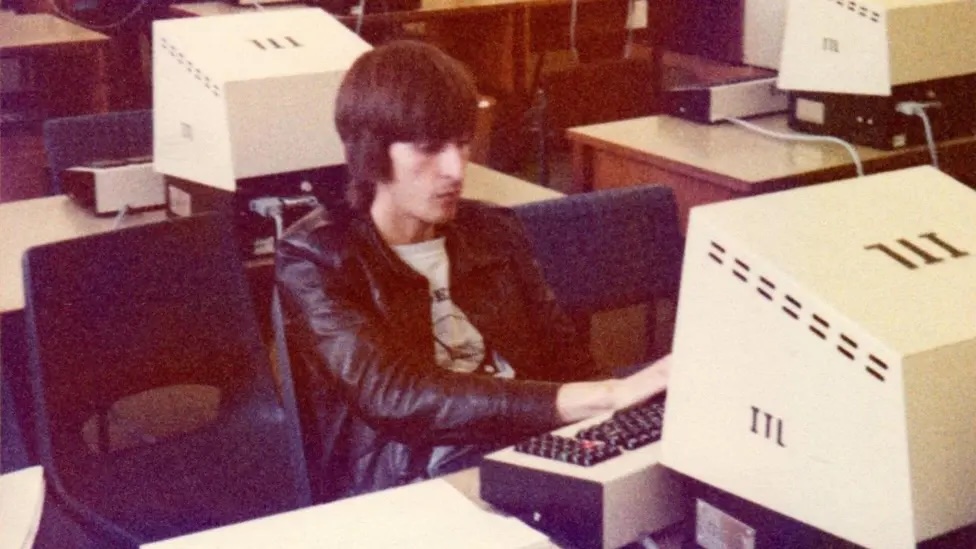
Widely regarded as the world’s first multiplayer game, it helped pioneer the idea of players sharing the same virtual world decades before today’s online gaming boom.
In 2020, the university awarded him an honorary doctorate recognising both his contribution to online gaming and his work establishing the Channel Islands’ internet domains.
Still carrying Guernsey’s name
Thirty years on, .gg remains Guernsey’s digital calling card.
It appears on everything from government services and local businesses to international gaming platforms used by millions of people around the world.
And despite the arrival of thousands of new internet domain endings over the past three decades, Dr Roberts believes it still has a unique place online.
“A place-based identity like .gg still holds its own, carrying Guernsey’s name out to the rest of the world every single day.”
Not bad for two little letters that almost never made it onto the internet at all.
