

A potential shark sighting at St Ouen’s Bay last weekend has reignited public fascination with one of the Channel Islands’ most misunderstood marine animals.
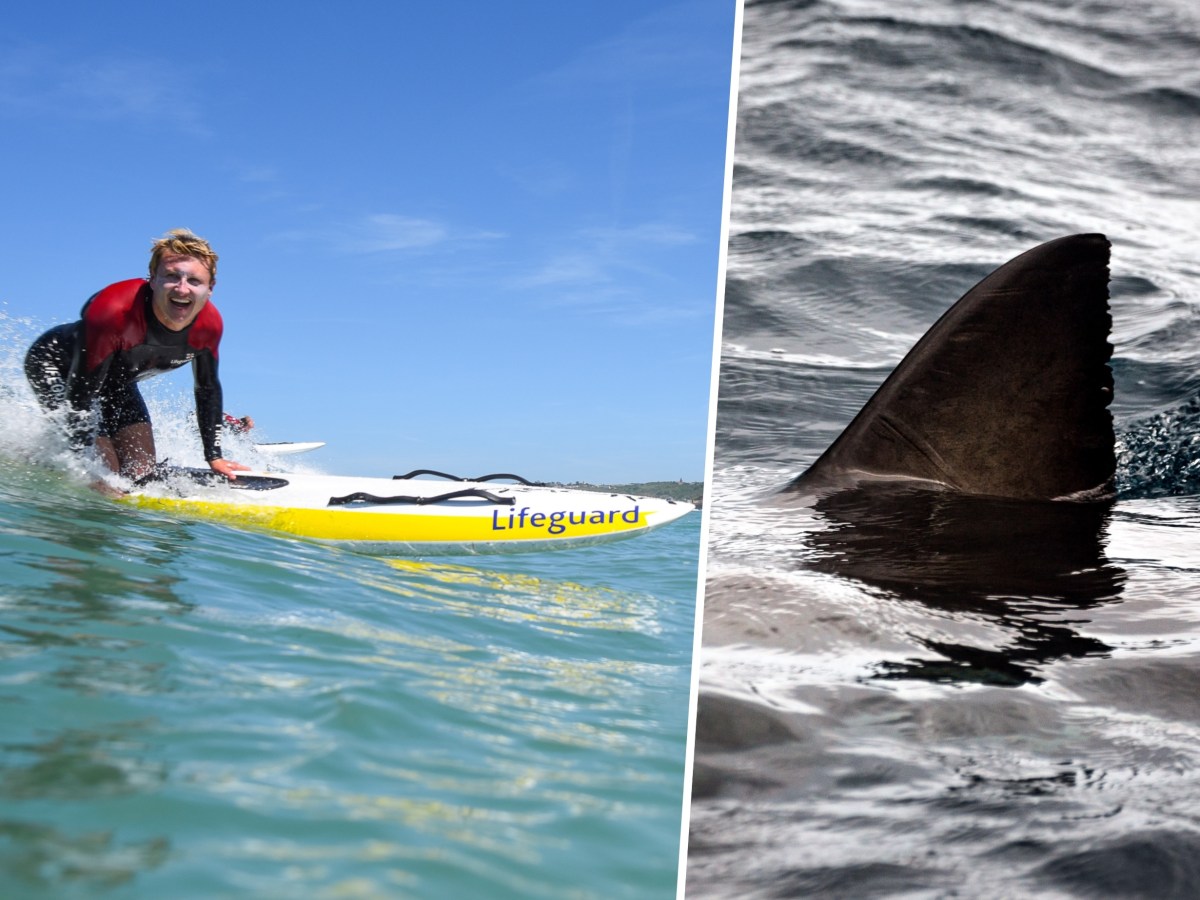
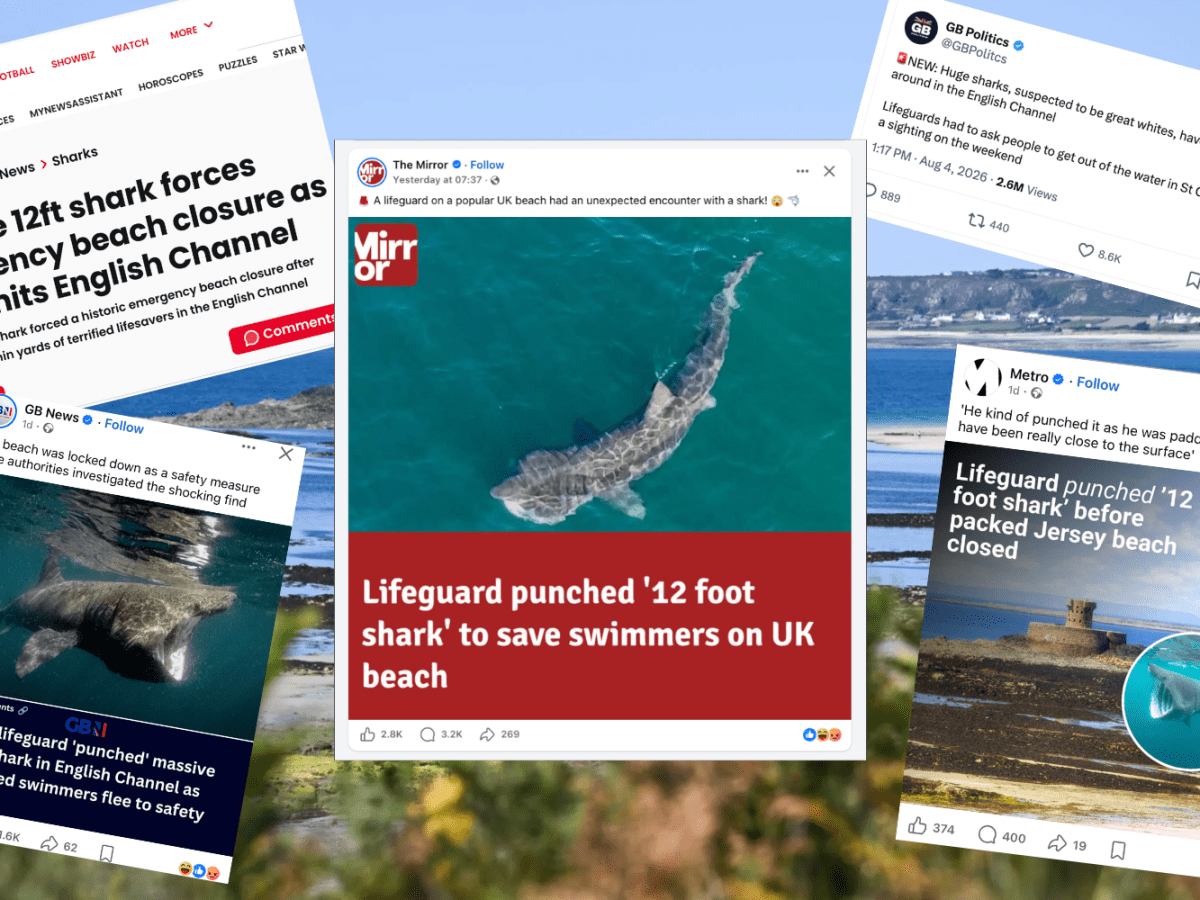
But while sharks have patrolled local waters for centuries, experts say the reality is far removed from the Hollywood stereotype.
For many islanders, the word “shark” conjures images of great whites and blockbuster films, but the reality is rather different.
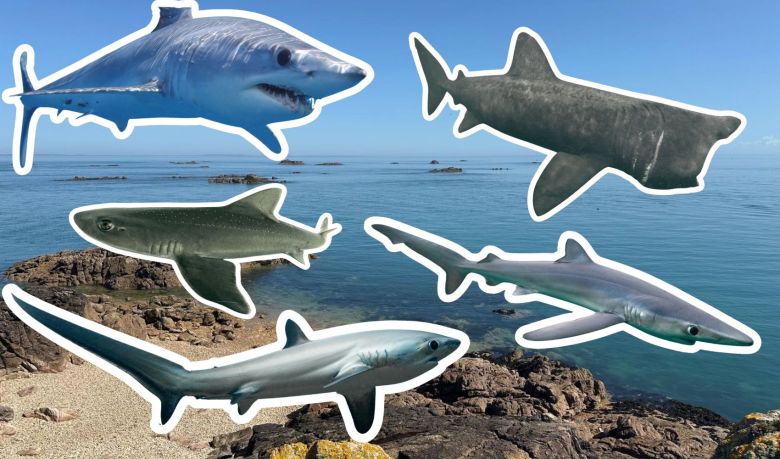
The Channel Islands are home to at least 15 confirmed shark species, ranging from tiny dogfish no longer than a forearm to the basking shark – the second-largest fish on Earth.
Most are harmless, some are endangered, and despite centuries of sightings and records, there has never been a confirmed shark attack in Jersey waters.
Following the recent reported sighting, Express has partnered up with Dr Paul Chambers, Head of Jersey’s Geopark, co-author of Marine Fish of the Channel Islands and a former Government marine resources specialist, to outline the remarkable diversity of sharks found around the islands and why there is little reason for alarm…
Jersey’s most common shark
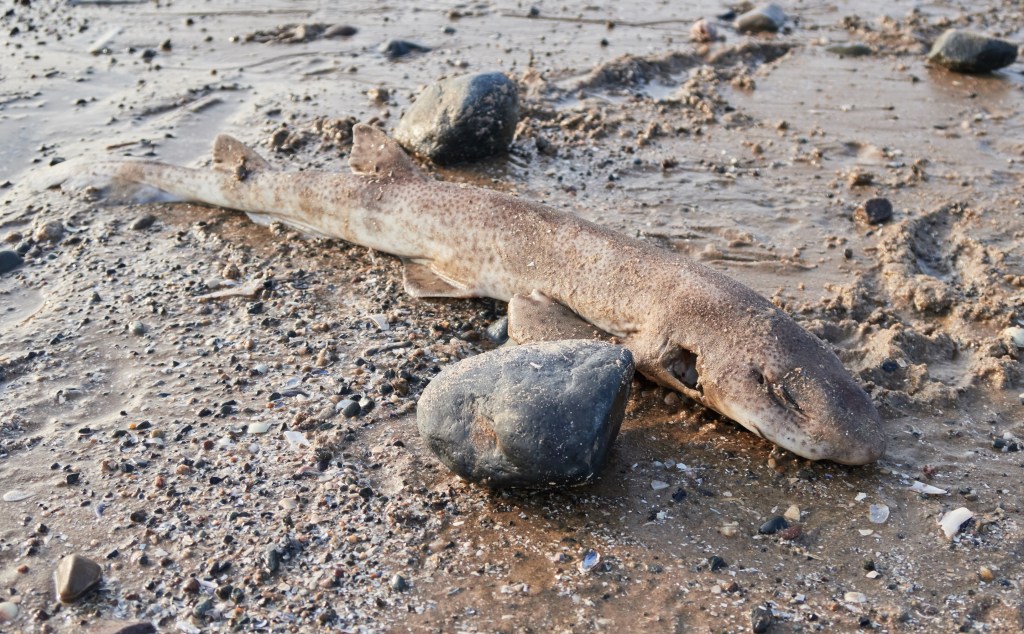
The shark most islanders are actually likely to encounter isn’t a giant predator but the humble small-spotted catshark, better known locally as the dogfish.

Found in shallow water around all the Channel Islands, these small sharks are a familiar sight for fishers, divers and snorkellers.
Curious rather than timid, they are often happy to rest on the seabed while divers photograph them and will sometimes even swim slowly towards people before turning away.
Their distinctive egg cases – commonly known as “mermaid’s purses” – are among the most familiar objects washed up on local beaches.

Closely related are the bull huss, which prefers deeper rocky reefs, and the starry smoothhound, a shark that scientific surveys suggest is far more common than official records indicate.
The Channel Islands may also be one of the few places where the common smooth-hound genuinely occurs.
Elsewhere around Britain, many supposed records are now thought to have been cases of mistaken identity, making the islands something of a scientific curiosity.
The big sharks

Several larger sharks regularly pass through Channel Island waters, the most familiar is the porbeagle, which belongs to the same family as the great white shark.
Although their streamlined shape and tall dorsal fin can appear intimidating, porbeagles are not considered aggressive towards humans.
They are most often seen briefly by fishers and boaters before disappearing beneath the surface, although there have been reliable reports of porbeagles swimming around surfers in St Ouen’s Bay and even entering local harbours.
Other regular visitors include the blue shark, another open-ocean species that occasionally ventures closer to shore.
Blue sharks have provided some of Jersey’s most remarkable historical shark stories.
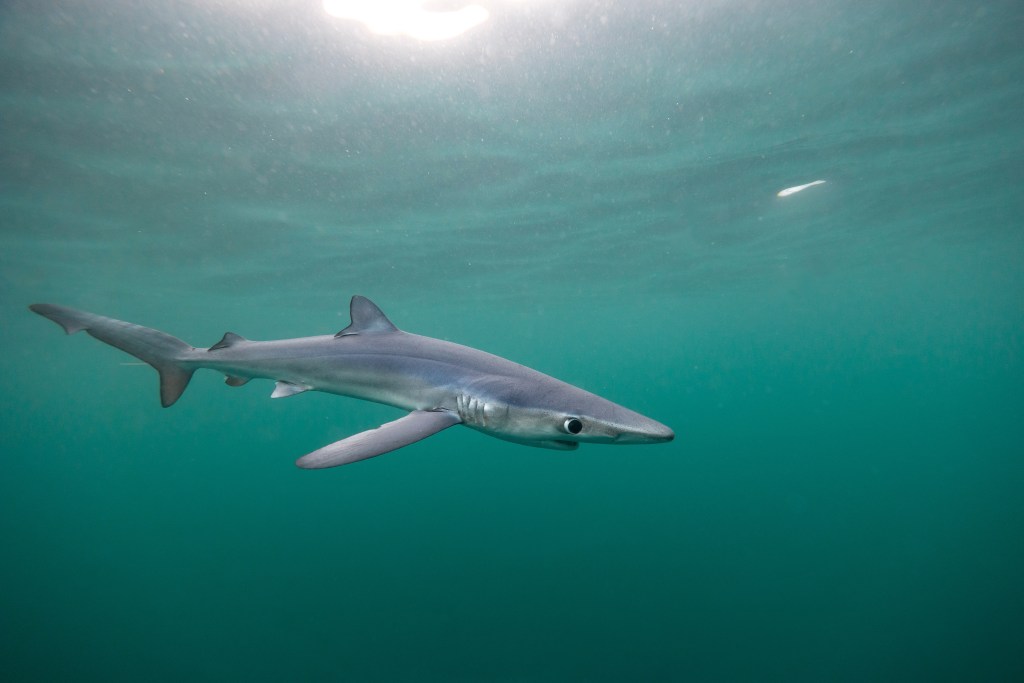
In 1879, a swimmer in St Aubin’s Bay reportedly spotted a shark approaching in shallow water.
According to contemporary accounts, he grabbed a rock, stunned the animal and dragged it ashore – believed to be the Channel Islands’ only documented unpleasant encounter between a person and a shark.
While dramatic, such encounters remain exceptionally rare.
Another impressive local species is the tope, a sleek shark that can grow to around two metres long and is highly prized by sea anglers for its fighting ability.
Female topes often move into shallower coastal waters during the summer to breed, meaning divers and snorkellers occasionally encounter them around offshore reefs and sandbanks.
The gentle giant

The largest shark ever likely to be seen around the Channel Islands is also the least threatening.
Growing to more than 10 metres long and weighing over four tonnes, the basking shark is the world’s second-largest fish after the whale shark.
Rather than hunting seals or fish, basking sharks feed exclusively on microscopic plankton, filtering vast quantities of seawater through their enormous mouths.
Sightings around Jersey are uncommon, with most occurring in deeper waters west of Guernsey or south of Sark.

One of the strangest episodes in Jersey’s marine history occurred in July 1951, when a juvenile basking shark became trapped inside the Havre des Pas bathing pool as the tide receded.
As crowds gathered, members of the Jersey Rifle Association were called to the scene and shot the distressed animal before it was taken to the abattoir.
Today, the outcome would certainly have been very different.
Basking sharks are now legally protected, reflecting changing attitudes towards marine conservation.
Rare visitors

Some sharks have become part of Channel Island folklore simply because they are seen so infrequently.
The thresher shark, instantly recognisable by its extraordinary whip-like tail, has only been recorded a handful of times locally.
One specimen caught by a mackerel fisherman south-west of Jersey in 1860 was displayed in St Helier for ten days before later touring local horse racing events.

Perhaps even rarer is the shortfin mako, the fastest shark in the world, capable of bursts of up to 67 kilometres per hour.
There is only one confirmed Channel Island record, a specimen caught off Guernsey in 1931.
Although makos are regarded as potentially dangerous, almost all injuries worldwide have involved sharks that were caught by anglers and improperly handled rather than attacks on swimmers.
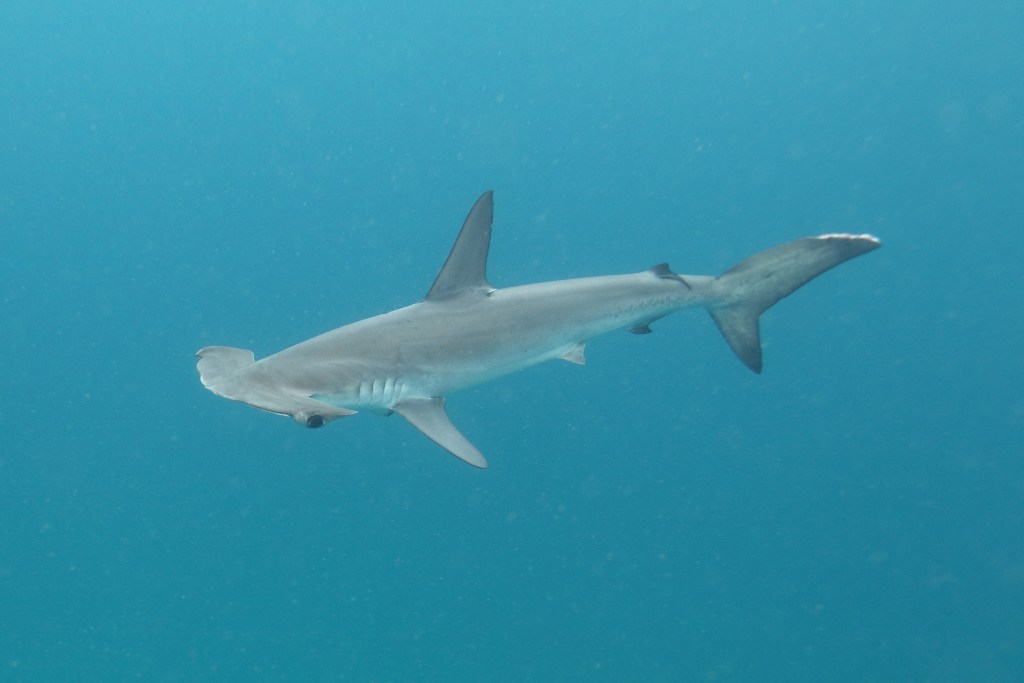
Another mystery surrounds the smooth hammerhead.
Despite having no confirmed Channel Island records, there have been two credible but unverified diver sightings in recent years.
Given that the islands lie within the species’ summer range, experts believe hammerheads probably do visit local waters occasionally but simply go unnoticed.
The sharks we’ve lost
However, not every shark has thrived in local waters.
The spurdog, once described as abundant around the Channel Islands, has suffered one of the most dramatic declines.
Slow to grow and taking many years to mature, the species proved especially vulnerable to overfishing.
By the 1960s it had become scarce around the islands, and by the year 2000 scientists considered it functionally extinct within the Normano-Breton Gulf which covers northern France and the eastern Channel Islands waters.
The last confirmed Jersey records date from 1980 and 1994.
Although occasional catches continue elsewhere nearby, its disappearance serves as a reminder that sharks are often far more vulnerable than people realise.
Fact versus fiction
Despite persistent rumours, there are no confirmed records of great white sharks anywhere in the English Channel.
According to Dr Chambers, reports of great whites around the Channel Islands are almost certainly misidentified porbeagles, which share a similar body shape and dorsal fin.
Likewise, some historic records remain open to question.
The blackmouth catshark, for example, is known only from a single record dating back to 1862, but it normally inhabits deep water so many scientists suspect it was misidentified.
A changing sea

As sea temperatures rise, marine scientists expect the Channel Islands’ marine life to continue evolving.
Several fish species traditionally associated with the Bay of Biscay, a rough gulf of the northeast Atlantic Ocean bordered by the northern coast of Spain and the western coast of France, have already expanded northwards since the 1980s.
Changes in prey distribution may eventually influence where larger predators travel, potentially bringing species such as hammerheads into local waters more frequently.
Even so, Dr Chambers stresses that predicting how sharks will respond to climate change is far from straightforward.
Protected predators

Many of the larger sharks found around the islands grow slowly and do not reach sexual maturity until they are close to a decade old, which makes them particularly vulnerable to commercial fishing.
Species including the blue shark, porbeagle and shortfin mako have all experienced major population declines worldwide.
However, Jersey recognised that vulnerability early, with the island becoming one of the first jurisdictions in the world to legally protect large pelagic sharks, making it illegal to catch or kill them in local waters.
More to learn than fear
For animals that have inhabited Earth’s oceans for hundreds of millions of years, sharks remain surprisingly mysterious.
Most spend their lives offshore, avoid people whenever possible and often pass through local waters completely unnoticed.
The recent St Ouen’s Bay sighting has undoubtedly captured public attention.
But perhaps the real story is not that sharks are appearing around Jersey – it is that, while many may not have realised it, they have always been here.
From curious dogfish resting on the seabed to elusive porbeagles patrolling offshore waters and the occasional basking shark gliding silently through the Channel, sharks are an ancient and important part of the islands’ marine ecosystem.
With thanks to Jersey Geopark and Dr Paul Chambers for providing the scientific information used in this feature.
