

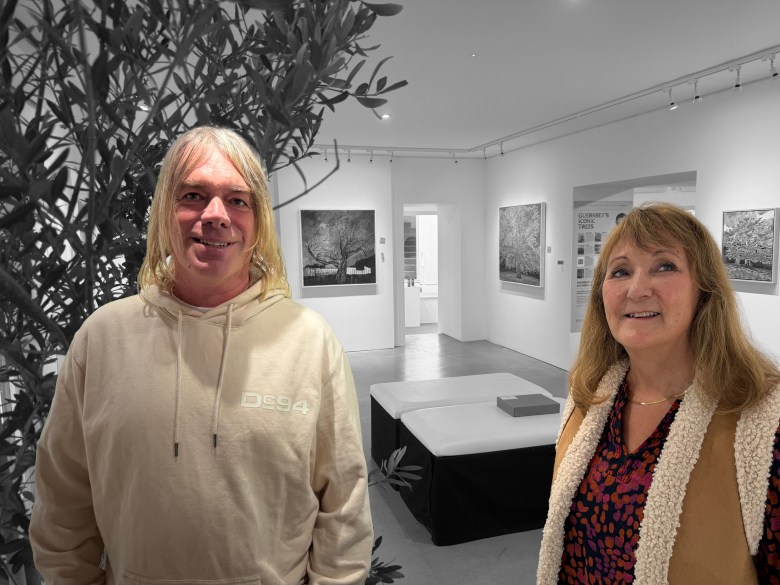
Rare black poplars, a chestnut tree lit up by neon, and an ever-growing book of people’s favourite trees.
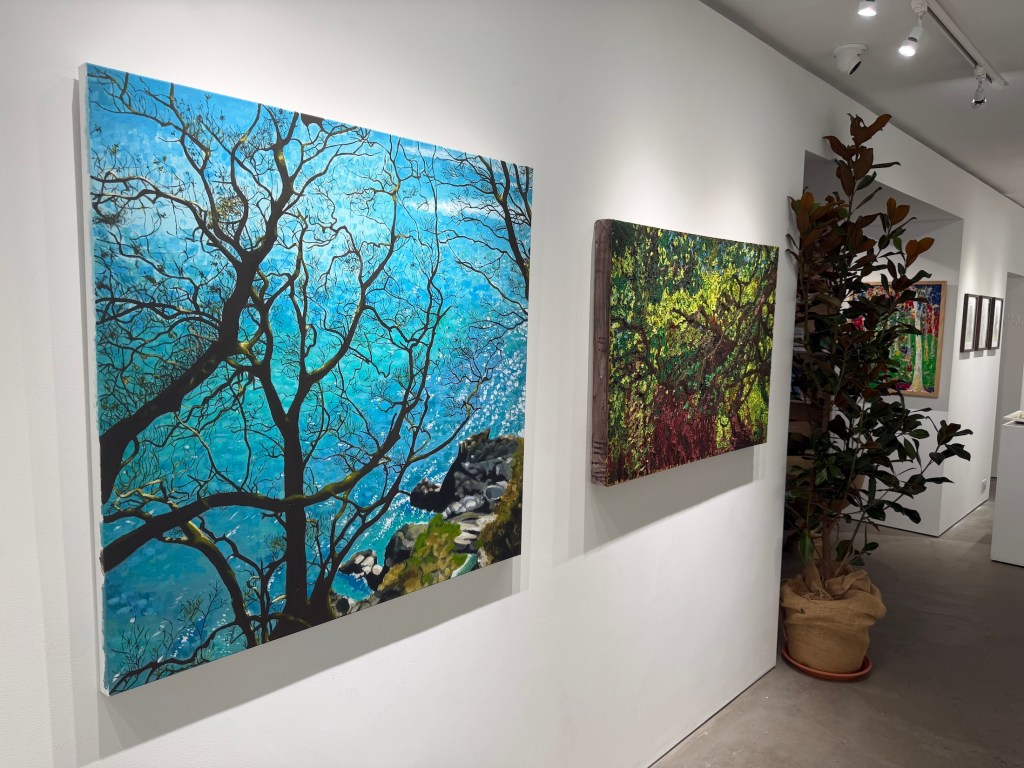
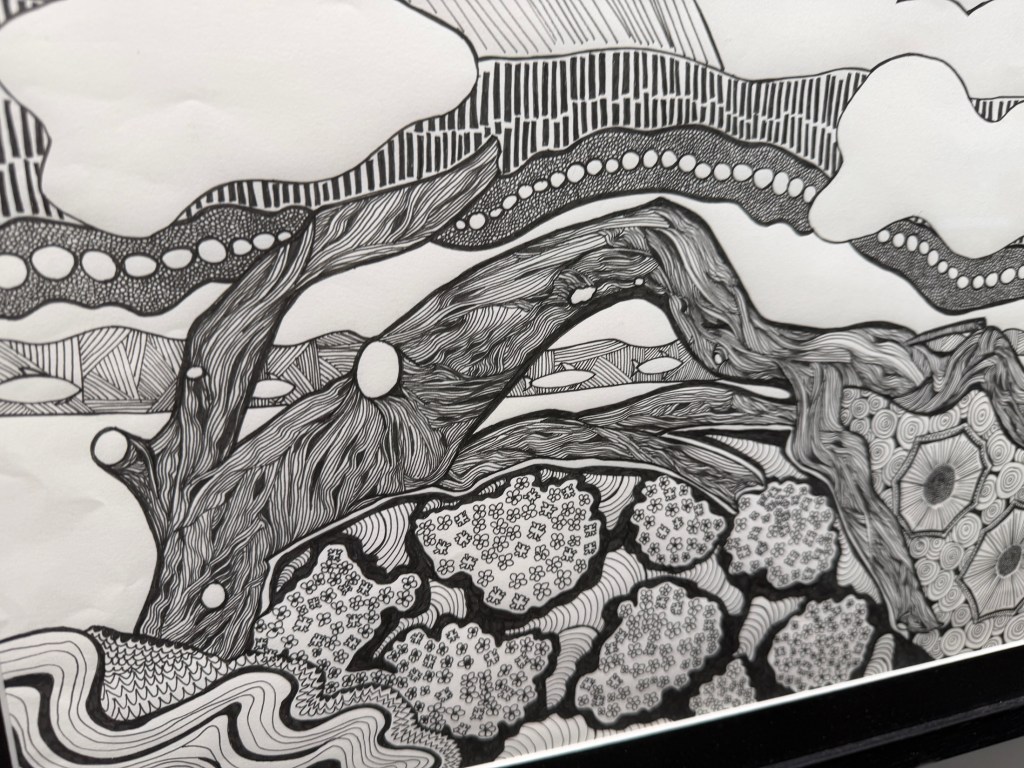
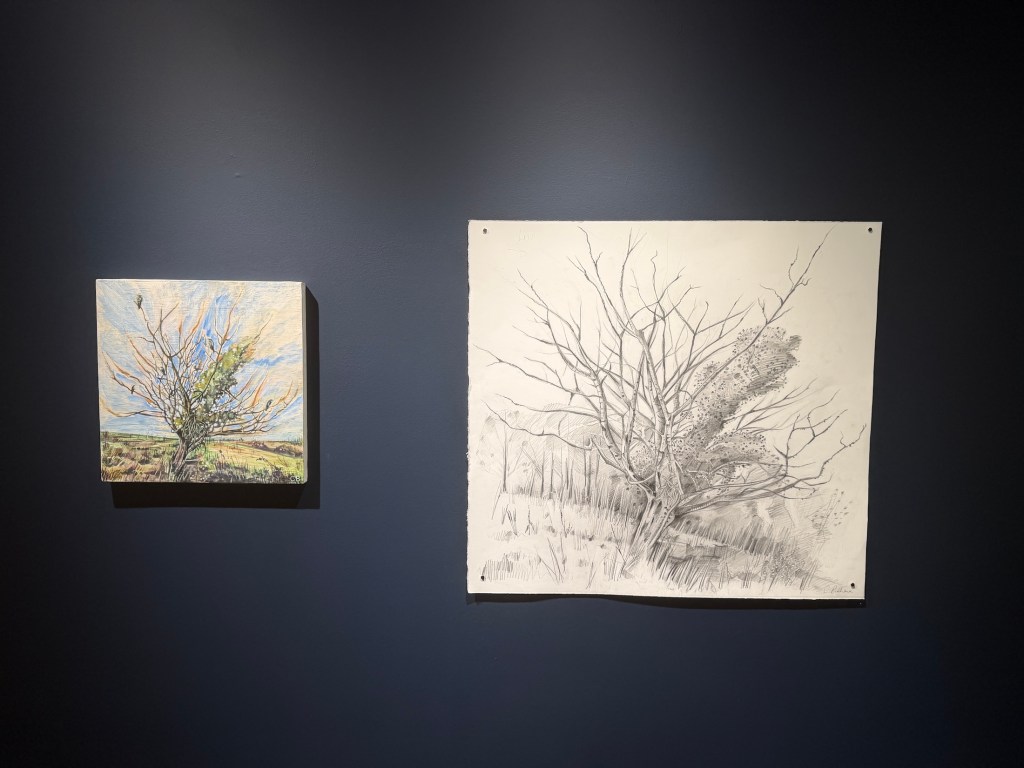
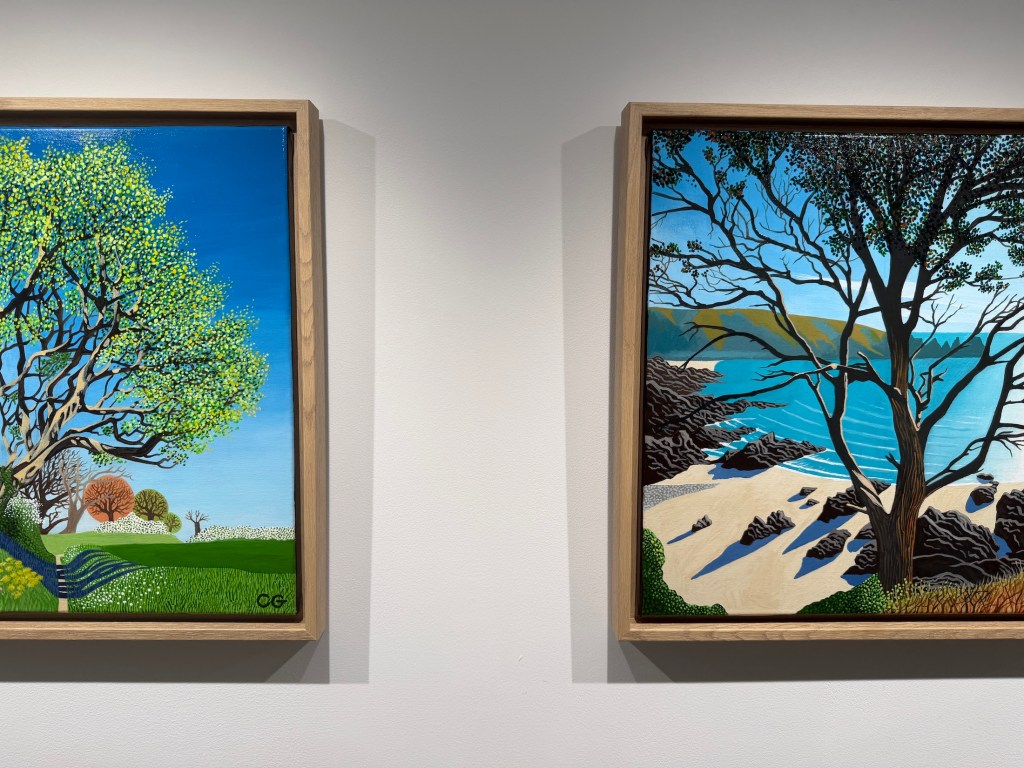
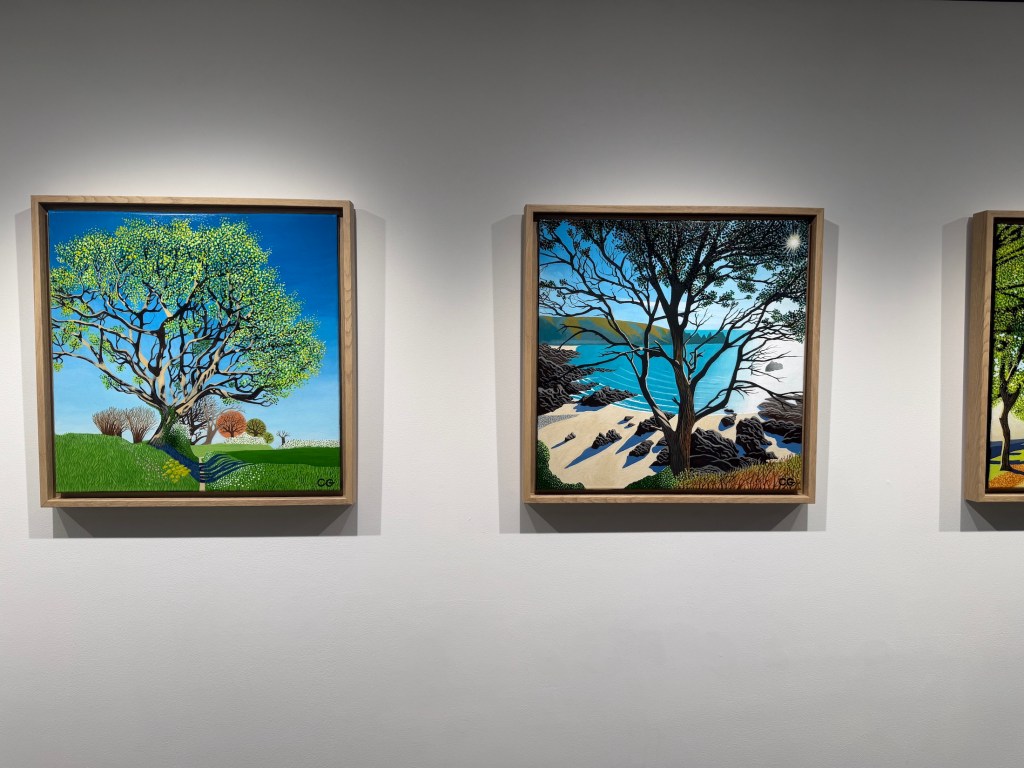
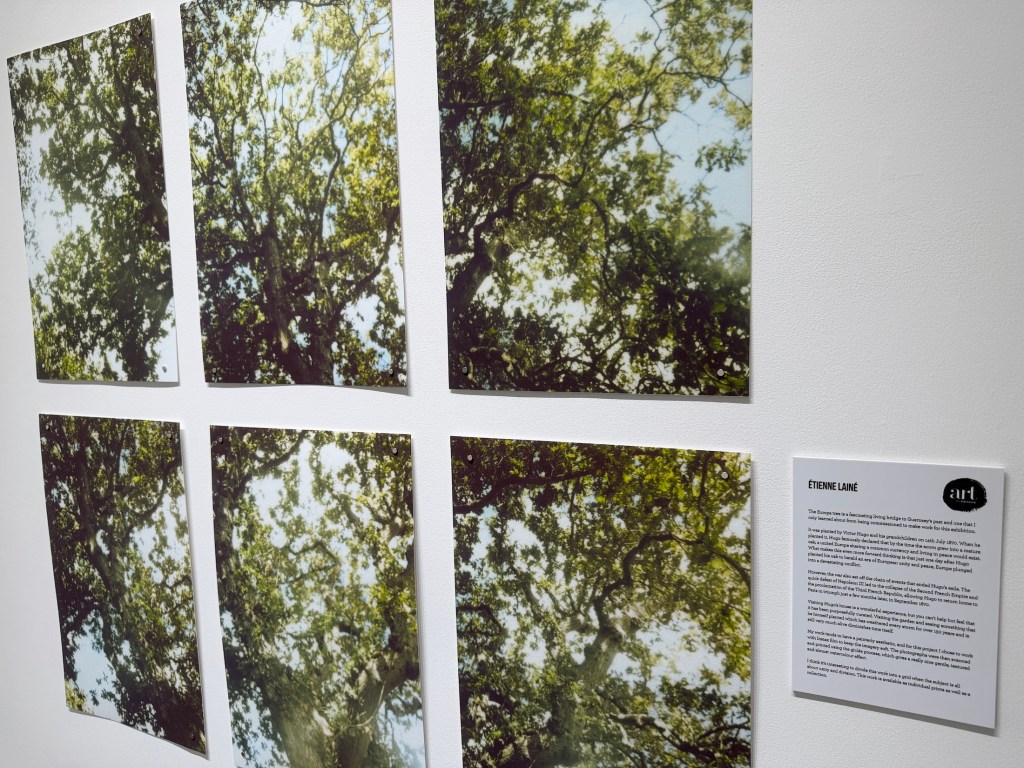
Guernsey’s leafy landmarks are getting the artistic treatment in a new exhibition at Art for Guernsey, bringing together paintings, prints, wooden sculptures and ceramics inspired by the island’s trees.
Some artists have focused on the trees themselves, while others have explored the wildlife they support, the memories attached to them and the details that make them special.
*Express* visited the gallery in Mansell Street to meet some of the artists and find out what has taken root in their imaginations.
Tim Gaudion: seeing the light
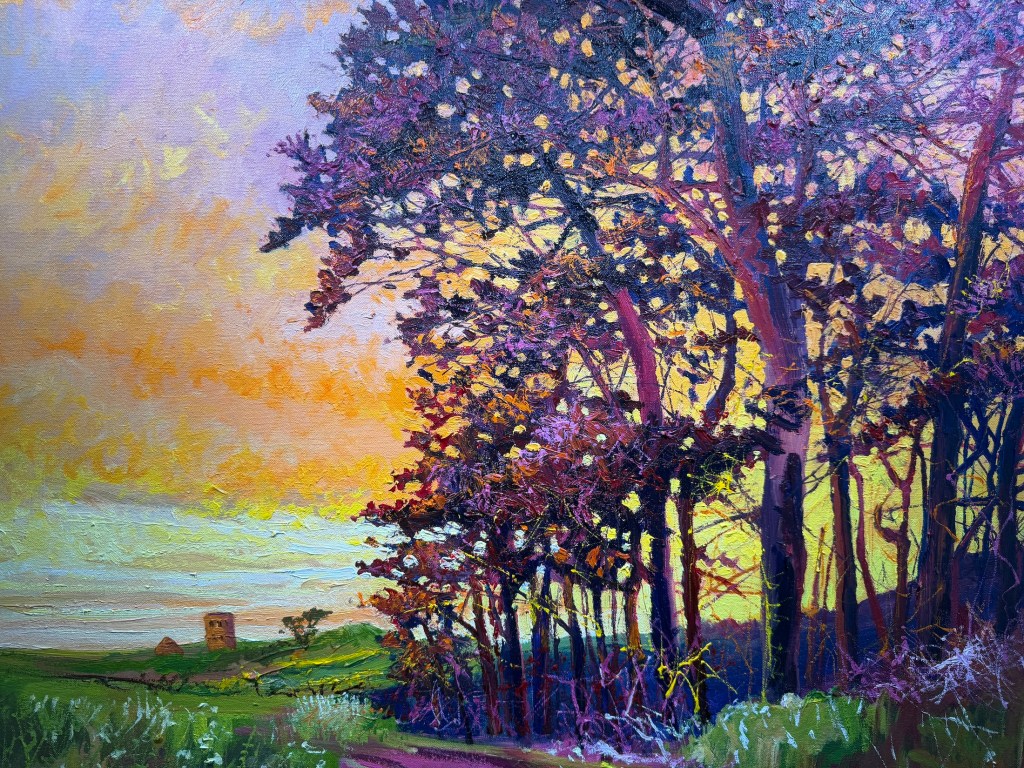
Tim Gaudion has brought 17 pieces to the exhibition, including a series inspired by some unusual residents of the Water Meadows.
The black poplars caught his attention after he read a National Trust story about the trees and the threat of them being cut down.
“They’re like black poplars, which are really rare trees,” he said.
“I didn’t know about it, and the kind of story intrigued me, about how these poplars might grow and how, when they fall, they regrow and sprout up again over hundreds of years.”
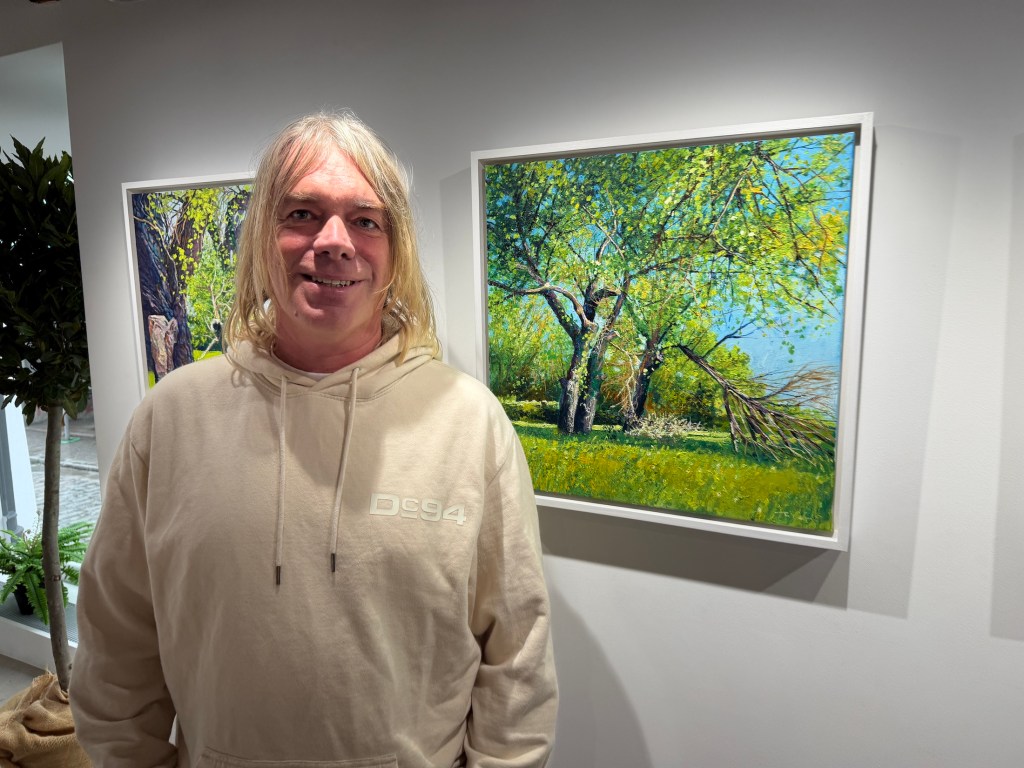
There are only a few hundred in the whole of the UK, he said, and their successful reproduction depends on male and female trees being in the right positions.
But it was not just their rarity that appealed to him.
“I like the kind of gnarly, knobbly bark there, and the way the light comes through in the meadows,” he said.
“It’s only ever grazed by cattle, there’s been no pesticides, so it’s a very natural environment.”
He is drawn to their imperfections as much as their beauty.
“They’re not all perfect, but some of the branches are broken and falling and a bit scruffy, but it just looks stunning with the light.”
One painting even features a cut log being used to prop up one of the trees.
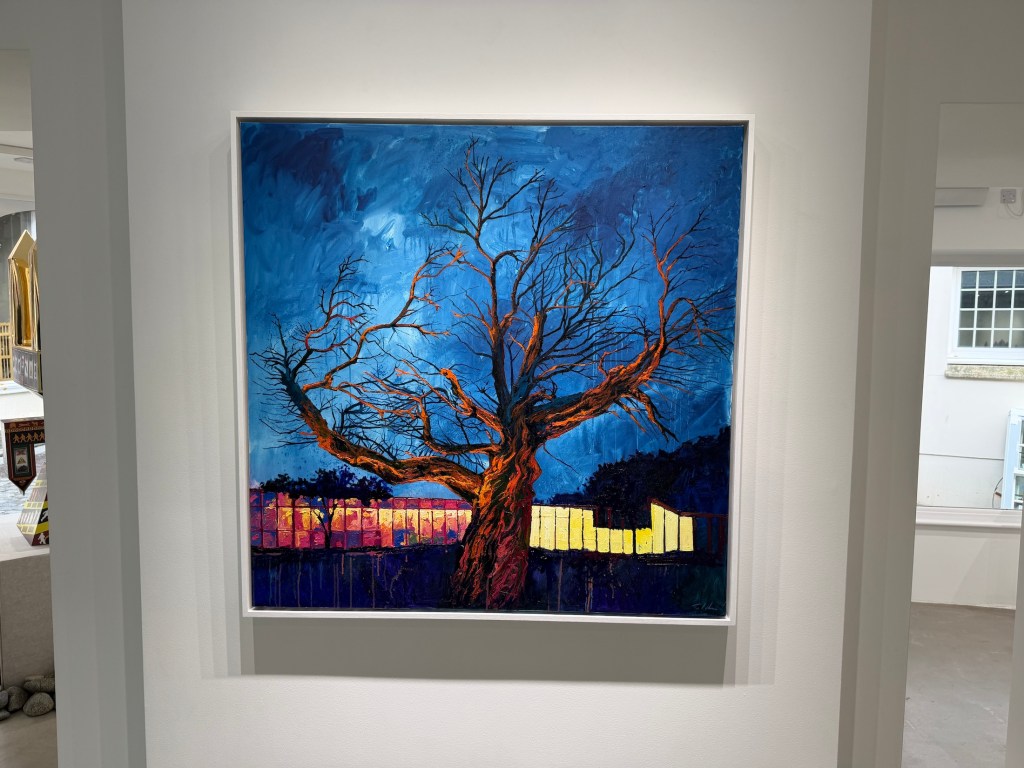
Another takes a very different approach to one of Guernsey’s familiar landmarks: the chestnut tree on the triangular plot outside Beau Sejour.
Tim painted it in winter, stripped of its leaves and set against the lights of the leisure centre.
“We’ve got the juxtaposition of the old tree, that skeleton form in winter, sort of dormant for the winter, against the modern leisure centre and the lights and the LEDs in the background,” he said.
He was also struck by the thought of what the tree might have witnessed over the years.
“Thinking about what that tree’s seen over the years,” he said.
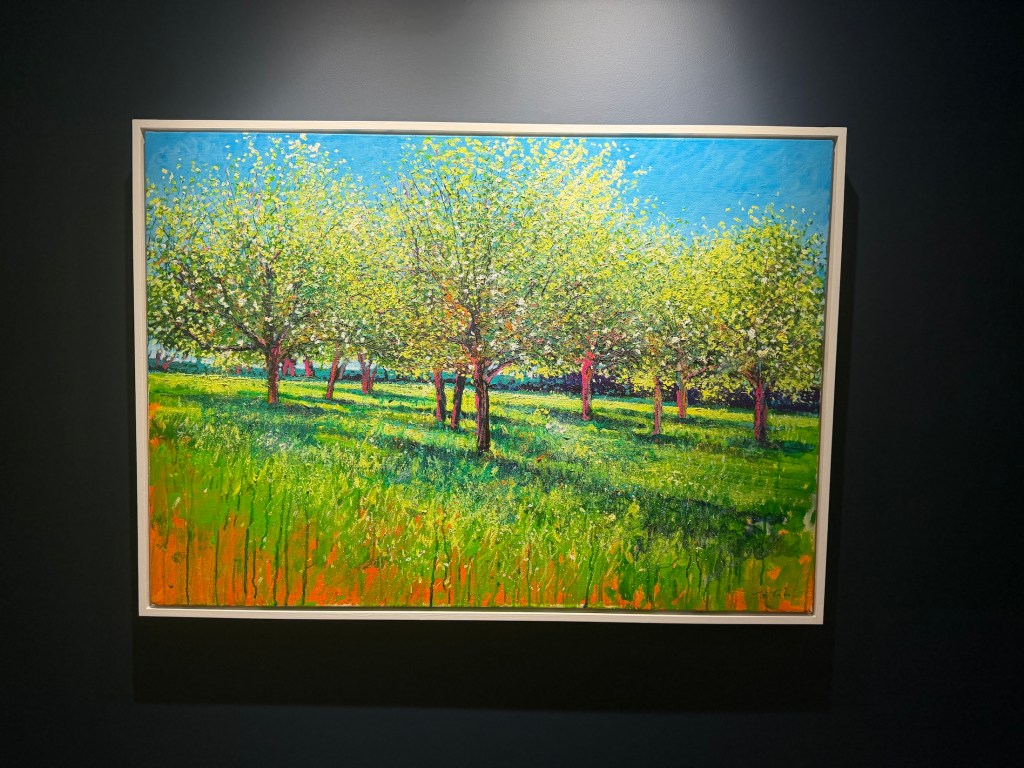
Light and colour are recurring themes in Tim’s work, and capturing a particular moment is central to his approach.
“One thing I love with trees is when you get the light hitting them or coming through the leaves, they’re almost like a big light of just green or golden,” he said.
“The leaves diffuse the light, and you get a lovely soft, subtle light feel.”
A tree can look completely different depending on when it is viewed, he said.
Anna Van der Hoek: stories that take root
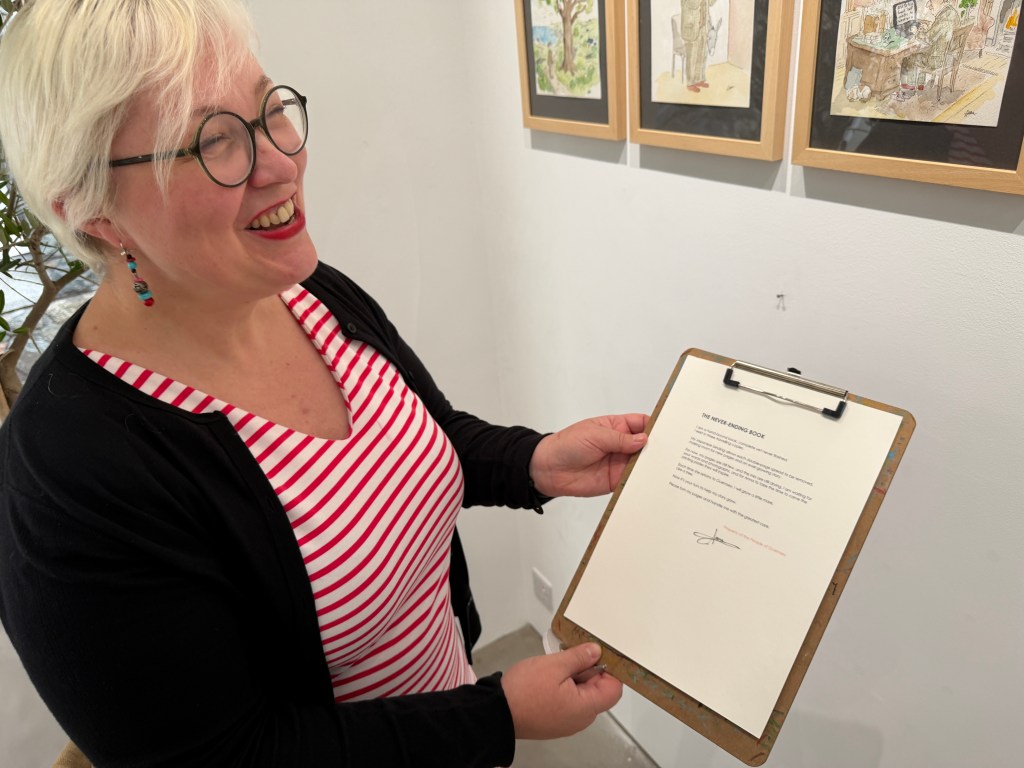
For Anna Van der Hoek, the starting point is not necessarily the tree itself, but our relationship with it, including the stories we attach to it – both through memories and physically through printing.
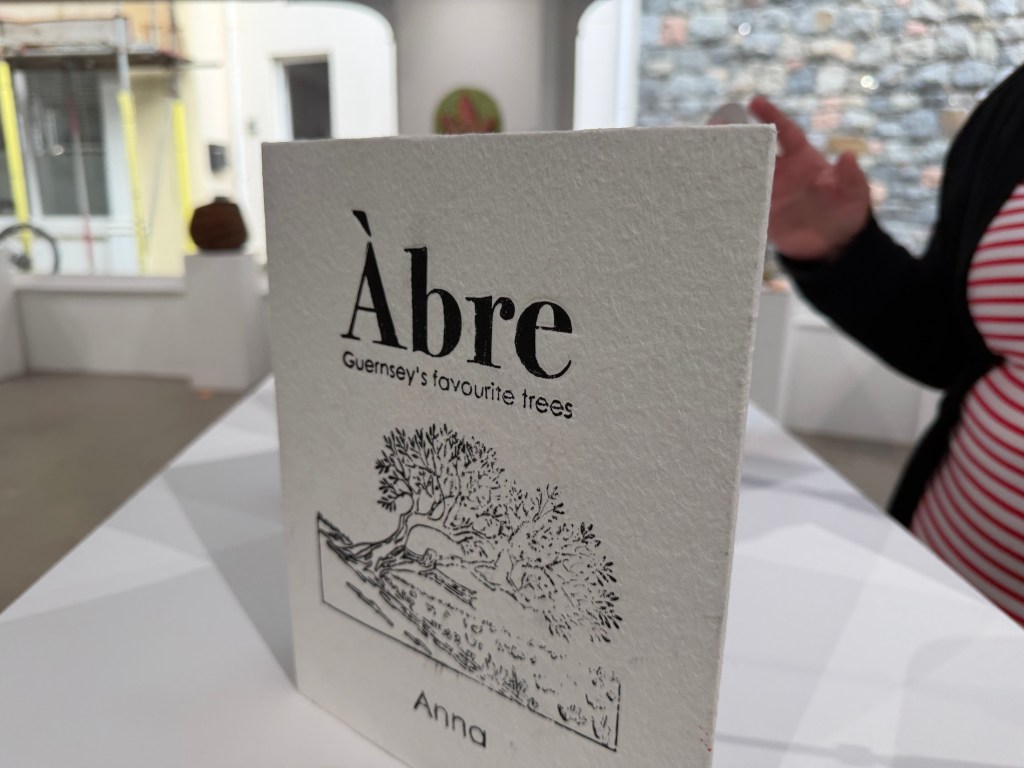
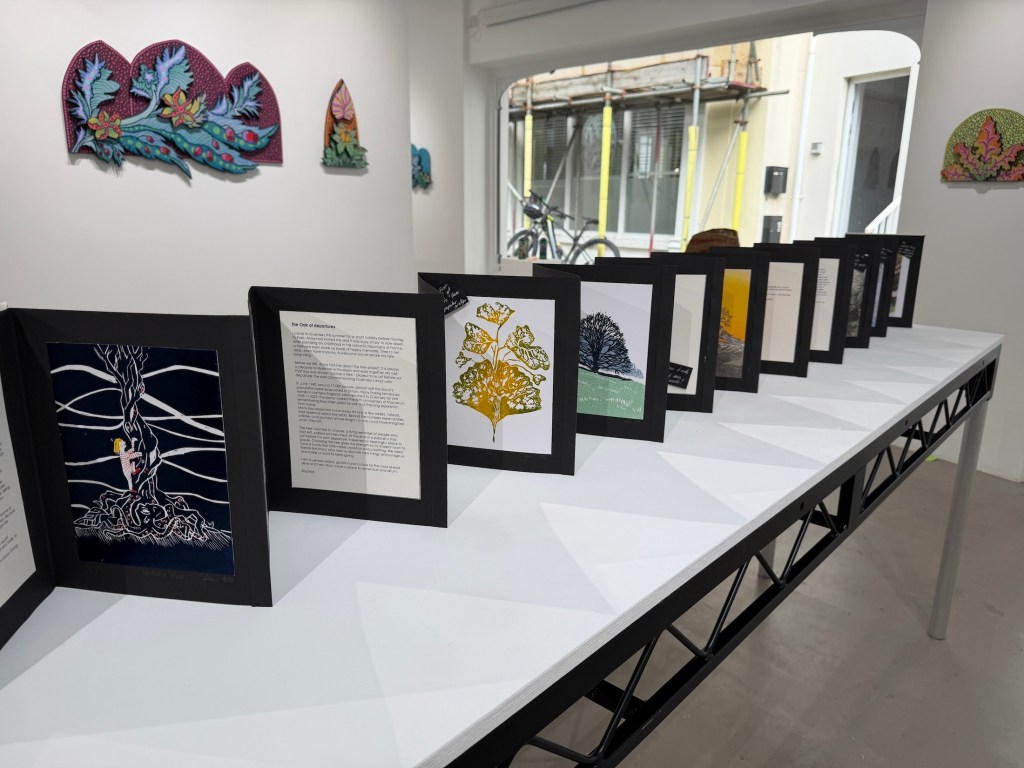
Her project explores how trees can live on in different forms, including as books, prints and shared memories.
She invites people to share their favourite tree in Guernsey and explain what makes it special to them.
Anna then carves their stories into printing plates, turning them into part of an evolving artwork.
Anna describes it as a “never-ending” book, with no final chapter or fixed collection of stories.
As more people share their memories, the project can keep growing.
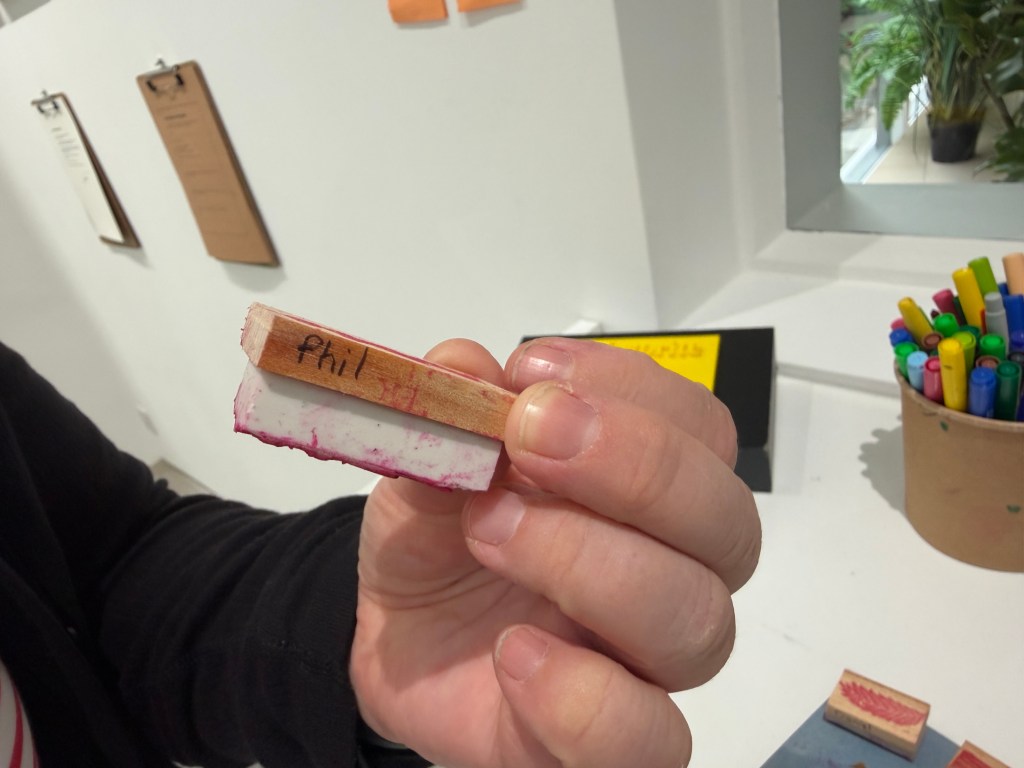
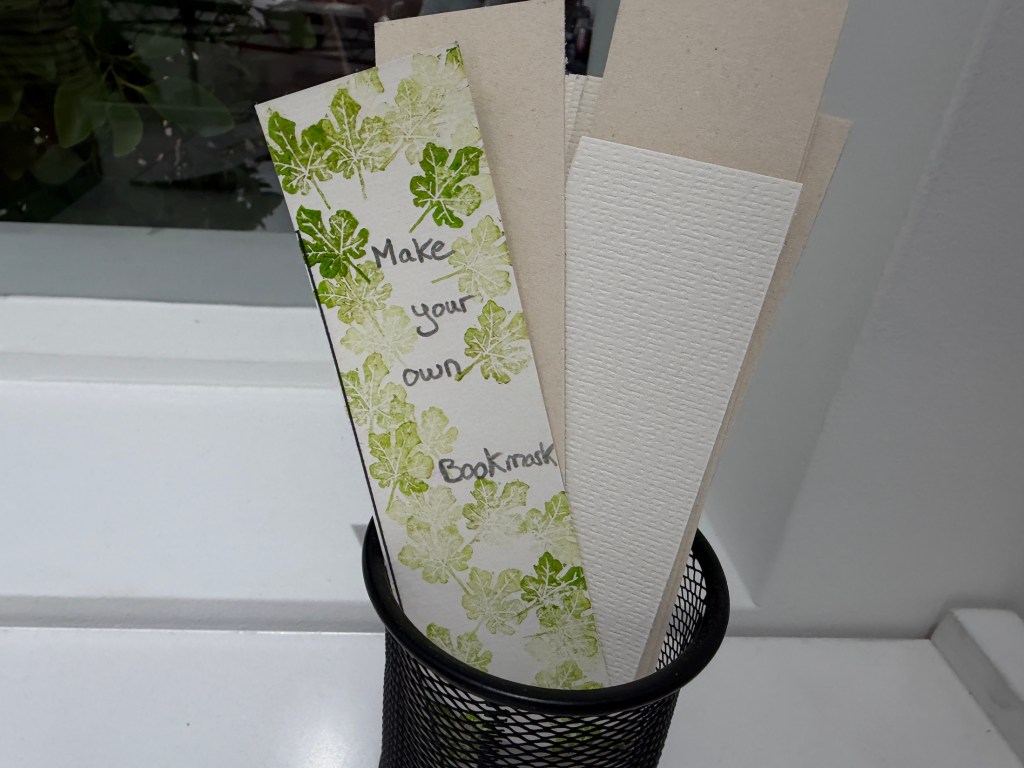
Visitors can also get involved through an interactive station where they can make leaf prints and bookmarks.
Destroyed paintings in the morning
But there is a heart-wrenching personal story behind Anna’s return to the canvas.
Now living in France, she has spent much of her life working as a teacher, having studied graphic design in the Netherlands and more recently architecture.
Her relationship with painting, however, goes back to childhood.
She said her parents did not like the way her brain worked “a bit faster than average”, so would get into trouble for painting, especially as she didn’t paint in the twee style they liked.
Not to be put off, she used to sneak into “the kitchen to take oil and paint in the dark, with a little lamp.”
“I used to destroy in the morning everything what I was doing, not to get in trouble, but I needed to paint,” she said.
Understandably, the experience put of off painting and for 30 years she “didn’t touch brushes”, she said.
Instead, she taught children to paint before eventually returning to her own work.
There is something striking about the contrast between her childhood paintings, destroyed before morning, and the book she is now creating, which is designed never to be finished.
For Anna, the finished artwork is not necessarily the most important part.
“The idea is that the relationship is more important than the end result,” she said.
“It’s the connections, time spent together, and I like to listen to people’s stories.”
Some of those stories have been deeply moving.
“Some are very deep,” she said, “I’ve been crying with people.”
Leo Dillman: beyond the canvas
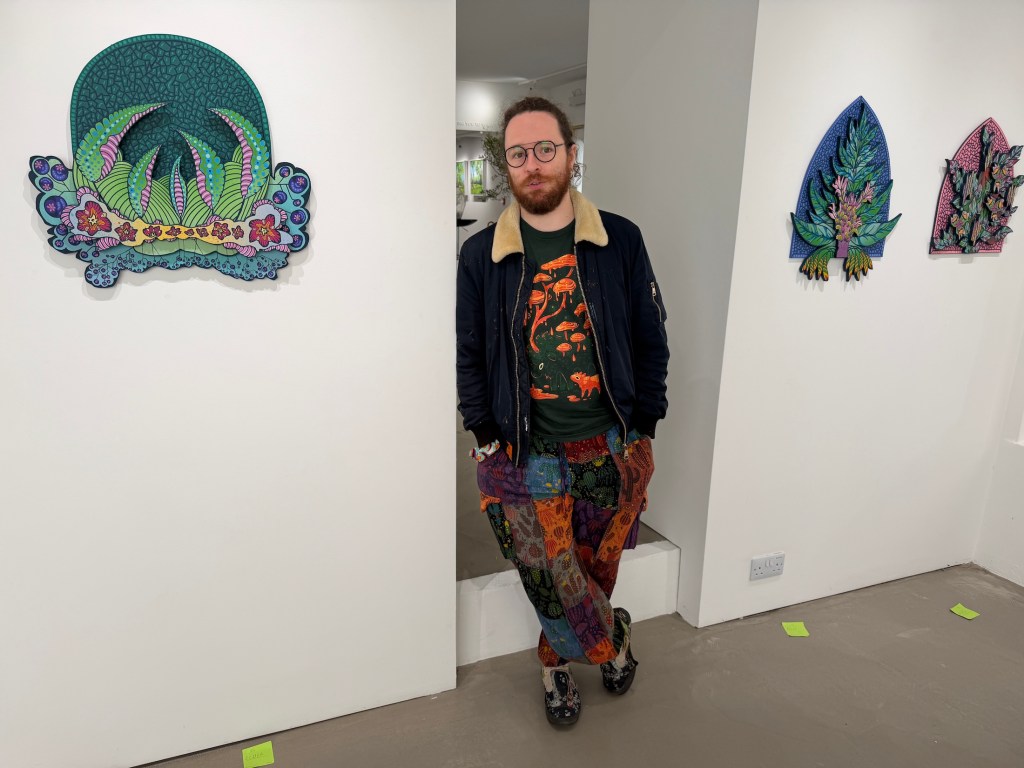
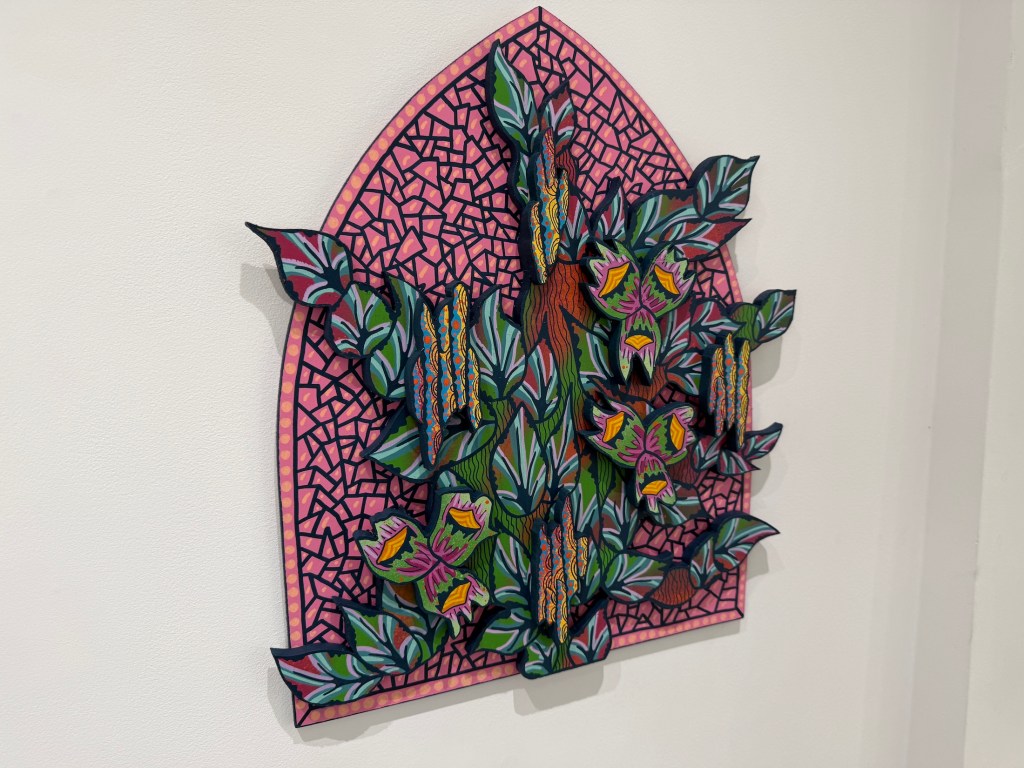
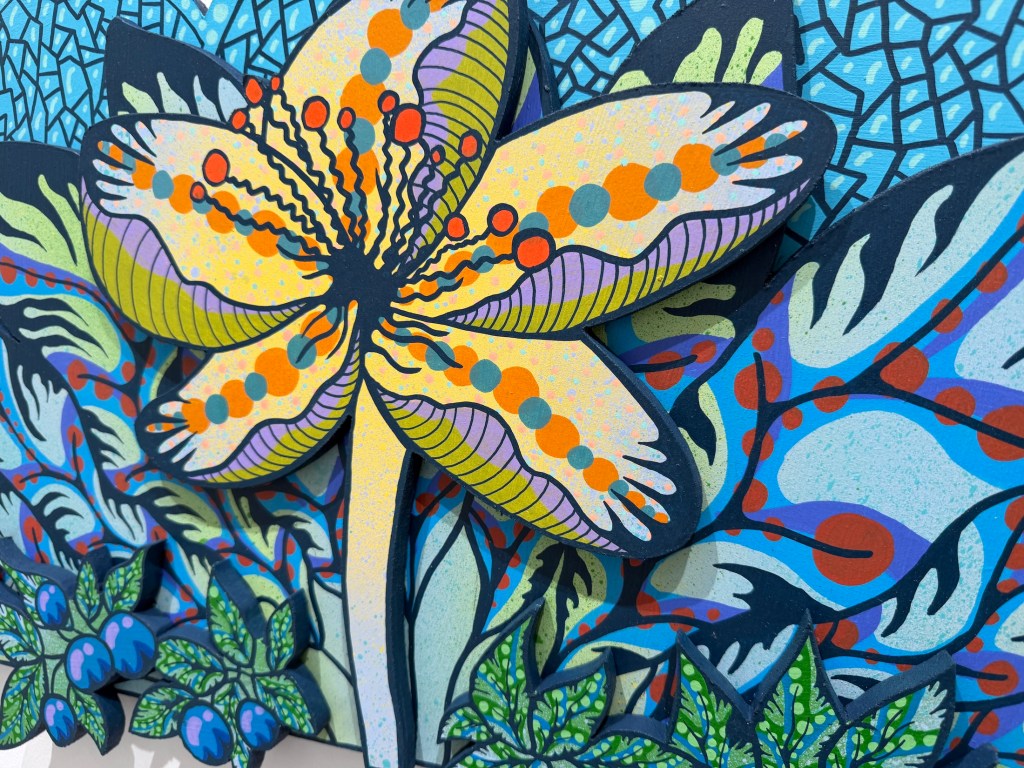
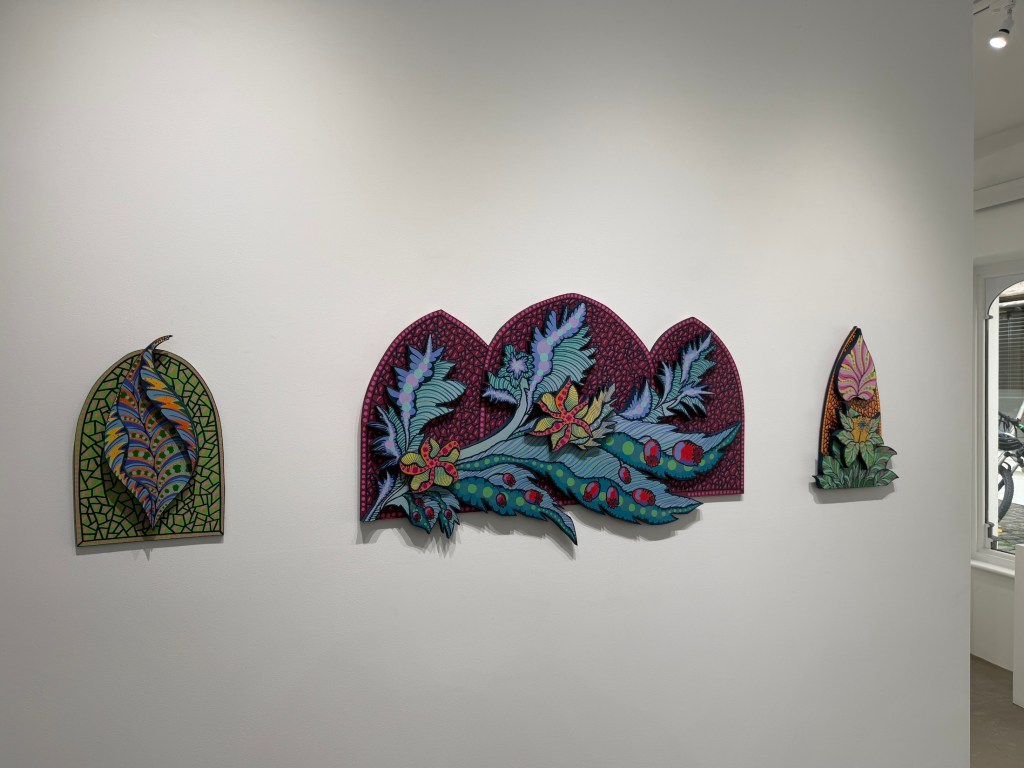
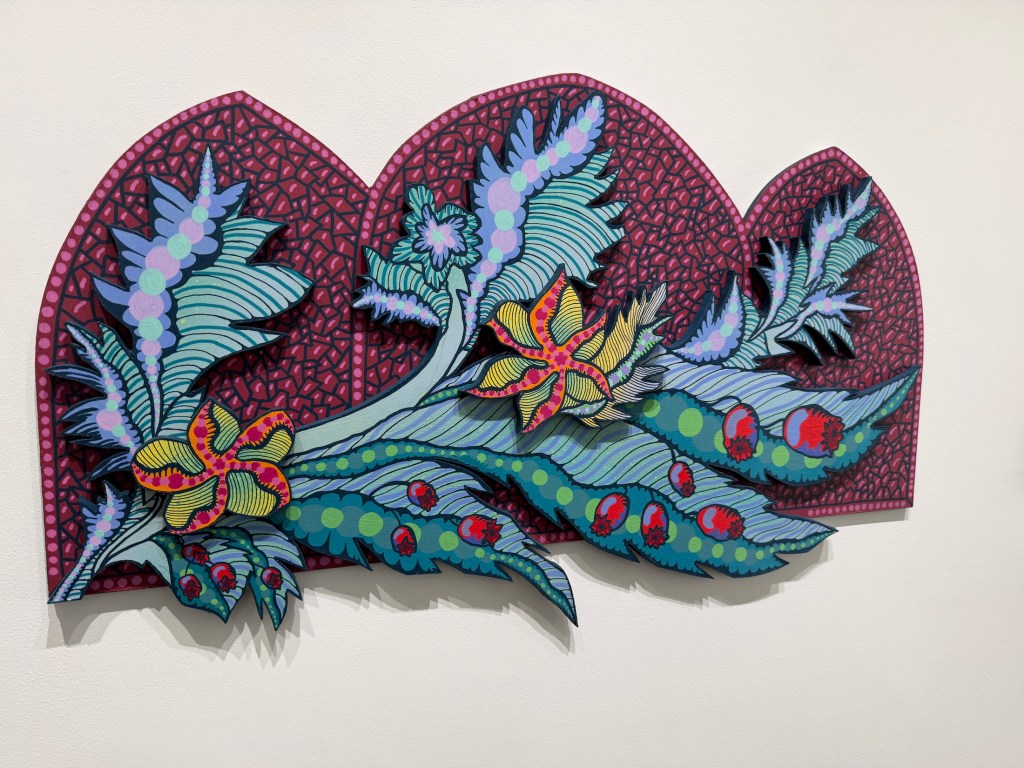
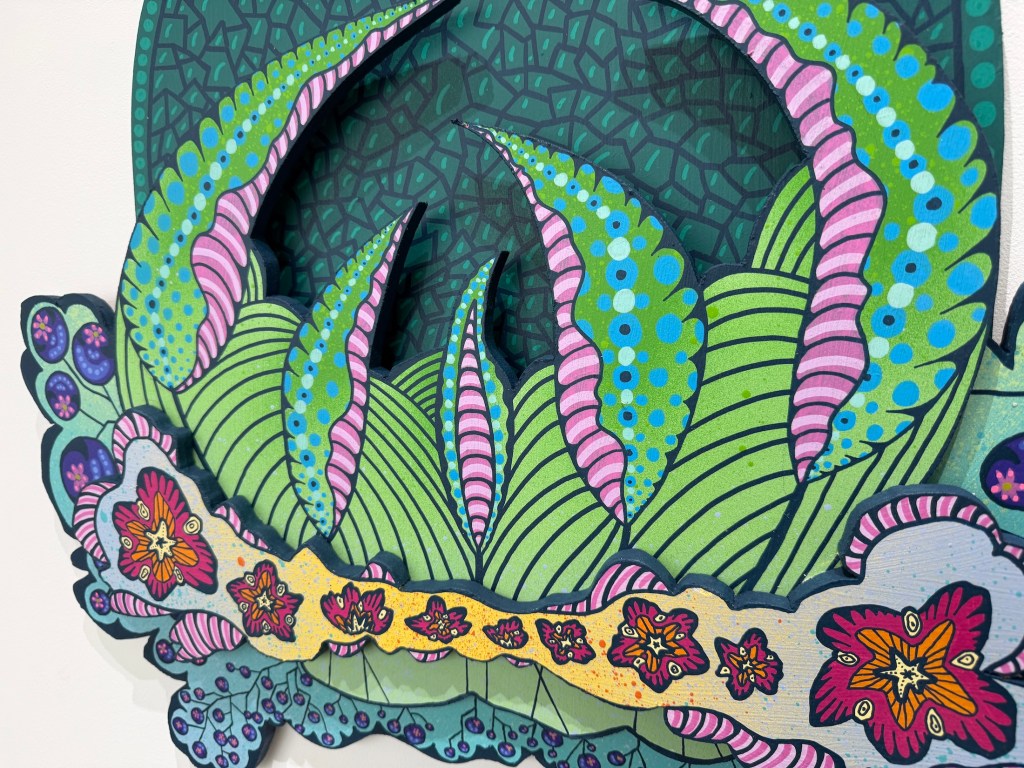
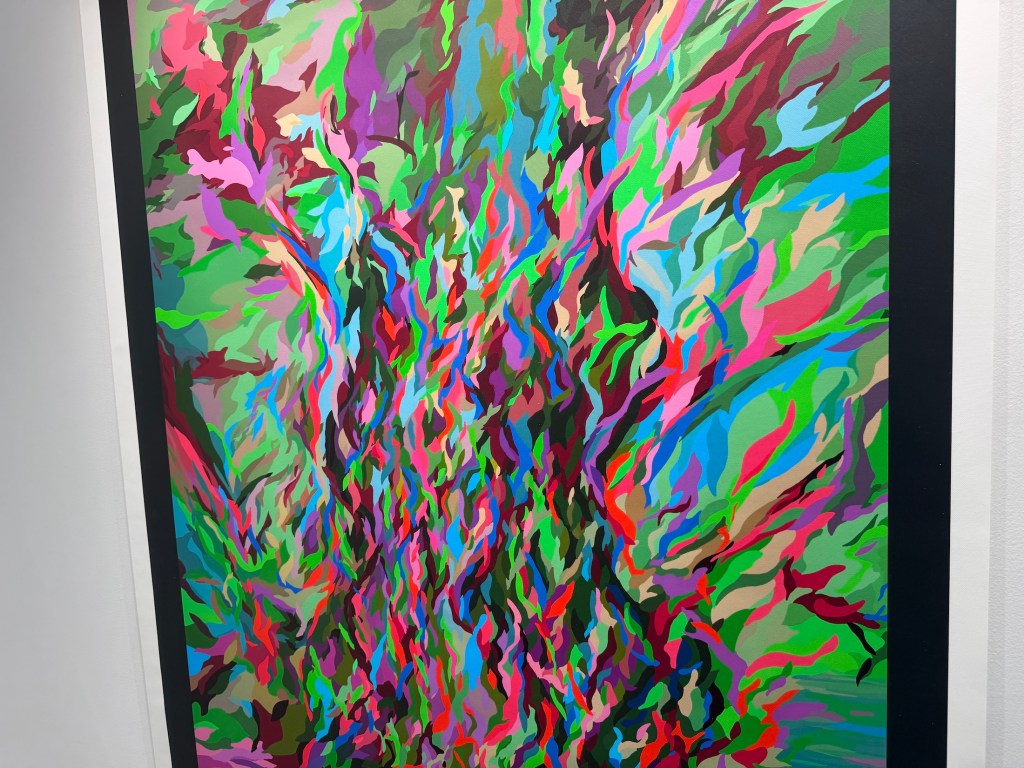
Leo Dillman, who travelled from Paris for the exhibition, has taken a more pronounced route, creating colourful, three-dimensional wooden artworks that push beyond the boundaries of a traditional picture.
His pieces combine botanical shapes with geometric backgrounds, using layers of cut-out wood to create depth and movement.
Leaves, flowers and stems appear to grow out of the surface, with bold colours and dark outlines giving the work an almost stained-glass quality.
That was, in fact, part of the inspiration.
“I wanted to emulate or simulate stained glass,” he said.
Having started with a sketch, he wanted to take the idea further.
“I wanted to go beyond the canvas, like a square canvas, and make my own canvas.”
The process involves drawing directly onto MDF, cutting out the shapes by hand, sanding the pieces and adding colour.
“My work is both from imagination and from pictures,” he said.
“I like to mix real photographs and imagination.”
Looking at the bigger picture
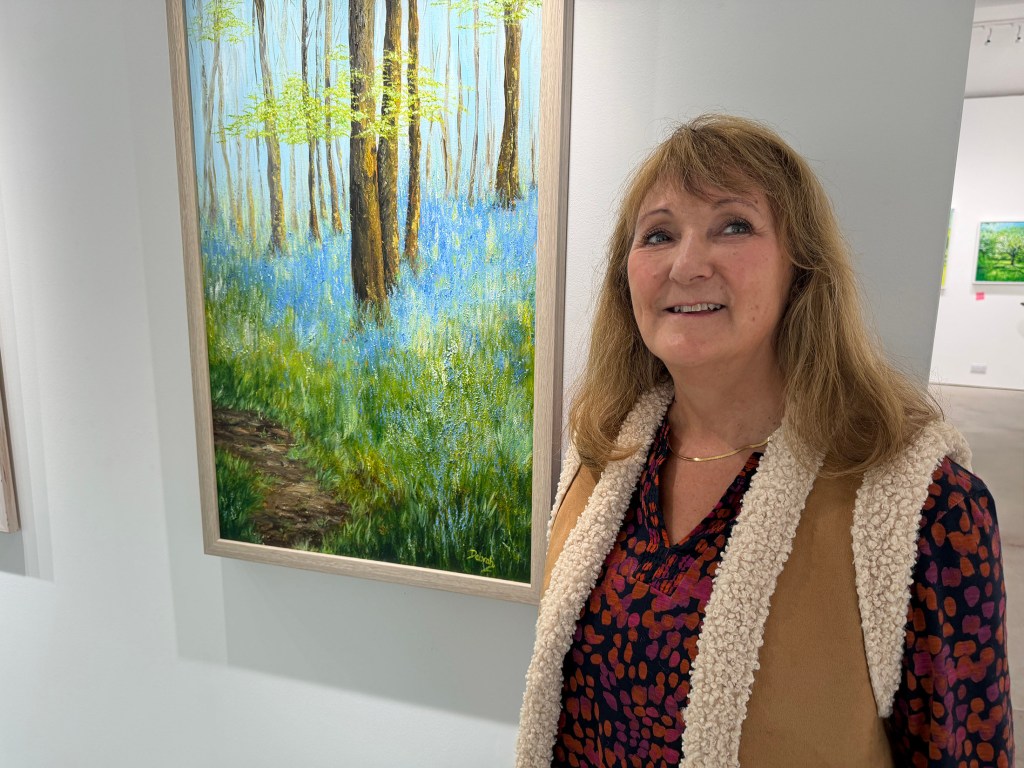
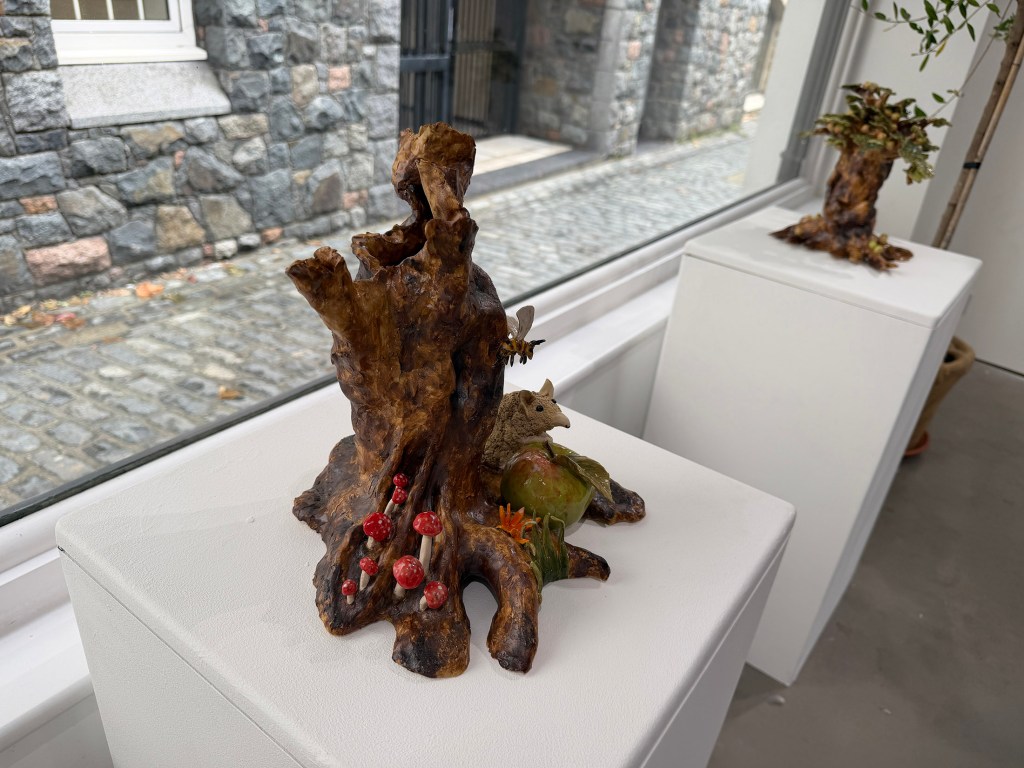
Deborah Martin has explored the life surrounding trees, rather than simply their trunks and branches.
Her work includes paintings and ceramic sculptures, with one piece, ‘Rude Riot’, reflecting how trees support other living things.
“There’s so much going on around the tree, and trees are supporting everything,” she said.
“How a tree sustains other living things. Us, cows.”
Having moved to Guernsey from Newbury in April, Deborah said she had found plenty of inspiration on the island.
“We’ve fallen in love with the place,” she said, adding: “Everywhere I go, I’m just inspired.”
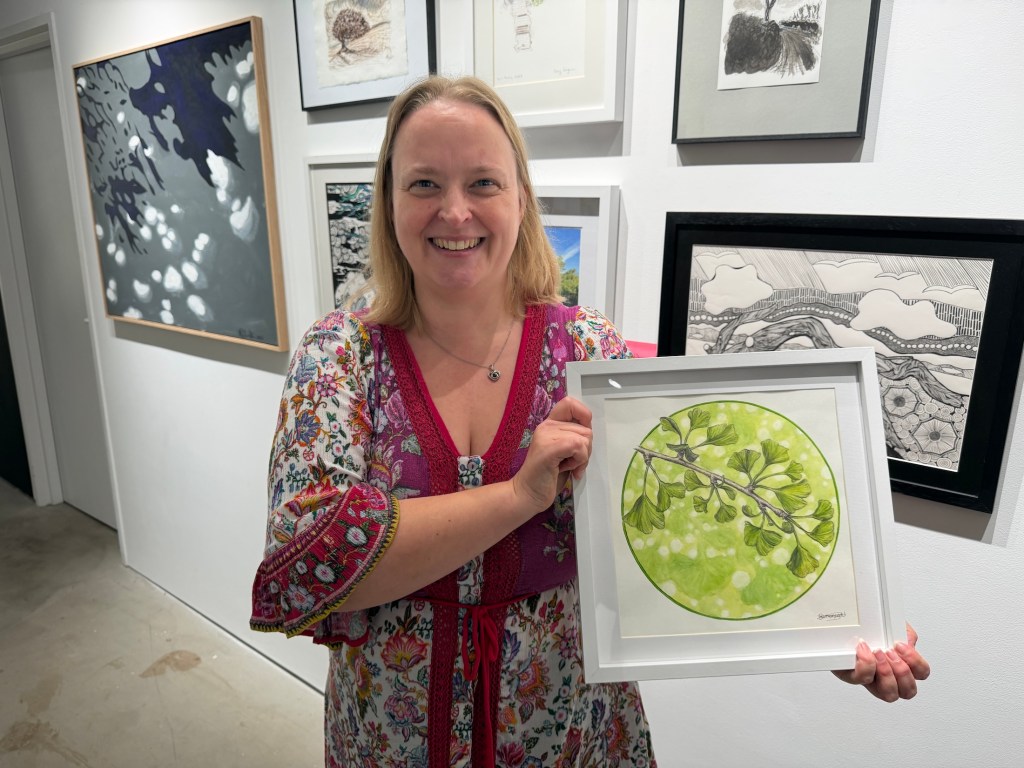
Charmaine Dodd, meanwhile, was inspired by the distinctive leaves of the ginkgo tree at Candie Gardens.
Her watercolour, ‘Glistening Ginkgo’, grew out of an interest sparked by leaves her mother brought home from a botanical walk.
She was fascinated by their shape, texture and changing colours.
“I like the fact that the leaves, these leaves, it goes through such a changing colour,” she said.
“So from bright green, and it goes all the colours, you know, oranges and rusty colours.”
Rooted in Guernsey
For Art for Guernsey founder and chairman David Ummels, the exhibition is a chance to celebrate a part of the island’s natural heritage that has perhaps received less attention than its coastline and countryside.
“Over the last 10 years we have tirelessly celebrated the landscapes and seascapes of Guernsey, and the very special sources of inspiration that the island never fails to provide,” he said.
“For a few years we have been thinking about shining a light on Guernsey’s trees.”
“We don’t have that many, but some of those we have are truly magnificent.”
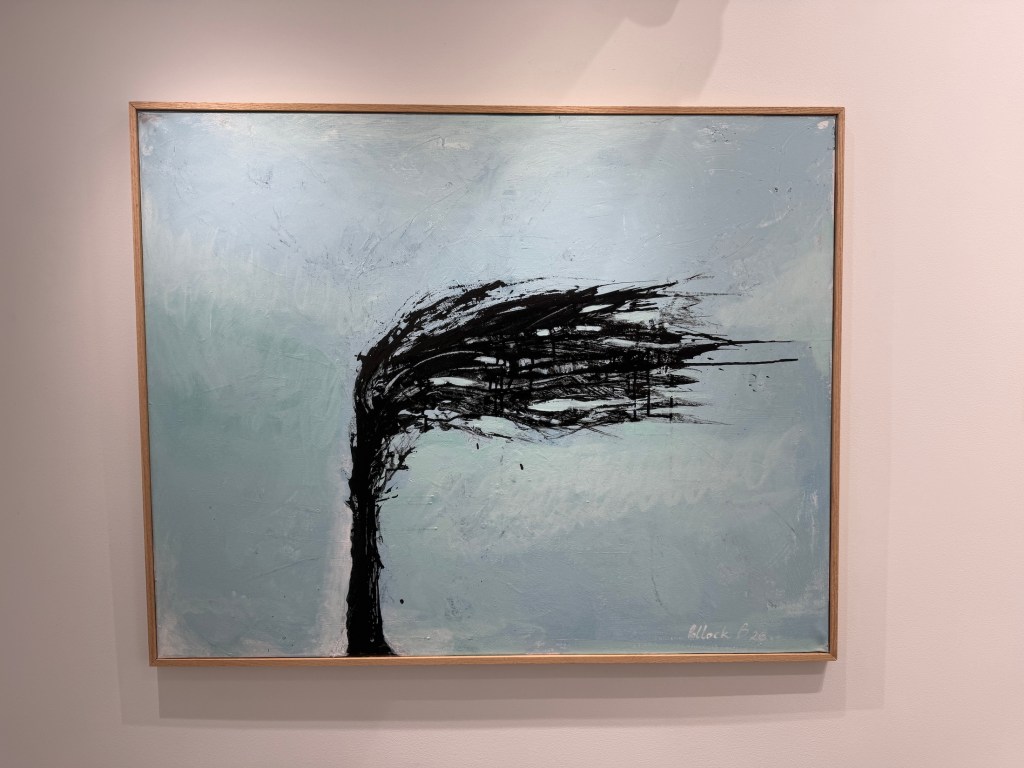
‘Guernsey’s Iconic Trees’ is being held at the Art for Guernsey Gallery, 4-6 Mansell Street, St Peter Port, until Saturday 23 January.
