

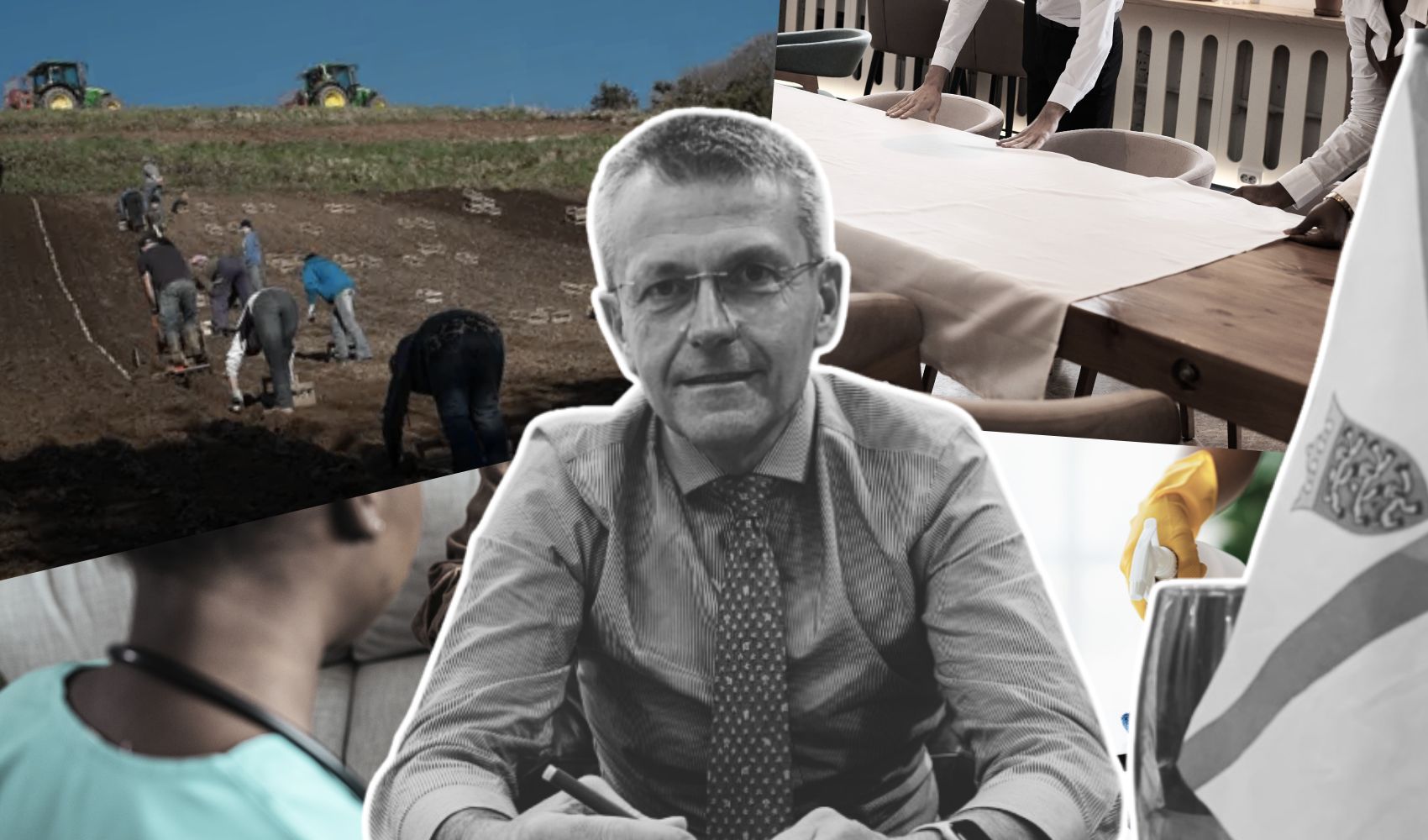
The treatment of Jersey’s migrant worker community has been thrust into the spotlight following the sentencing of former minister Philip Ozouf – renewing urgent calls for the Island to introduce specific modern-slavery legislation.
But what does “modern slavery” actually mean, how real is the risk in Jersey, and how close is the Island to changing the law?
What is modern slavery?
Modern slavery is an umbrella term covering a range of serious crimes, including human trafficking, forced labour, domestic servitude and exploitation.
Victims are often controlled through threats, debt, restriction of movement, confiscation of documents, or dependency on an employer for housing, food or immigration status. While the term can feel abstract, campaigners stress that modern slavery frequently occurs “in plain sight” – particularly where migrant workers are involved.
Unlike the UK, Jersey does not currently have standalone modern slavery legislation.
Caritas: Companies must commit to “ethical recruiting”
The sentencing of Ozouf this week prompted concern from charities supporting affected workers.
Patrick Lynch, chief executive of Caritas Jersey, said the charity had been supporting some of the workers involved.
“This crime, like all crimes, was not a victimless crime,” he said.
“We urge the Island to finally take seriously the ongoing exploitation of many migrant workers – migrant workers without whom Jersey would be severely impacted.”
He added: “It is imperative that the next States Assembly brings forward and implements thorough, robust and effective modern-slavery legislation.”
Mr Lynch also called for structural changes, including a labour inspection office within Jersey Customs and Immigration Service, and reform of employment licensing.
“We would urge that employees, rather than employers, hold employment licences to avoid the risk of modern slavery and people trafficking,” he said.
“We also ask all companies and organisations to commit to ethical recruiting.”
Salvation Army: “We all have a part to play in noticing the warning signs”
Alice Nunn, co-lead of Salvation Army Jersey, said the charity was aware of “the deep harm caused when people are exploited, particularly where there are widely recognised signs of modern slavery”.
“For those affected, the impact can be devastating – leaving them frightened, isolated and struggling to trust others,” she said.
“With the right support, people can begin to rebuild their lives and regain hope for the future.”
Mrs Nunn warned that exploitation often persists because it is ignored.
“Exploitation can only continue when it is overlooked or ignored,” she said.
“We all have a part to play in noticing the warning signs and speaking up when something does not feel right. Protecting vulnerable people is everyone’s responsibility.”
Is the risk growing?
Concerns about exploitation have been rising alongside major changes in Jersey’s workforce.
What are the signs of modern slavery?
According to guidance previously released by the Modern Slavery helpline and shared by States of Jersey Police, red flags can include:
- Physical appearance/neglect
- Isolation
- Poor living conditions
- Restricted freedom of movement
- Unusual travel times
- Reluctance to seek help
According to the government’s recent population policy report, Jersey’s population stood at an estimated 104,540 at the end of 2024 – up 510 on the previous year.
Between 2019 and 2024, the number of Filipino and Kenyan workers increased by 502% and 703% respectively, reflecting a shift away from European migration following Brexit and economic growth in EU countries.
The report noted that African and Asian migrants are now more likely to be working on fixed-term immigration permissions – a factor campaigners say can heighten vulnerability.
New safeguarding measures
In response, the government has confirmed that a dedicated Migrant Safeguarding Group is being set up.
Writing in the report’s foreword, Chief Minister Lyndon Farnham said the group would address “issues such as exploitation risks, accommodation standards and access to healthcare”.

Ministers also confirmed plans to establish a Migrant Safeguarding Board and said work permit policies remain under review, with expanded skilled worker routes offering pathways to long-term residence.
The government said it was “committed” to ensuring migrant workers are treated fairly and have access to safe working and living conditions.
Scrutiny warnings
Political concern over modern-slavery risks is not new.
In 2023, the Work Permit Holder Welfare Review Panel – led by Reform Jersey Deputy Beatriz Porée – found that there had been an 800% increase in permits issued since 2019 and highlighted gaps in safeguarding and a lack of provisions specifically aimed at preventing modern slavery, including forced labour and trafficking.
Community groups including Friends of Africa and the Kenyan Jersey Committee also raised concerns during the review.
The issue has taken on added weight ahead of the conclusion of an inquest into the death of Filipino farm worker George Michael Monte De Ramos Castrudes, who died last year following a fire in his prefabricated accommodation at the Three Oaks Vineries site in Grouville.
The inquest is examining the cause of the fire, the condition of the accommodation, and whether immigration status, finances or other circumstances contributed to his death – as well as whether recommendations should be made to prevent future fatalities.
“Hidden in plain sight”
At a recent event attended by business leaders, policymakers and HR professionals, campaigners warned that modern slavery could already be affecting significant numbers of people in Jersey.
James Clarry, chief executive of Justice and Care, said that – based on UK comparisons – as many as 200 people in Jersey could be victims of modern slavery, around three-quarters of them migrants.
He warned that exploitation is often “hidden in plain sight”, but said he had been encouraged by local conversations and a growing willingness to confront the issue.
SUPPORT…
Anyone who believes a child or adult is being abused or exploited in any way is urged to call police on 612612 or make an anonymous report via Crimestoppers on 0800 555 111.
In an emergency, if someone is in immediate danger, call 999.
The Modern Slavery Helpline on 0800 0121 700 or Crimestoppers on 0800 555 111 have a range of interpreters, so be sure to tell them what language you speak, or would prefer to converse in.
The Modern Slavery Helpline’s Unseen App allows users to spot the signs of modern slavery, in addition to the most common locations of exploitation so you can report suspicions and get help wherever you are. It also provides information on the major types of modern slavery. Search ‘unseen UK’ or ‘Modern Slavery Helpline’ in your app store.
