

An independent panel of economists have welcomed the “modest” surplus of income over day-to-day spending costs proposed within the government’s proposed Budget – but have again called for reserves to be reinforced amid “heightened uncertainty and prevalent global risks”.
A new report has been published by the Fiscal Policy Panel, which gives the Treasury Minister and States Members independent economic advice on matters relating to tax, spending policy and the use of the Stabilisation Fund and Strategic Reserve.
The FPP’s latest assessment comes after Jersey’s economy shrank in real terms for two consecutive years, which the panel says is mainly due to bank profits dropping back to more normal levels.
Whilst the world economy has been more resilient than expected thus far, growth has come from narrow drivers, mainly very strong investment in AI based on expectations of major productivity gains in the future
FPP chairman Sir Sir Jon Cunliffe
But it noted that the 1.5% drop in real GVA in 2025 “also reflects wider economic challenges”.
In addition to financial services growth falling from higher 2024 levels, the non-finance related and public sectors contracted by 1.6% in aggregate.
“The global outlook remains highly uncertain,” FPP chairman Sir Jon Cunliffe stated.
“Supply chain disruption from the prolonged conflict in the Middle East is increasing global inflation,” he continued.
“Whilst the world economy has been more resilient than expected thus far, growth has come from narrow drivers, mainly very strong investment in AI based on expectations of major productivity gains in the future.

“A reassessment of these expectations could prompt a market correction that damages economic growth and investment, including in Jersey.”
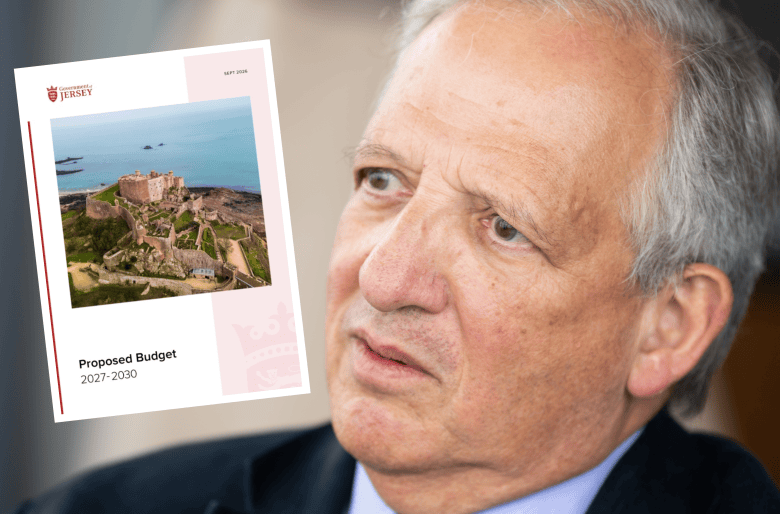
The government’s proposed 2027 to 2030 Budget, due to be debated in December, outlines plans for £1.3bn of spending on delivering services to islanders next year against anticipated general revenue income of £1.4bn.
Outlining its recommendations, the panel said that the proposed surplus of income after day-to-day spending costs “reflects a modest but welcome improvement in the fiscal position”.
“Maintaining and building that surplus would be prudent fiscal policy, particularly given Jersey’s substantial proposed capital programme,” it continued.
“The smaller the surplus of income over day-to-day spending costs, the more
capital investment will need to be funded either by borrowing or drawdown of reserves,
both of which will reduce Jersey’s fiscal resilience.
“Against a backdrop of heightened uncertainty and prevalent global risks, it is increasingly important to strengthen fiscal resilience.”
The FPP also acknowledges plans to use upside Pillar Two revenues to reduce drawdowns from the Strategic Reserve as “a fiscally responsible decision”.
The Strategic Reserve remains below the levels recommended by the panel, and the Stabilisation Fund has been exhausted
FPP chairman Sir Sir Jon Cunliffe
It has recommended allocating “any additional upside revenues to reserves to further strengthen resilience”, warning that “the Strategic Reserve remains below its target level and the Stabilisation Fund is depleted”.
Other recommendations include strong support for a switch to multi-year Budgets, which the panel says will provide “a more disciplined framework for fiscal planning”.
It also advised that capital expenditure “should only be regarded as investment where a project generates a positive net economic return”.
“Otherwise, an opportunity to enhance the States of Jersey’s net asset position is foregone,” it added.
In addition to the risks linked to a potential correction in expectations surrounding AI, the panel highlighted high energy prices, growing inflation and increasing borrowing
costs.
It cited forecasts expecting inflation to peak in 2027.
