

Plans to expand Jersey’s mains water network and invest in PFAS treatment technology have been set out in the government’s new 25-year capital investment programme.
Under the ‘Investing in Jersey’ programme, published this week, ministers pledged to extend the reach of the island’s water network and support Jersey Water to install treatment systems capable of removing all traces of PFAS – a group of toxic chemicals known to contaminate drinking water and accumulate in the human body.
“A safe and reliable water supply is essential”
The strategy document confirms that work will take place between 2026 and 2033.
“A safe and reliable water supply is essential,” it said. “Most homes in Jersey are now connected to the mains system, but some still rely on private water sources.
“In addition, long-term water security is being affected by population growth, pollution risks (including PFAS), and changing rainfall patterns.”
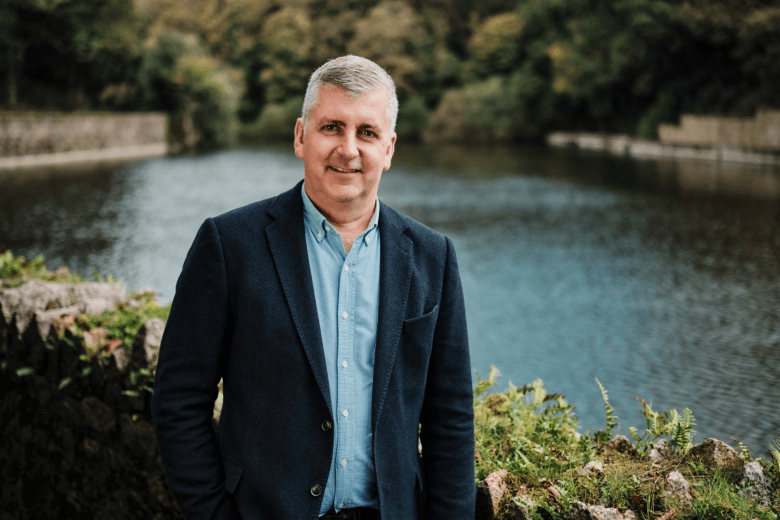
The document confirmed that the Government will partner with Jersey Water to “expand the mains water network to ensure island-wide access to treated drinking water” and “invest in PFAS treatment technologies and other measures to maintain drinking water quality.”
Speaking at a media briefing, Chief Minister Lyndon Farnham confirmed that Jersey Water would lead the PFAS work.
He said funding could be delivered through the new fund, either via a direct investment or a long-term loan to Jersey Water, which would then recover the costs through water charges.
Deputy Farnham explained: “I think we all agree with the principle that we need to address PFAS in the future so that would look like a conversation with Jersey Water, because they would lead on that.
“We’re also looking at aspirations to make sure every house has mains drainage and water… That would all be delivered through Jersey Water, and that would, could manifest itself in an investment… or perhaps a long-term loan to Jersey Water.
“So they’ve got the funding to deliver that additional infrastructure, and they are an incorporated business so then they would, of course, recuperate that in their water rate.”
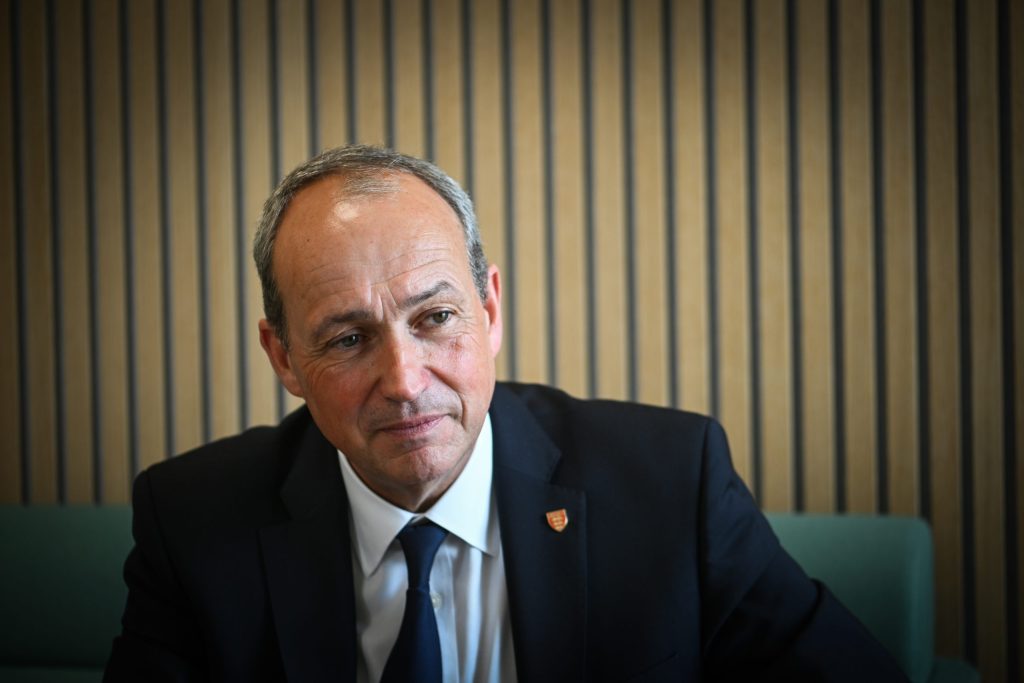
Jersey Water CEO Helier Smith welcomed the commitment to invest in long-term water infrastructure.
He said: “The commitment to extend the mains water network to all island homes and invest in PFAS treatment technology is a positive step and aligned closely with our own priorities, so we look forward to working with the Government to discuss the planning, funding and delivery of these significant long-term infrastructure projects for the island.”
“Far too late and dangerously vague”
But campaigners say the Government’s plans do not go far or fast enough.
Water Awareness Jersey chair Paul Le Claire criticised the lack of detail around technology, standards, and timelines – and said Jersey was lagging far behind other jurisdictions.
“Jersey’s PFAS treatment pledge is far too late and dangerously vague,” he said.
“While other countries have had treatment infrastructure in place for years, our so-called ‘world leaders’ are aiming for 2033 – and spending millions – just to continue delivering water they claim is already ‘safe’.”

He added: “Islanders are being exposed daily through water, food, soil, and air.
“Yet the Government still offers no detail on what treatment technologies will be used, no enforceable PFAS standards – ours remain among the weakest in the world – and no plan to stop burning PFAS-contaminated sewage sludge in the incinerator or spreading it on agricultural land.”
Mr Le Claire called for “stricter standards, modern public health laws, and independent regulators and commissioners with the power – and courage – to act”.
“The idea that these safeguards are ‘too expensive’ for a small island is nonsense,” he said.
“It is precisely because Jersey is small, contained, and vulnerable that we need the strongest protections possible.”
Timely intervention is “critically urgent”
St Ouen’s Bay resident Sarah Simon – who has long campaigned for the Government to take action – said the lack of effective removal systems was allowing the chemical to build up in residents’ bodies.
“Jersey residents are experiencing daily bioaccumulation of PFAS through their drinking water, making timely intervention critically urgent,” she said.
“The removal of PFAS from island wide water sources is fundamental to the long-term health of islanders as these forever chemicals are persistent in mains water due to lack of remediation.”

Ms Simon said the global approach to PFAS treatment was evolving, with the industry moving towards complete chemical destruction using technologies like Supercritical Water Oxidation.
“Significant cost and waste management challenges persist,” she explained. “The focus is shifting beyond just removal of PFAS to encompass complete destruction whilst managing the lifecycle costs and impacts of treatment.
“The critical issue lies in whether Jersey’s decision making will shift towards implementing the most robust solution, or whether a tendency towards cost-minimisation, evident in their past choices, will continue to guide their actions regarding PFAS treatment.”
Possible treatment options
It comes after an independent study by environment consultancy Arcadis revealed that PFAS – so-called “forever chemicals” historically used in firefighting foam at the Airport’s fire training ground – had spread further west through groundwater and streams than earlier assessments had indicated.

Originally thought to be mainly confined to the area in St Peter beneath the runway, the PFAS “plume” has now been found to stretch further across the St Ouen’s Bay and Pont Marquet catchment areas.
The findings have triggered what officials have also described as the most coordinated response to PFAS contamination in Jersey to date – with the Government, Jersey Water, and Ports of Jersey agreeing to take joint responsibility for delivering those actions.
A steering group, made up of officials from these organisations, was formed to oversee the response by coordinating testing, water supply changes, and long-term remediation work.
Earlier this summer, Jersey Water said it has already been working on possible treatment options and is monitoring international best practice as part of that process:
- Granular Activated Carbon (GAC) is a process whereby water gravitates through a bed of porous carbon granules which adsorbs and removes contaminants. Other pre-treatment processes are usually required, and GAC media needs to be replaced or regenerated when its adsorption capacity is exhausted.
- Ion Exchange (IEX) is a process whereby water is contacted with synthetic resin beads which selectively remove certain types of contaminants based on their ionic charge (it is unlikely that a single resin will remove all types of PFAS due to the varying nature of these compounds). Other pre-treatment processes are usually required and IEX resin needs to be replaced or regenerated when its adsorption capacity is exhausted.
- Nanofiltration and Reverse Osmosis are pressure-driven processes whereby water is filtered by membranes with small and very small pore sizes, respectively. The selection of the most effective treatment depends on the nature of the PFAS compounds in the water being treated. Other pre-treatment processes are usually required and there will be waste streams which must be managed.
The Government has also pledged to introduce stricter PFAS regulations later this year and invest in treatment technology to remove all traces of the so-called “forever chemicals” from Jersey’s water supply.
The commitment came after a petition calling for a Government-funded treatment plant gained nearly 1,300 signatures.
