

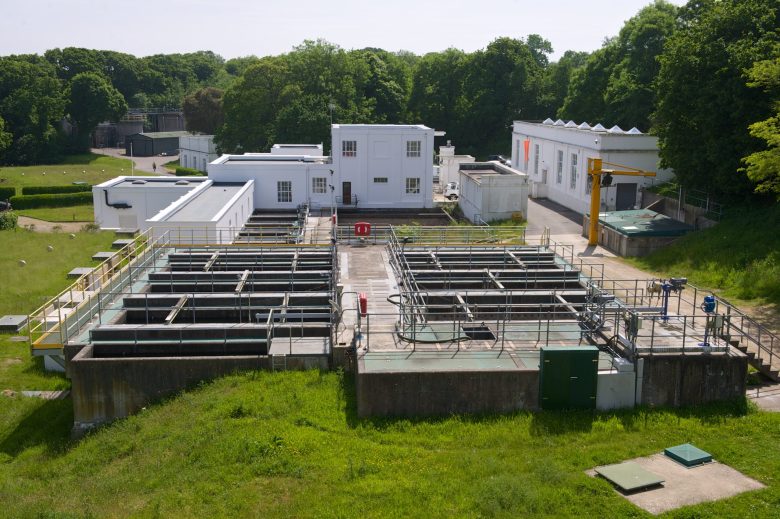
Jersey Water is exploring two technologies to remove PFAS from drinking water that will bring levels of the cancer-linked “forever chemical” down to a limit which the Government has been recommended to adopt… but what are they?
The utility, which is 74% owned by taxpayers, has over time been narrowing down the choice of technologies it plans to pilot in the next two years, with the frontrunners now “granular activated carbon” and “ion exchange”, which will offer an additional level of treatment to existing methods.
The company has set aside £2m of its recently announced £48m investment plan for the next five years to investigate which PFAS treatment works best, including running the pilot studies, but sources of longer-term funding remain unclear.
However, the Government – in its “Investing in Jersey” infrastructure programme – has committed to “invest in PFAS treatment technologies and other measures to maintain drinking water quality”. It seems likely, therefore, that taxpayer funds will be available.
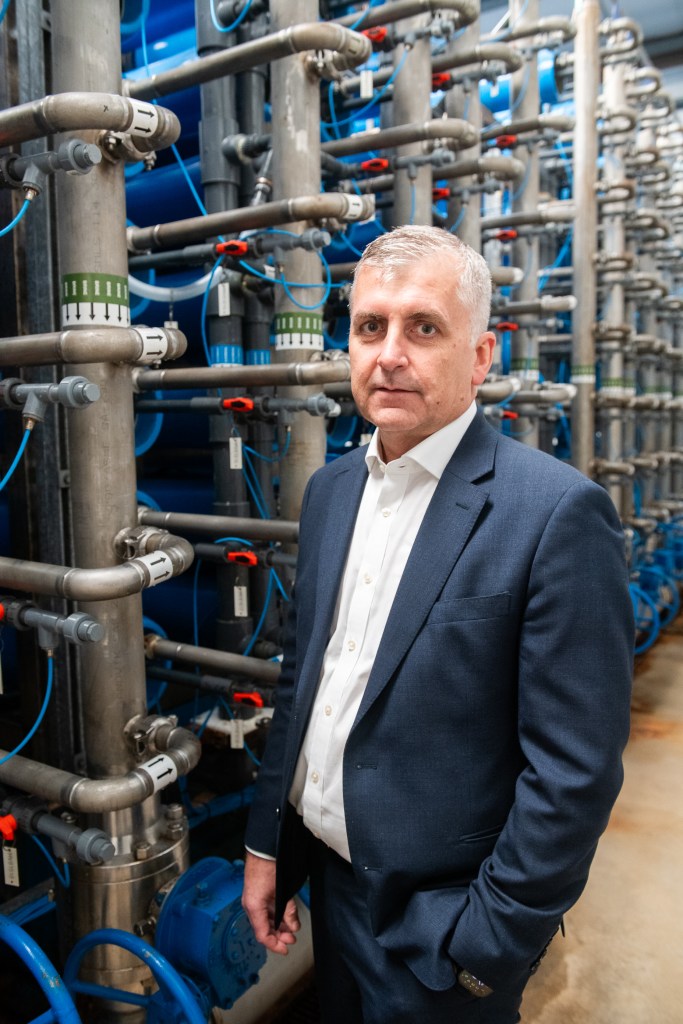
Water bills will go up by an inflation-busting 15.5% in January to fund the utility’s near-£50m programme, which includes upgrading the desalination plant and extending the mains network.
It also anticipates “above-average” increases from 2027.
Addressing who would pay for a PFAS-treatment plant, Jersey Water Chief Executive Officer Helier Smith said: “We have significant uncertainty around PFAS [funding] and how the Island will respond to that.
“Until we have clarity on how much PFAS treatment is going to cost and how that is going to be funded, we won’t have clarity on its future impact on water charges. The likelihood is there will need to be further increases in water charges to fund some or all of those costs.”
Jeanette Sheldon, the utility’s head of water quality, reiterated that drinking water in Jersey was safe and that the Island used PFAS limits deemed 70% safer than those set in the UK and EU.
She added that the extra PFAS treatment envisaged would reduce Jersey’s current level of 13 nanograms per litre of drinking water to below 4 ng/l – which is the threshold, for four PFAS compounds, recommended by the Government’s panel of PFAS advisers.
She said: “That future, precautionary standard will take the level [of PFAS] down to an equivalent of approximately a sixth of a teaspoon of sugar in 100 Olympic swimming pools; however, that will require us to invest in additional treatment and will require multistage treatment. Very few countries have this standard in law as we speak.”
“We have started that process: we have looked at a number of different options, anticipating the change in the standard. Having a potential standard is useful because we can narrow those options down.
“Over the next two years, we have allocated £2m which will be invested into the pilot trials and other investigations to minimise the trace levels of PFAS detected in our drinking water.
“Options we are currently looking into include activated carbon and ion exchange technologies, most likely in series, so water will pass through both treatment stages.
“These methods are widely recognised as highly effective for removing PFAS and by piloting both together it will help us fully understand how they perform under local conditions using our own water sources.”
Mr Smith added: “Our treatment works were not designed to accommodate these complex and sizeable treatment processes that we are looking to add.
“So, we are looking at significant changes to how we treat water in the Island, potentially needing a new treatment works. So, there is a significant range of outcomes that we are looking at with significant investment required.
“It is important we get it right, which is why we want to take time to do the pilot studies to make sure we have the right solution for the Island going forward.”
The technologies under consideration…
What is Granulated Activated Carbon treatment?
This is the most studied treatment for PFAS removal. Activated carbon is commonly used to “adsorb” natural organic compounds, taste and odour compounds, and synthetic organic chemicals in drinking water-treatment systems. “Adsorption” is both the physical and chemical process of accumulating a substance, such as PFAS, at the interface between liquid and solids phases.
Activated carbon is an effective adsorbent because it is a highly porous material and provides a large surface area to which contaminants may adsorb. Activated carbon is made from organic materials with high carbon contents such as wood, and coal; and is often used in granular form.
What is an Ion Exchange Plant?
This usually consists of several tanks which each contain ion exchange resins. Water is comprised of one atom of oxygen and two of hydrogen, which together produces an electrically neutral molecule.
PFAS compounds are negatively charged in water, which means they have negative ions attached to each PFAS chain. The ion exchange resins, on the other hand, are positively charged. Water is therefore pumped into ion exchange treatment tanks and as it filters through the ion exchange resins, the negative ions in the PFAS are attracted to the positive ions in the resin. The PFAS stays attached to the resins while the water travels through, leaving the contaminants behind.
