

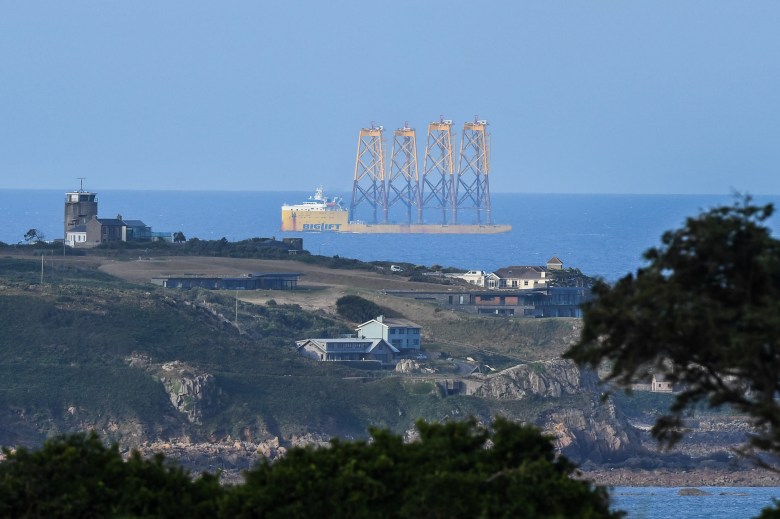
As major wind farm projects across the UK, US and Europe face delays, downsizing or collapse under the weight of inflation and political turbulence, could Jersey’s own £3bn ambitions be starting to stall?
Environment Minister Steve Luce this week pledged to bring the “best option” for an offshore wind farm to the States Assembly for a vote by the end of the year – but, in a potential signal of cooling confidence, he took the opportunity to point out that “the best option may be that we don’t proceed”.
Express explores current appetites globally and locally…
A quick recap… Jersey’s wind farm story to date
Last April, politicians gave government the green light to formally explore the opportunities for the island to build a £2-3bn wind farm of up to one-gigawatt in generating capacity, in the south-west of Jersey’s territorial waters.
It followed a public consultation, which ran from November 2023 to February 2024, where many islanders expressed support for such a scheme.
The proposal, which was approved by 40 votes to one, involves the leasing of seabed rights, which the Minister said would be the first commercial stage of the project.

Speaking during the latest States sitting, Deputy Luce said that work on the policy and legislation required to lease, consent and regulate an offshore wind farm was “progressing well”.
“I have instructed officers to prepare two documents,” he explained. “The first is a draft law, which would establish a framework for consenting the construction, operation and decommissioning of offshore energy installations, including offshore wind.”
He added that the second document would be a proposition setting out his “proposed approach” to identifying, securing, facilitating and opening a formal leasing process “once relevant legislation and processes are in place”.
How much interest have the plans generated?
While Guernsey politicians voted not to collaborate with Jersey on a future electricity strategy in 2023 – following a debate that saw them dredge up multiple previous fall-outs that had apparently left the islands on the brink of all-out “political civil war” – the Minister spent two days with politicians on the island last November to discuss climate impact and offshore wind farms.
Deputy Luce said his team had also been in contact with officials from the Isle of Man and France.
The construction of the Saint Brieuc wind farm, which is just over 20 miles from Jersey and visible from the island’s coast, was completed in December 2023.
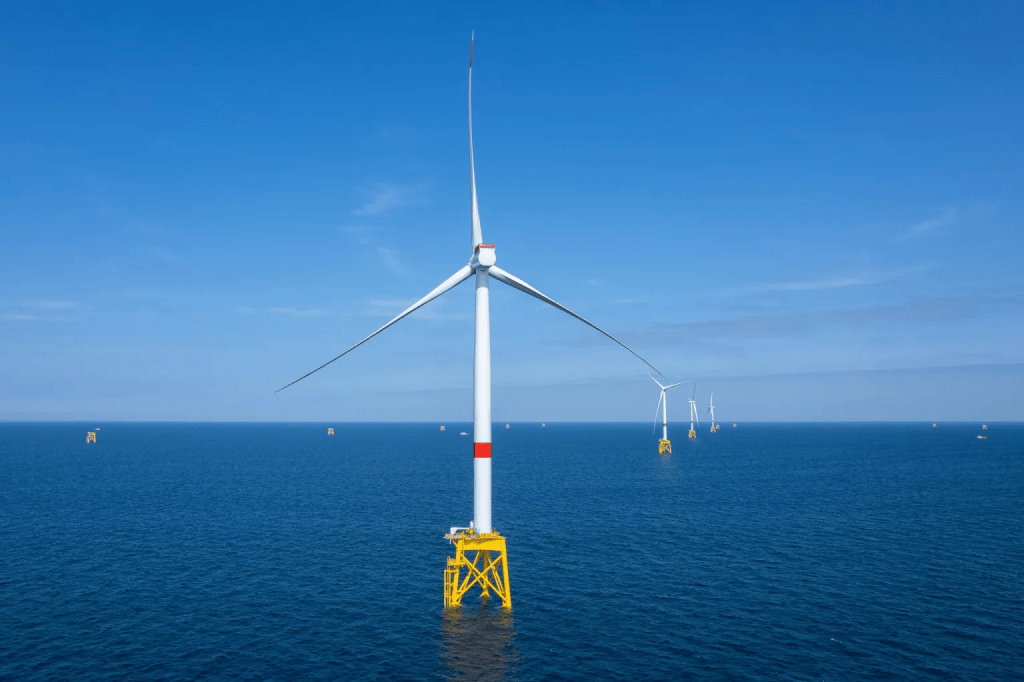
The French government has since shared aspirations for additional wind farms west of the island – something which prompted former Environment Minister Jonathan Renouf, who set the wind farm plans in motion, to ask his successor whether this could have a “shadowing effect” on a local scheme.
“That is all going to have to be discussed with the French government – if we move forward at all,” he said.
But Deputy Luce also confirmed that there were “a number of commercial entities interested in a Jersey opportunity”, adding that he remained “positive that there are options for the island should we wish to proceed to the leasing round”.
What’s happening globally?
But while French wind ambitions appear to be growing, the recent picture in the UK and US has been less positive.
In a major blow to the UK government’s clean energy ambitions, Danish energy giant Ørsted last week confirmed it had cancelled the 2.4GW Hornsea 4 wind farm off the coast of East Yorkshire, which would have powered more than a million homes.
Ørsted said the project no longer made economic sense, despite having secured a 15-year contract with the UK government to sell power at a guaranteed price.
Its CEO, Rasmus Errboe, blamed “the combination of increased supply chain costs, higher interest rates and increased execution risk”.
It was a similar situation two years ago, in July 2023, for Swedish firm Vattenfall. It halted development of the 1.4GW Norfolk Boreas project, which designed to power 1.5 million homes, after construction costs rendered it financially unviable.
Meanwhile, in the US, President Donald Trump has put a stop to all federal approvals for wind farm projects in January, and last month halted the construction of a major wind farm off the coast of Long Island, which was due to power 500,000 homes.
The situation led 17 States to sue the administration on Monday, the New York Times reported.
According to Windtech International, market uncertainty saw $7.9 billion in planned investments into wind projects withdrawn between January and March this year – “more than triple the total cancelled over the previous 30 months”.
Will a Jersey project add up?
While clean energy generation and contributing to net-zero goals could be one benefit, the economic question is the one likely to determine whether Jersey’s plan ultimately goes ahead.
A report analysing the potential economic impact of the project previously estimated that, “based on a conservative price per unit of 6p, a 1,000 MW wind farm could generate electricity worth £226million; of which 17% could be locally consumed (based on 2021 energy demand), whilst the remainder could be planned export.”
In a Economist Tom Holvey was recently quoted in a government blog as saying: “I don’t think any nation in the history of the world has ever done badly out of energy production.”
“When we see the global economic turbulence at the moment, having your own energy production is really going to be important in the future. It buys you into market negotiations, if nothing else,” he said.
Mr Holvey added: “What I’ve always said about wind is it has to make economic sense. And if it doesn’t, if we’re subsidising it, we should not do it because we should be doing it for an economic reason rather than any other reason.”
To fund the project, Deputy Luce previously said that he would be “more inclined” to see the development of a £2-3bn wind farm in Jersey’s territorial waters financed through the private sector, rather than a partnership involving public funds.
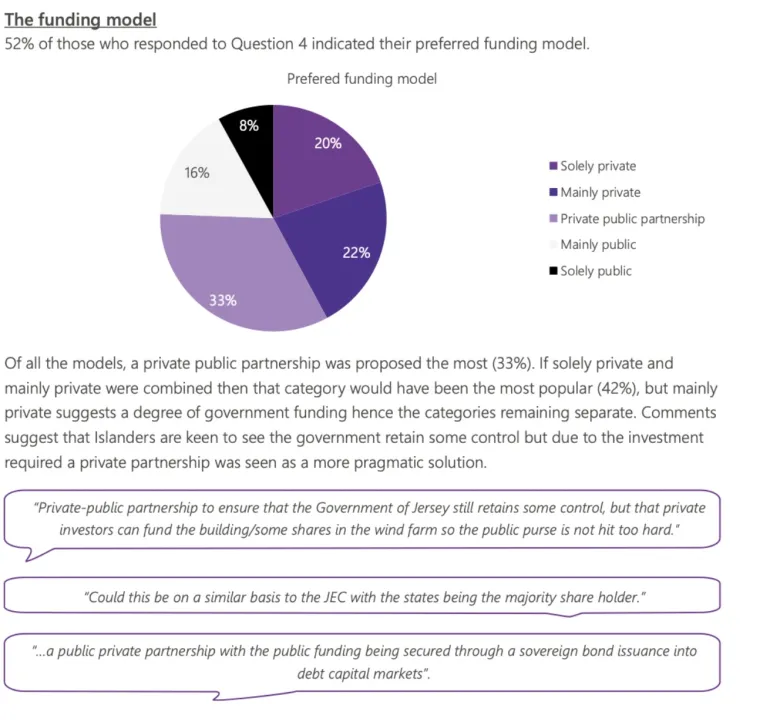
During the public consultation, a mix of both private and public funding proved the most popular – although many leaned towards the former as either the sole (20%) or main (22%) source of funding.
JEC CEO Chris Ambler previously floated the idea of a scheme could enable islanders to take “an ownership interest” in the development by making their own investments of as little as £500.
Deputy Luce said this week that, when he eventually brings his preferred way forward to the States, his proposal would be clear on the “strategic drivers for such a project and the benefits case for the island, taking into account likely market conditions”.
While the Minister said he would return to the Assembly “with the best option”, Deputy Luce noted that “the best option may be that we don’t proceed”.
“A decision has been taken to move forward to the next stage, but the main decision will be taken at the end of this year as to whether we move forward further,” he explained.
Follow Express for all the latest updates…
