


Higher fuel costs stemming from the conflict in the Middle East were among the biggest factors influencing a continued rise in Jersey’s inflation rate, according to the latest report from Statistics Jersey.
Published today, the Retail Prices Index for September 2026 contains analysis of the speed at which goods and services in the island are getting more expensive, broken down by category.
Express took a look at the data…
The figures at a glance:
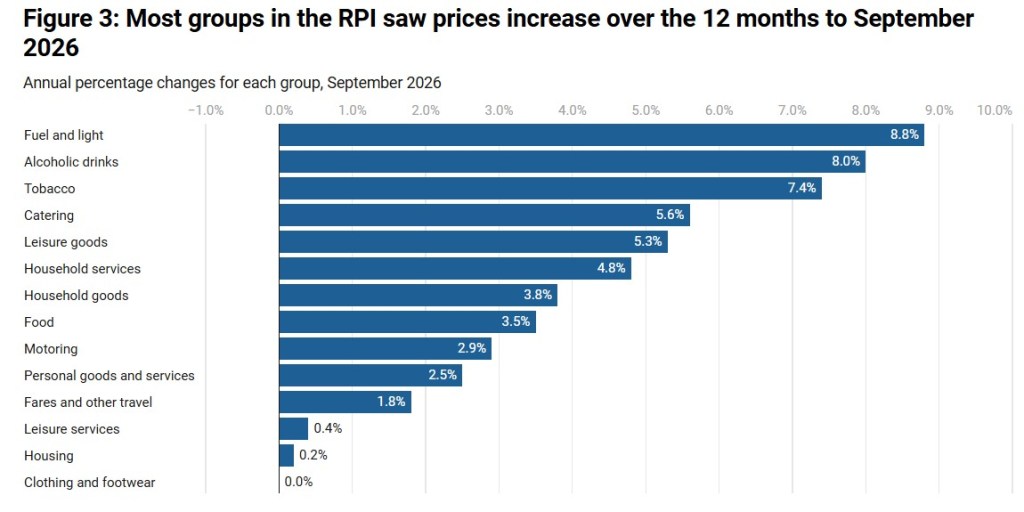
- The annual rate of inflation, which was marked at 2.8% in June, rose to 3.0% over the following quarter with most categories observing price increases.
- The category that saw the biggest change over the period was average prices in the fuel and light group, which increased by 8.8%.
- Heating oil and other fuels have seen an annual increase of 47.7%, while petrol and oil rose by 22.7%.
- The housing costs group, which made up the largest contribution to RPI, increased by 0.2%, adding 0.05 percentage points to the overall rate.
- Alcoholic drinks, as well as the fares and other travel category, were also among the main contributors (+0.14 and +0.13 percentage points respectively).
During this period, global energy markets remained affected by geopolitical developments in the Middle East, contributing to movements in the prices of products such as heating oil and petrol
Statistics Jersey
The report also looks at how vulnerable islanders – such as pensioners and those on low incomes – are faring.
It does this by looking at two specific measures of inflation: RPI Pensioners and RPI Low Income.
RPI (Pensioners) had increased by 4.3%, while RPI (Low Income) increased by 3.6%.
Outlining the findings, Statistics Jersey noted that: “The RPI price collection process for this report started on 4 September and finished on 18 September 2026.
“During this period, global energy markets remained affected by geopolitical developments in the Middle East, contributing to movements in the prices of products such as heating oil and petrol.”
The statistics office highlighted that the impact of this was reflected in the quarter’s figures.
It also acknowledged that there have since been further increases in fuel prices, particularly for diesel, noting that: “As these changes occurred after price collection had been completed, they are not captured in the figures presented in this report”.
