


Indecent images reports have doubled since last year, the police chief has said.
So what’s behind these numbers – and how are phones examined in investigations?
Social media platforms
As the number of investigations involving data from phones and computers keeps increasing, so does the number of reports, police chief Robin Smith told the Children, Education and Home Affairs Scrutiny panel at a quarterly hearing.
“Indecent images being reported to us now are up 200% compared to last year – around one or two a week,” he said.

Social media companies have become “more engaged” in identifying and reporting illicit images of children, he added.
“The surveillance is much better, which is a good thing. So of course, it makes us busier.”
“We’re not improving backlogs”
Officers and staff in the Digital Forensics Unit are dealing with huge amounts of seized phones, Mr Smith said.
At the start of this year, the States police was injected with £240,000 of extra funding, the “vast majority” of which was set to go to community policing and the rest to the digital forensics unit.
But at the same time, he said, the unit is dealing with more data than ever.
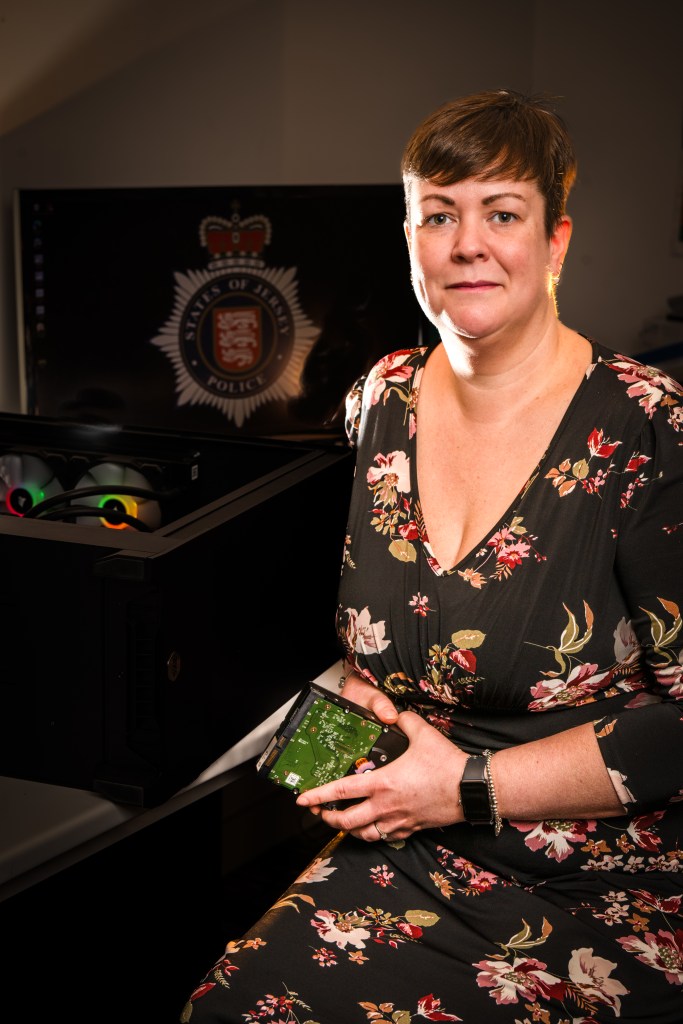
“We’re not improving backlogs, although that’s an aspiration, because just to stand still is actually a success right now, such is the amount of digital information that comes into the police station,” Mr Smith said.
“It’s not just about storage, it’s also about skills.”
Around 92% of all investigations involve some sort of digital analysis such as getting data from a mobile phone, Mr Smith said, and they have seen “an enormous increase in the amount of phones that we seize”.
“It’s an expensive unit.”
Storage
Additional funding has helped pay for additional storage, Mr Smith said.
“One of the other challenges is the amount of data that we now store,” he said.
“It is enormous amounts.”
Forces around the world will need to find “a better way to deal with it because it is still a challenge”, he said.
“That money was very gratefully received, and I am more confident than I’ve ever been in my tenure that I think we will be able to improve that situation in the next few years.”
Digital forensics
Skills, hardware and storage were all part of the expense, according to Mr Smith.
“Software that can speed up time – and we have that kind of software – that can analyse thousands of photographs without necessarily needing a human being to look at them. Clearly, they have to be looked at before we go to court.
“This is the reason why, if we stand still, we can stand still. That might be seen as a success.”
Ultimately, he added, digital forensics “saves money”. It means more defendants plead guilty early instead of going through a lengthy prosecution – ultimately speeding up the process.
