

The Welsh are well known for their beautiful singing voices and 100 years ago, a choir of striking miners from Wales arrived in Jersey to raise money for their families.
The choir were from the Aber Valley and were in the Island for a week-long tour during the summer of 1926.
That year, there was turmoil in the British mining industry. Against a backdrop of falling prices, coal mine owners demanded that workers’ wages be lowered and hours increased. This was rejected by the Miners’ Federation of Great Britain who coined the phrase: “Not a penny off the pay, not a minute on the day.”
Agreement could not be reached, which led to a general strike in support of the miners in May 2026. It lasted nine days but the miners refused to return to work under the conditions that were offered. This led to different projects to try and keep workers and their families fed. One of these was community bands and entertainment travelling the country to try and make money.
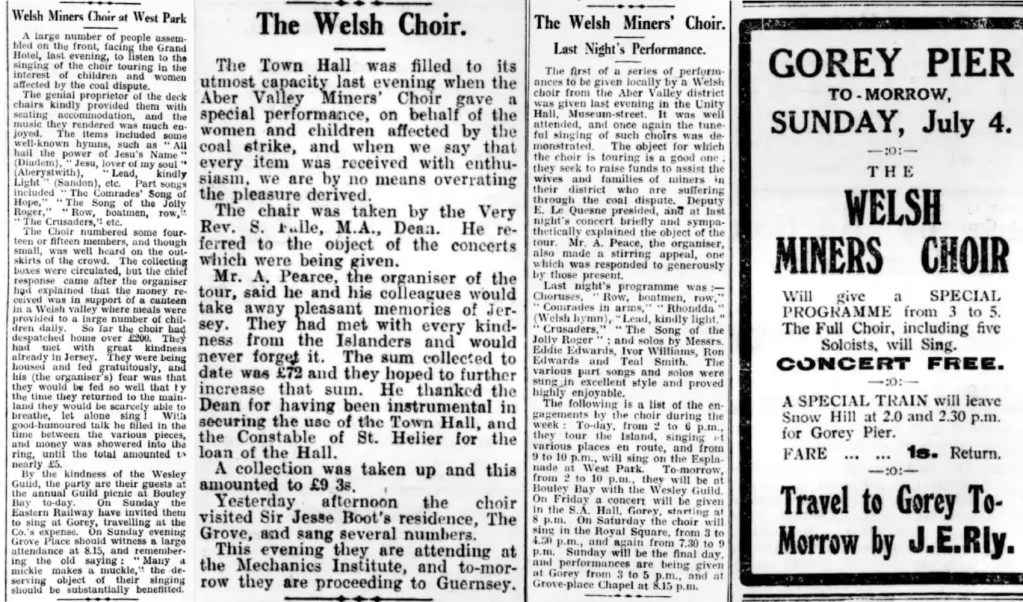
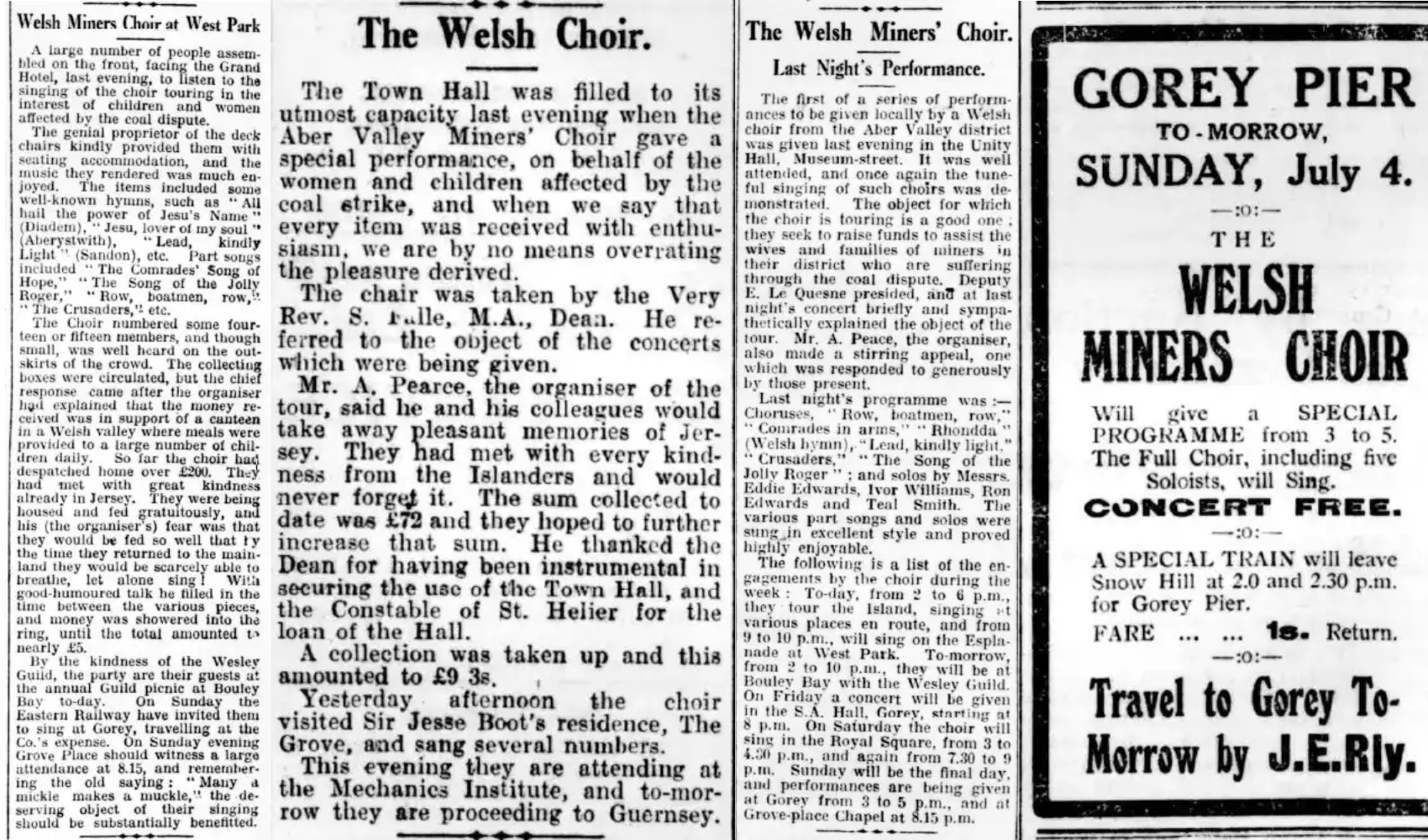
The first mention of the tour that included Jersey was in the Evening Post on 28 June 1926. It was announced that “a Welsh miners’ choir of 18 voices, from the Aber Valley, is arriving in the Island tomorrow morning”.
Readers were told the purpose of the choir’s visit was to make use of their musical gifts to help to alleviate their suffering, and that of fellow miners, in the remote valley in South Wales.
The report in the Evening Post said: “We all owe a debt to the miners, whose work is admittedly one of the most dangerous and unpleasant tasks necessary to the life of a civilised community.” It alluded to the fact that the coal stoppage may be controversial but it could not be fought out “at the cost of suffering women and children”.
The Welsh choir were to perform solos, part songs and chorus work and there was a request from the organiser of the visit, Alex Pearce, who was staying at Unity Hall in Museum Street, for hospitality to be provided to members of the choir so that every penny collected could be sent home to Wales.
Their first concert of their week-long tour took place the following day at the Unity Hall. An advertisement in the newspaper trumpeted the fact that the concert was free but that a collection would be taken in aid of relief funds. It finished with a plea to the audience: “Don’t let the children suffer.”
It was reported that the event was well attended and “the tuneful singing of such choirs was demonstrated”. Deputy E Le Quesne presided and explained the object of the tour. The organiser, Mr Pearce, gave a stirring appeal for attendees to be as generous as possible. Solos were sung by choir members Eddie Edward, Ivor Williams, Ron Edward and Teal Smith.
On the afternoon of 30 June, the choir toured the Island and stopped at various places to perform. This culminated in a performance on the Esplanade seafront facing the Grand Hotel. Seating was provided by the proprietor of the deck chair concession.
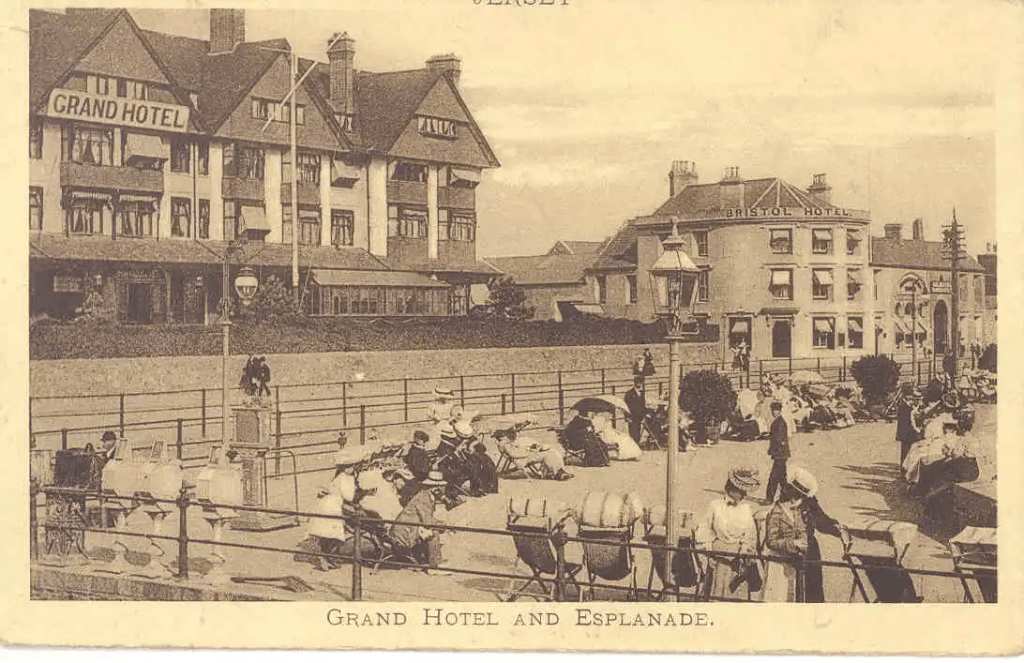
Collection boxes were circulated and after an explanation that the money raised was for a canteen in a Welsh valley where meals were provided daily to a large number of children, a sum of nearly £5 was raised.
The organiser mentioned the generosity of those housing the men. He said that “they were being housed gratuitously, and his fear was that they would be fed so well that by the time they returned to the mainland they would scarcely be able to breathe, let alone sing!”
The next day, the party were the guests of the Wesley Guild at their annual picnic at Bouley Bay. Stopping at Ebenezer and Bouley Bay, the choir sung a number of pieces and raised almost £5 once more.
They continued to tour the Island and performed in the Royal Square and then at Gorey, with a special train laid on that afternoon to carry people from Snow Hill. Further performances followed at Grove Place Chapel and the Congregational Church.

On 5 July, they paid a special visit to the residence of Sir Jesse Boot and sang several numbers. In the evening, they packed out the Town Hall at an event chaired by the Dean of Jersey, the Very Rev Samuel Falle. The Evening Post commented: “When we say that every item was received with enthusiasm, we are by no means overrating the pleasure derived.”

Mr Pearce said that “he and his colleagues would take away pleasant memories of Jersey. They had met with every kindness from the Islanders and would never forget it”. He mentioned that up to that point, they had made £72 from their visit and they hoped to be able to increase that sum before they left.
The choir completed their tour with a concert at the Mechanics Institute, before leaving for Guernsey on 7 July.
Ultimately, by the end of 1926 the miners were forced to accept the diminished terms and conditions and returned to work.
LEARN MORE…
To uncover more stories like this one, dive into the Jersey Heritage Online Catalogue and read more below…


Something went wrong. Please refresh the page and/or try again.
