


When your average Brit thinks of Dave Rowntree, they likely picture him behind the drum kit for Blur, pounding out the beat to Song 2, Parklife and other anthems that soundtracked the 90s. But this bank holiday Sunday, the Britpop legend will be swapping Wembley-sized crowds for an intimate shoreline DJ set in Jersey.
He’ll be headlining Day Disco’s Ultimate Retro Bank Holiday Party – a sun-soaked celebration of 80s, 90s and noughties bangers made for grown-ups who want to party before bedtime – at Bar Nautique (formerly Vittoria).
It’s not his first visit to Jersey – and he’s clear on why he keeps coming back.
“Every time I ask myself, ‘Why don’t I live here again? Somebody explain to me why I don’t live here’,” he tells Express, ahead of his set.
Rowntree’s life since the peak of Blur’s fame has been anything but typical. A trained solicitor and Labour Party member with a sharp view on technology, politics and the music industry, he’s now on a mission to make the live scene more inclusive and sustainable, while celebrating the joy of a cracking tune and a great crowd.
In this interview with Express, he shares why music today is better than ever, how Brexit and corporate greed have damaged the live industry, what it’s really like to play Wembley – and why he believes the future of nightlife might just be… daytime…
Introduce yourself…
“I’m Dave Rowntree, best known as the drummer in Blur. I helped form the band with my three colleagues and partners in crime in 1989. We’ve been going ever since, had some stops and starts, but most recently we did a tour which ended this time last year.
“We played Wembley Stadium for two nights and a bunch of festivals around Europe, which ended in California, playing a big festival there in Palm Springs.”
Have you had the opportunity to visit Jersey before? If so, what was your experience like and are you excited to come and play at the Day Disco event?
“Many times. Every time I ask myself, “why don’t I live here again? Somebody explain to me why I don’t live here.”
“…Entertainment is being based less and less around nightlife, now people are much less interested in being a passive receiver of entertainment. They want something that’s a bit more immersive and interactive. They want something that’s a bit more memorable. So there are not lots of new ideas like day disco being tried out.

“People have families, people have things to do in the evenings. People have commitments that they can’t get out of. A lot of people work shifts and aren’t able to work to go out on any nights at all, so the entire universe of entertainment seems closed off to them, and that’s just ridiculous.”
“Big shows are big, especially Glastonbury, you can’t even see the front row, but Wembley is different. Wembley is a very special gig as it turns out, and people told me it was a very special gig, but people say all kinds of things in the music industry. But it’s actually a very small venue, but you can fit lots of people in. It’s not much bigger than the football pitch it’s set around. The seating just goes straight up pretty much, so you can actually see everybody, and that’s one of the reasons why it is so extraordinary.
“The sound the crowd makes sounds like 90,000 people shouting in your face, which is a sound you’ve never heard before. You can see everybody, you can see people smiling, chatting and dancing. It’s a wonderful feeling, if it’s going well, probably not such a wonderful feeling if it’s not going so well, but for us it was just magical really. Wembley’s like the exception rather than the rule, I think.”
Given the rapid evolution of the music industry, what are your views on the current industry? In particular, in which direction is it evolving and the various trends that are emerging?
“In terms of the current artists, I think that it’s very easy and a really lazy and boring trap to get into saying “music was better in my day.” Music now is far better than it’s ever been, and many of the best songs ever written are being written right now I think.”
“I think the charts have always been quite an unhealthy place because the charts are for kids. When you look at the charts, you look at them and think, “oh god, music is in a terrible state.” But I remember doing exactly the same thing in the 80s and early 90s when my band started and thinking, “I must remember that the charts were appealing and never to fall into this trap of looking at the charts and thinking – oh music is terrible.”
“Music is great and there are extraordinary artists around at the moment. It goes in the direction it’s going to go, so it’s silly to try and say “there should be more guitar music” or “there should be more of this and less of that.”
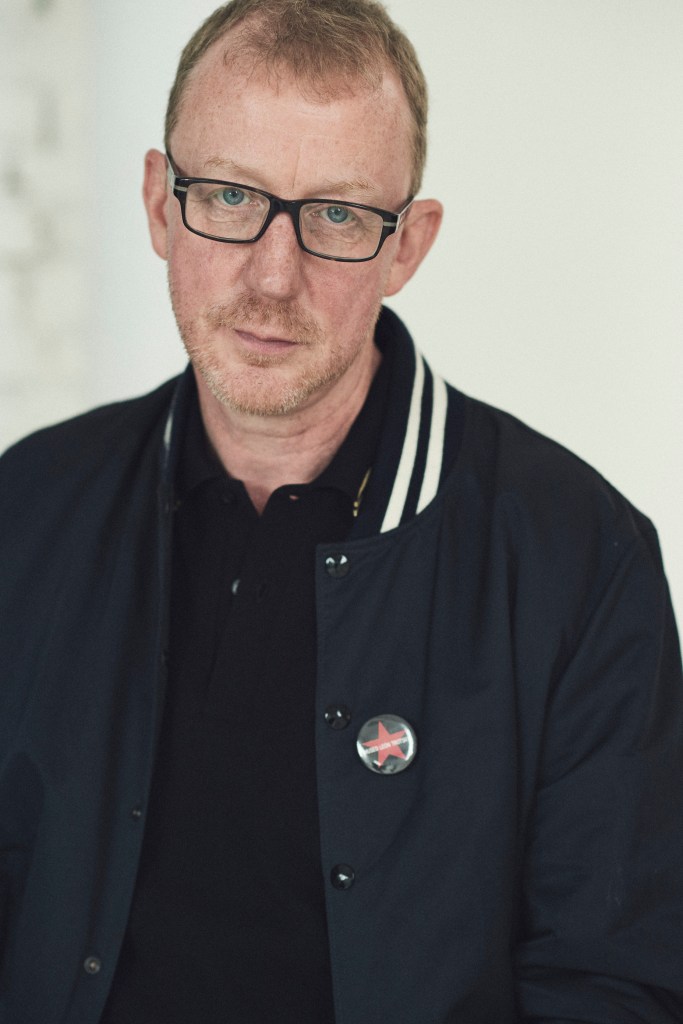
“It goes in the direction it goes, and it always has. It’s quite unpredictable, and that’s what makes it interesting. I think in terms of the industry itself, there’ve been lots of changes.”
“The music industry is now technology-based, and as technology changes, so does the industry.”
“The trick, which we’ve never quite mastered, is, as things, to try and change them in a way that benefits the artists. That’s why I helped set up this organisation called ‘The Featured Artist Coalition.’ It’s a trade union for pop stars because we’re so fed up with the technology changes being made to benefit the record companies and the publishing companies, and the corporate interests. Every time there is a change, it seems that the artists end up getting even less, and the big corporate interests end up getting even more in the long term,m and that makes the industry unsustainable, and we’re not far from it.”
“Now there’ve been some big changes. Brexit was a disaster for the live music industry. The move to streaming, while it could have been something that could have massively benefited artists, the large corporate interests have managed to arrange it yet again, so even more money goes to them and even less goes to artists. So it’s very hard now for somebody to make that transition into the music industry, give up their day job and become an artist full time. Unless you can do it full-time, you can never be good enough to be successful, like with anything. So it’s very hard to do unless you come from a rich family who can fund it, and that’s a real shame.”
“While it is vital that the audience finds the music accessible, it’s also vital that the musicians find the industry accessible, and it’s getting less and less accessible now.”
Social media has become a useful tool in the music industry, offering artists accessible and free opportunities for exposure. However, the increase in digital platforms, predominantly TikTok, also presents challenges, such as market oversaturation and the pressure to maintain constant engagement. How do you perceive the impact of social media on emerging artists and the music industry? Do you believe it facilitates greater opportunities for exposure, or does it contribute to an oversaturated market that makes it more challenging for new talent to stand out?
“It was always difficult to take that step into doing it for a living, you know, to give up the day job, it was always a risky thing to do. It was always a very difficult transition to make and people always struggled. It’s never been any different except now, it’s even harder to do I think.”
“While social media has shown a lot of promise, there isn’t really any money to be made for most people in the music industry, and the same can be said for the live industry. For most people, that was always the case, but at least when we were in the European Union, we had access to the 500 million people in the EU, which we could travel to and play in front of, but now it’s absolutely prohibited except for artists who are already successful.”
“A lot of artists used to bankroll their early career by playing small festivals and gigs around Europe, and there were a lot, so you could spend the summer touring. It was always a good idea for bands to do a lot of gigs and make enough money to see them through the winter, whilst you write the album. That structure is practically gone now because there simply isn’t the infrastructure in the UK to allow people to do that. Venues are closing down rather than opening up in the UK, and I also suspect it’s the same in Jersey.”
What advice would you give to any aspiring or emerging artists who are new to the industry and want to pursue a career in music?
“The songs are the important thing these days. There’s not much else in the music industry that is worth any money anymore, so the foundation of everything is the songs, but that’s the bit most people concentrate on the least. People spend a lot of time learning to play their instrument, planning and playing gigs, but people need to spend a lot more time writing and learning to write songs, the same way you would learn to play an instrument. The only way to learn is by doing, there are no shortcuts or books you can read. Although that might help you, the same way you learn an instrument is the same way you’ll learnt to song write. The 10,000 hours it takes to be fluent in an instrument is the same amount of time it takes to be fluent in songwriting.”

“The reason that Blur has been so successful is because the songs are good and because Damon does little else really. He’s either playing music or he’s writing when we go home after a gig. We’d go back to the Hotel after a gig, and Damon would go up to his room and write another couple of songs before he went to bed. He always has 200 to 300 songs sitting on the back burner, so when he decides he wants to do an album, he has loads to choose from. He’ll find 20 songs and would think “that will fit,” maybe change the words, but off we’d go, but it takes up all of his time. He treats songwriting as his main job and then the rest of it as a fun play off, which is why Blur are so successful. I’m not saying that everyone has to do it like Damon, each band member will find their own path, but there’s always got to be somebody in the band that focuses on the songwriting and at the start, everyone should really be focusing on it too. When you get the songs right, everything else falls quite naturally into place.”
As a well-know public figure, you’ve utilised your platform to raise awareness of certain topics and bring them to light. Was this always part of your intention, or did your personal experiences and career evolution lead you to this path?
“I took some missteps, shall we say, along the way. I was forced to turn my life around. One of the things that I found I was missing in my life and that I wasn’t getting out of music was getting to work, person to person, one-on-one, trying to help people solve their problems. It’s odd because the more successful the band got, the more you know, even though I believe music is incredibly powerful and a positive force in the world, but you see that less and less as time went on.
“The more isolated you are when you’re making records and you’re stuck away in a room for months on end with just a few people, you don’t get to see that moment where people put the record on for the first time or play the music for the first time.
“Equally, the gigs get bigger and bigger, and you get to the point where you can’t even see the front row of the audience. It’s quite difficult because you don’t get that sense of person-to-person interaction, so I found I was really missing that.
“A lot of things I decided to do when I turned my life around were to do with helping people one-on-one. That kind of principle has taken me down a lot of interesting paths. I got involved with my local Labour Party, ended up doing a lot of work with them, I got involved with a local firm of solicitors and ended up training as a solicitor. You know it’s amazing when you take these sorts of decisions, where these things could lead you. So I’ve had quite an exciting life, really, I’ve done lots of different things.”
