

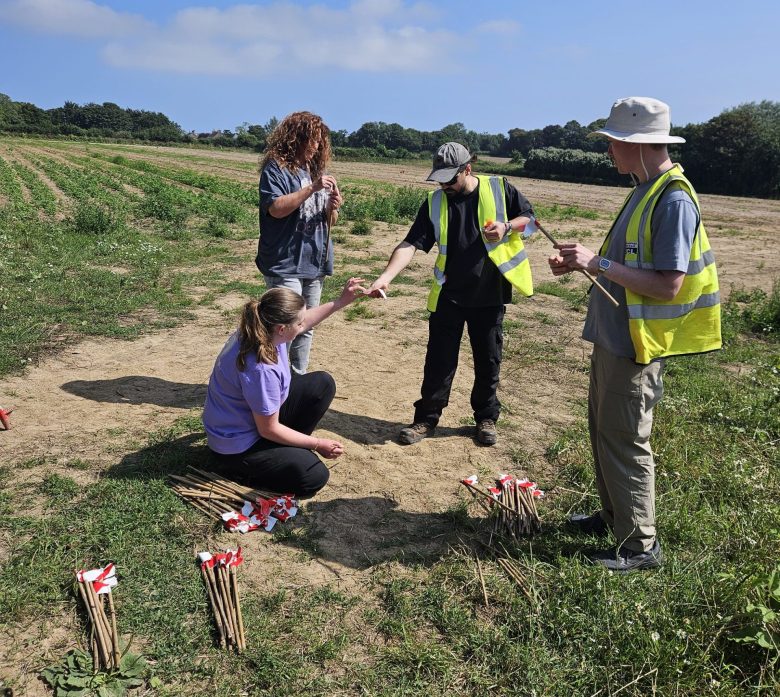
An archaeological dig at one of the Island’s most important sites could reveal what Jersey looked like thousands of years ago and how it evolved from the Ice Age – and Islanders have been invited along to find out more.
Where and when?
Archaeologists have come from England, Wales, Sweden and Denmark to work on the field opposite La Hougue Bie alongside members of Société Jersiaise.
The field is known as Jardin de Perchard and is owned by Jersey Heritage.
The archaeologists are expected to stay until 6 August this year, which is the first of three summers due to be spent in Jersey.
What makes La Hougue Bie so special?
La Hougue Bie itself is next to the field that archaeologists are digging up. The Neolithic passage grave is around 5,500 to 6,000 years old – making it one of the world’s oldest buildings.
Dr Matt Pope, from the UCL Institute of Archaeology, has already worked at sites including La Cotte de St Brelade.
“We know a fair amount about the prehistory of Jersey’s coastline, but the interior of the island is now starting to be taken seriously by archaeologists,” he said.
“This project will help to unlock Jersey’s full story, test scientific methods of investigation and explore the neighbourhood of one of Europe’s most spectacular prehistoric monuments, La Hougue Bie.”
What are the archaeologists hoping to find?

Olga Finch, Jersey Heritage’s curator for archaeology, explained that what is found will help researchers imagine what the area around La Hougue Bie would have looked like 6,000 years ago when the burial chamber was built – and much further in the past.
“The start of this three-year project marks the beginning of an exciting new chapter of archaeological discovery for Jersey,” she said.
“The archaeologists hope to understand how the landscape was used 6,000 years ago at the time the La Hougue Bie burial chamber was being used and what the deep buried records of Ice Age sediment beneath the field can reveal about climate change and ancient people, including Neanderthals, during the last quarter of a million years.”
Dr Pope added that those “remarkable” Ice Age landscapes are “at the heart of Jersey’s aspirations to become a Unesco Global Geopark”.
Can Islanders visit?
Yes! There are two ways to visit the dig:
- A free open day is being held at the field on Sunday 2 August, from 10am to 2.30pm. Jersey Heritage said there would be talks, displays and other activities.
- Visitors to La Hougue Bie will be able to watch the dig from the top of the mound, near the chapel. Volunteer guides – who give tours of La Hougue Bie – will talk about the dig.
