

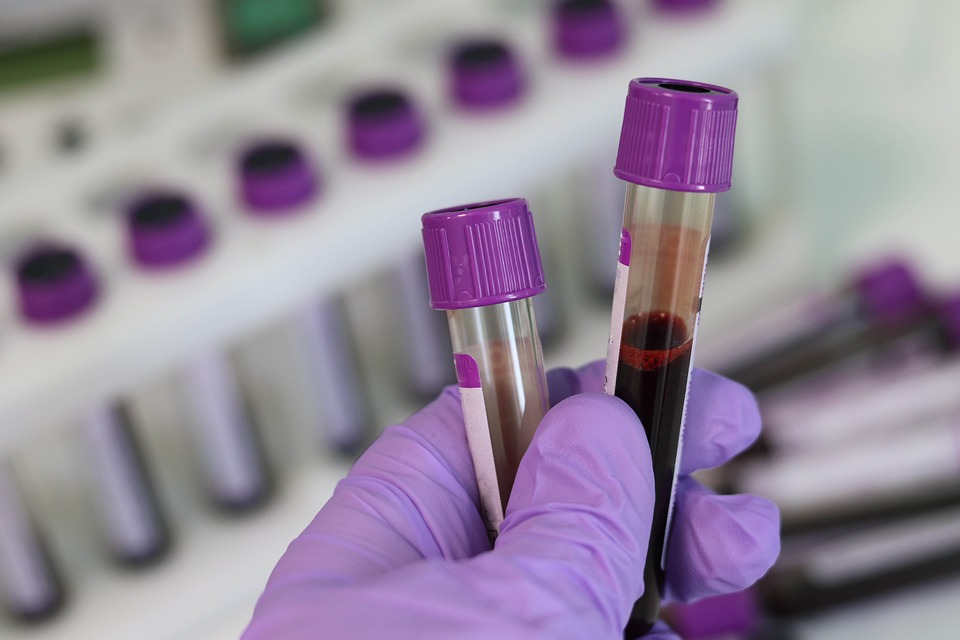
Experts advising Jersey’s government on how to deal with toxic “forever chemical” PFAS are warning medics to be on high alert to potential health effects in people living in a known contamination zone – and is also recommending testing blood from donors around the island to assess wider levels of exposure.
In a new report, the PFAS Scientific Advisory Panel proposes using “altruistic blood donation samples, excess serum collected to perform other tests, or by other means” to estimate background levels of PFAS – a group of synthetic, persistent chemicals linked to health risks such as elevated cholesterol and some cancers.
Earlier testing focused on residents living near the airport, where firefighting foam containing PFAS was historically used and ended up contaminating private water supplies. But the panel now suggests Jersey needs a clearer picture of exposure across the whole island.
Casting the net wider
The panel says that anonymised community testing would help build a baseline of “background levels of PFAS in the wider community, by parish”.
It also calls for testing to be reopened to people who met the criteria for the original 2022 programme but did not take part, and extended to those who had possible exposure but no relevant symptoms.
In addition, it recommends testing for “those who worked as firefighters during the period when firefighting foams containing PFAS of concern were in use, and to those who were involved in the clean-up of the foams as part of their job”.
Clinicians urged to be cautious
A previous report by the panel linked PFAS exposure to cancer and cholesterol risks.
In their latest report, the panel is urging clinicians to remain alert when treating patients from the area affected by the contamination, particularly those with elevated cholesterol or symptoms associated with testicular or kidney cancers.
“When PFAS-exposed people exhibit symptoms which are consistent with kidney cancer or testicular cancer, clinicians should have a higher level of suspicion of cancer than in unexposed populations,” the report states.

It also recommends that “regular testicular self-examination should be considered in PFAS-exposed populations.”
In addition, the panel advises that “clinicians, when seeing people with known PFAS exposure, should consider testing for serum cholesterol.”
Cholesterol drug and blood-letting remain preferred treatment options
While the expert PFAS panel had previously suggested exploring bloodletting for removal, as Express first reported in 2023, their latest report maintains that this should only be a potential “second line” option, as opposed to cholesterol drugs known as bile acid sequestrants.
The latest report makes the specific recommendation that people with high cholesterol and high levels of PFAS in their blood should be offered a medication called colesevelam, which can help lower both.
These medications work by binding to substances in the intestines and preventing their reabsorption and will cost the government up to £ 41,510 per year to treat around 50 people.

Doctors are advised to consider this if a person’s total PFAS level (across eight specific chemicals) is 20 nanograms per millilitre or more.
Women of childbearing age who are not pregnant – and not planning to become pregnant during treatment – may be offered the drug colesevelam if their levels are 10 nanograms per millilitre or higher.
Catch up: How Jersey PFAS pollution came to light…
PFAS (perfluoroalkyl and polyfluoroalkyl substances) are a group of man-made chemicals, often referred to as ‘forever chemicals’ due to their inability to break down in the body or the environment.
PFAS was an ingredient added to everyday items such as frying pans, outdoor jackets and floor tiles because of its ability to repel water, heat, and oil.
Concerns that PFAS in firefighting foam might be affecting the health of residents with private supplies living under the airport runway were first raised publicly by Sarah Simon, who suffers from skin, thyroid and autoimmune disorders, as well as joint and nerve pain.
She tested her own blood to prove that she had elevated levels.

Her concerns were then backed by others living in the area.
The following year, an Express investigation uncovered a secret contract between the Government and the foam’s manufacturer, US multinational 3M.
Agreed by the States Assembly in January 2005 after a behind-closed-doors debate, the deal resulted in 3M giving the government of the day £2.6m, which went towards cleaning up the contaminated training ground and building a new rig on the site.
It also meant the Government was legally bound to help the manufacturer defend any claims made against it, including by islanders who believed their health had been damaged.
Two years later in 2022, 78 islanders volunteered to have their blood tested for PFAS as part of a Government-sponsored programme. Every one of them was found to have it in their blood, with 80% having at least one type of PFAS at a high concentration.
The PFAS Scientific Advisory Panel was set up the following year to explore options to support approximately 50 islanders affected by elevated exposure to PFAS and make recommendations to Ministers and the Director of Public Health.
Doctors should give these women clear information about “potential impact on future offspring”, so they can make an informed decision about whether to start the treatment, the panel said.
For those unable to take colesevelam, the panel suggested therapeutic phlebotomy (bloodletting) as an alternative treatment.
The panel added that regular monitoring through blood tests would track the effectiveness of treatments, with interventions stopping once an individual’s PFAS levels reach background levels, which are yet to be established.
Treatment works upgrades under discussion
Meanwhile, consideration is being given to potential upgrades to Jersey’s water treatment facilities.
Mains water concentrations of PFAS are currently below limits for PFAS set by the UK and the EU, though stricter standards are due to be introduced in the coming years.
Jersey Water has pledged to work with the Government to find the best way to remove all traces of PFAS from the island’s water supply after more than a thousand islanders signed a petition calling for a dedicated treatment plant.
Environment Minister Steve Luce recently revealed that upgrades at the island’s treatment plants could cost upwards of £20 million each – a cost that could be passed on to taxpayers or result in higher water bills.
He stressed that no decisions had been made yet, however, and that discussions between Jersey Water and government were ongoing.
Feedback sought
A three-week public feedback period has now been launched to allow islanders to share their views before the report is finalised and formally considered by the government.
The feedback period will run until 24 April, after which the panel will review submissions before finalising its report.
Responding to the draft report, Health Minister Tom Binet said the government’s Water Quality and Safety Board would “give careful consideration” to the recommendations.
The draft report is available HERE and islanders can submit their feedback via email to PFASPanel@gov.je.
Want to talk PFAS?
Express has been investigating the impact of PFAS on islanders’ health – and the secret deal which hindered action from being taken until now – for the past five years… and we’re still going. If you want to share a comment or story, email editor@bailiwickexpress.com. Our team are happy to speak in confidence.
LISTEN…
In a recent Bailiwick Podcasts episode, we examine PFAS contamination in Jersey’s water supply with Steve Hajioff, Chair of the independent panel looking into the issue.
With nearly 40 years of medical experience and work with the World Health Organisation, Dr Hajioff explains why these persistent chemicals have become a global issue and how Jersey is responding…
